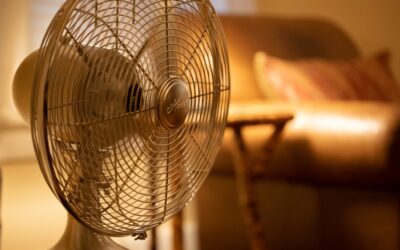
When you need a cooling breeze in a tight spot or a quiet boost of airflow at your desk, a compact fan often beats a bulky one. A small floor fan packs surprising power into a footprint you can tuck beside a chair, under a desk, or in a corner, and it moves air right where you want it. This guide walks through the main types, the features that actually matter, smart placement, and how to use one safely.
Compact does not mean weak. Many small fans push a strong, focused stream of air, which makes them efficient at cooling a person or a small zone rather than trying to condition a whole room. Knowing what to look for helps you pick a model that fits both your space and your needs.
Why a Small Floor Fan Makes Sense
The appeal starts with placement flexibility. A compact fan fits where a tower or pedestal fan simply will not, such as a cramped home office, a kid’s room, a kitchen counter, or a corner of a small apartment. It is also easy to move from room to room, so one fan can follow you through the day.
There is an efficiency angle too. Cooling the air directly around you with a focused fan can let you stay comfortable while easing up on air conditioning, which can trim energy use during warm months. For targeted personal cooling, a small fan is often all you need.
Common Types of Small Floor Fans
The category includes several designs, each with its own strengths. Common types include:
- Compact axial floor fans: The classic round fan on a small stand, offering broad, gentle airflow and usually a tilting head.
- High-velocity mini fans: Built for strong, concentrated airflow, great for spot cooling, drying, or ventilation in a small area.
- Personal desk-style fans: Tiny units that sit on a surface or the floor near you for direct, quiet cooling.
- Bladeless-style compact fans: A safer, easy-to-clean design with no exposed spinning blades, helpful in homes with children or pets.
- Rechargeable or USB fans: Portable, cord-free options for flexibility, though typically with lower output than plug-in models.
Match the type to your goal. For a strong, directed blast, a high-velocity model wins; for steady background airflow, a standard axial fan is the easygoing choice.
Key Features to Look For
A few features separate a fan you love from one you tolerate. Consider these before buying:
- Multiple speeds: At least two or three settings let you dial in airflow from a whisper to a strong breeze.
- Tilt and oscillation: An adjustable head aims air precisely, and oscillation spreads it across a wider area.
- Noise level: If you want it for sleeping or working, look for a model known for quiet operation on low speeds.
- Stability: A wide, weighted base keeps a compact fan from tipping if bumped.
- Easy cleaning: A grille that comes apart or a bladeless design makes dust removal far simpler.
- Controls and timer: Touch controls, remotes, and shut-off timers add convenience, especially for overnight use.
Think about how and where you will actually use the fan, then prioritize the features that match that routine rather than chasing every extra.
Where to Place a Small Floor Fan
Placement makes a big difference in comfort. For personal cooling, set the fan a few feet away and aim it at chair or desk height so the airflow reaches you directly. To cool a room more evenly, position the fan to push air across the space rather than at a wall, and use oscillation to broaden coverage.
For ventilation, place the fan near an open window to pull in cooler outdoor air or to push warm indoor air out. In a stuffy room, aiming a fan toward a doorway can help move stale air along and improve circulation. Experiment with angles, since small adjustments can noticeably change how cool the room feels.
Cleaning and Maintenance
A clean fan runs quieter and pushes more air. Dust builds up quickly on blades and grilles, so wipe the exterior regularly and clean the blades on a schedule. Always unplug the fan before cleaning, and let it stop completely before you open any guard.
For models with a removable grille, take it apart per the instructions, wipe the blades with a soft cloth, and let everything dry fully before reassembling. Avoid soaking electrical parts. Bladeless and enclosed designs are usually the easiest to keep clean, which is worth considering if you dislike fan maintenance.
Using Your Fan Safely
Fans are simple appliances, but a few precautions keep them safe. Place the fan on a stable, flat surface where it will not be knocked over, and keep the cord out of walkways to prevent trips. Do not run an electric fan in wet conditions or near water unless it is specifically rated for that, since electricity and water are a dangerous mix.
Keep little fingers and curious pets away from any exposed blades, which is exactly where a bladeless or fully guarded model earns its place. Use the correct outlet, avoid overloading power strips, and follow the manufacturer’s operating instructions. If a fan ever sparks, smells of burning, or runs hot, unplug it and stop using it.
Power, Efficiency, and Running Costs
One underrated benefit of compact fans is how little they cost to run. Because a small fan cools the person rather than the entire room, it can keep you comfortable while you nudge the thermostat up a few degrees, which eases the load on your air conditioner during peak heat. Over a long summer, that targeted approach can make a real difference on energy bills compared with relying on cooling alone.
Look at how a fan is powered, too. Plug-in models deliver the most consistent output and never need recharging, making them ideal for steady use at a desk or bedside. Rechargeable and USB-powered units trade some airflow for true portability, letting you carry cooling to a balcony, a closet workspace, or anywhere without a nearby outlet. Many modern fans use efficient motors that sip power even on higher settings, so check the product details if low running cost is a priority for you.
Making the Right Choice
The best compact fan is the one that fits your space, moves air the way you need, and runs quietly enough for the room. If you want strong spot cooling, lean toward a high-velocity model; if you want gentle, broad airflow for sleeping or background comfort, a standard axial or bladeless design serves better.
Weigh placement flexibility, noise, cleaning ease, and stability, and you will find a small floor fan that punches well above its size. With the right pick and safe placement, a little fan can make a warm room feel comfortable all season long.
Prefer to explore on your own?
See how new flooring looks in your actual room in seconds — free, no signup.
Try the free Floor Studio →