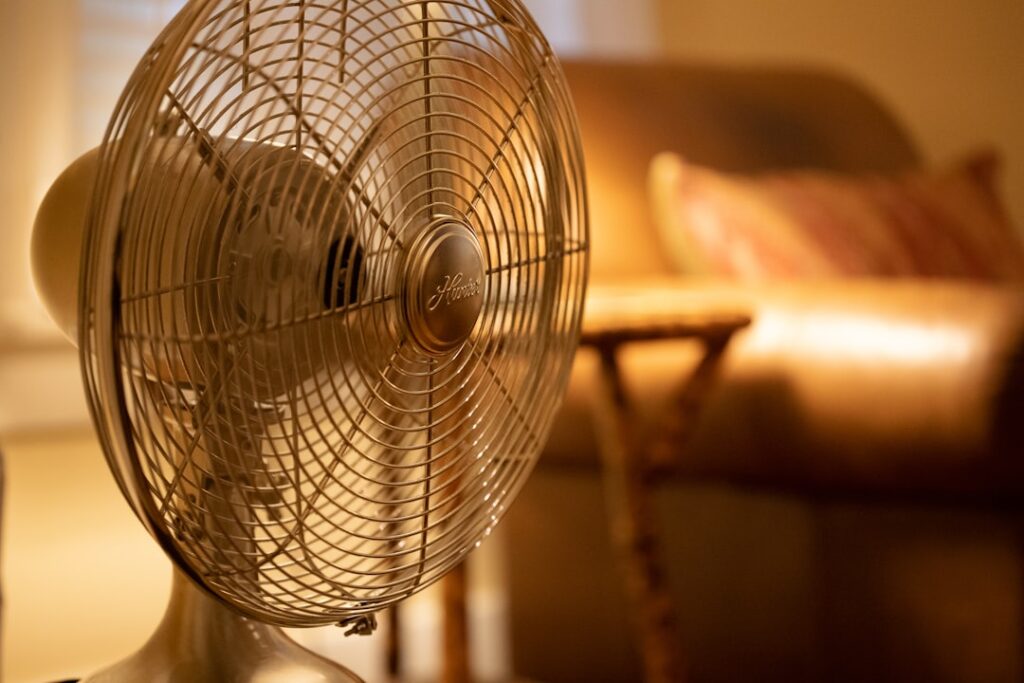
When a room runs hot and you would rather not crank the air conditioning, a floor standing fan is the most flexible way to move air where you need it. Unlike a ceiling fan bolted to one spot or a small desk fan that only cools your face, a standing fan can be wheeled from the living room to the bedroom, aimed at a single chair or oscillated across a whole gathering. The category has grown well beyond the basic pedestal model your grandparents owned, with bladeless towers, high-velocity drum fans, and quiet, app-controlled units all competing for floor space. Choosing well comes down to matching the fan type to your room and your priorities.
Main Types of Floor Standing Fans
Several distinct designs all sit on the floor, and each has a clear strength:
- Pedestal fans: A fan head on an adjustable-height pole and a wide base. The classic choice, with strong airflow, tilt, oscillation, and adjustable height.
- Tower fans: A tall, slim column that takes little floor space and pushes air through a vertical vent. Quieter and more discreet, but generally moves less air than a pedestal.
- High-velocity floor fans: Compact, powerful drum-style fans built to move large volumes of air in garages, workshops, and gyms. Loud but unbeatable for raw cooling and ventilation.
- Bladeless and air-multiplier fans: Sleek, child-safe designs with no exposed blades, often with air-purifying or heating features. Premium-priced and quieter.
If you want one fan to cool a living room and bedroom, a pedestal or tower covers most needs. For a garage or a hot kitchen during cooking, a high-velocity fan is the workhorse.
Sizing the Fan to Your Room
Airflow is measured in cubic feet per minute (CFM), and a bigger room needs a higher CFM rating to feel a real breeze. A small bedroom is satisfied by a modest tower fan, while an open living-dining space or a large garage benefits from a pedestal or high-velocity fan with stronger output.
Blade diameter also matters on pedestal fans; a 16-inch to 18-inch head moves noticeably more air than a 12-inch one. Match the fan’s reach to the distance you need to cover. A fan that cannot push air to the far side of the room just stirs the air around itself.
Key Features to Look For
Beyond raw airflow, features determine how livable a fan is day to day:
- Oscillation: Side-to-side sweeping spreads air across the room rather than blasting one spot. Some models oscillate vertically too.
- Adjustable height and tilt: Lets you direct air at a seated person or up toward a bed.
- Multiple speeds: Three speeds is the minimum; better fans offer a wider range plus a gentle “natural breeze” mode.
- Remote control and timers: Handy for bedrooms, letting the fan shut off after you fall asleep.
- Quiet operation: Look for low-decibel ratings or DC-motor models if you plan to run it while sleeping or working.
DC-motor fans deserve special mention. They use less electricity than older AC-motor fans, run noticeably quieter, and often offer finer speed control, which is why they have become popular for bedrooms despite a higher price.
Noise: The Make-or-Break Factor
A fan you cannot sleep or work next to will end up in the closet. Noise levels vary widely: a quality DC tower fan on a low setting can hum at a barely noticeable level, while a high-velocity drum fan on high is loud enough to drown out a conversation. If quiet matters, prioritize a DC-motor pedestal or tower fan and check the decibel rating before buying.
Keep in mind that any fan gets louder at higher speeds. A fan rated quiet on low may still be intrusive on its top setting, so make sure even the highest speed you will actually use stays tolerable for the room.
Safety and Placement
Floor fans are generally safe, but a few practices keep them that way:
- Stable base. Choose a fan with a wide, weighted base so it does not tip, especially around children and pets.
- Guard spacing. If you have small children, bladeless or fine-grille models prevent curious fingers from reaching the blades.
- Clear placement. Keep the intake unobstructed and set the fan on a level, hard surface for best airflow and stability.
- Cord management. Route the power cord out of walkways to avoid trip hazards, and never run it under a rug where heat can build.
Energy Use and Running Costs
One of the strongest reasons to own a floor fan is cost. A fan uses a tiny fraction of the electricity an air conditioner draws, so running a fan to stay comfortable, or to let you set the thermostat a few degrees higher, saves real money over a summer. DC-motor fans cut that consumption even further.
For the best effect, position a fan to create cross-ventilation, pulling cooler outdoor air in through one window while you sit in the airflow path, on milder evenings when you can skip the AC entirely.
Floor Fan vs. Ceiling Fan vs. AC
A floor fan is not a replacement for every cooling method, and knowing where it fits helps you spend wisely:
- vs. ceiling fan: A ceiling fan cools a whole room evenly and frees up floor space, but it is fixed in one spot and cannot follow you from room to room. A floor fan is portable and directs air right where you want it.
- vs. air conditioning: AC actually lowers temperature and humidity; a fan only moves air to make you feel cooler through evaporation off your skin. A fan costs a fraction as much to run and pairs well with AC, letting you raise the thermostat a few degrees and still feel comfortable.
- vs. desk or window fan: A standing fan moves far more air and reaches a whole seating area, while a desk fan cools one person and a window fan mainly ventilates.
The smart play in most homes is to use a floor fan alongside AC, not instead of it, gaining comfort and energy savings without giving up real cooling on the hottest days.
Cleaning and Maintenance
Dust is the enemy of fan performance and air quality. Over time, blades and grilles collect a film that the fan then blows around the room. To keep it running clean:
- Unplug the fan before cleaning.
- Wipe the grille and housing with a damp cloth, and on pedestal fans, remove the front grille to clean the blades directly.
- Vacuum or brush dust from intake vents on tower and bladeless models.
- Tighten any loose base or pole connections so the fan stays stable.
A quick wipe-down every few weeks during heavy use keeps airflow strong and the air cleaner. Pick the type that fits your room, prioritize a quiet DC motor if it lives in a bedroom, and a good floor standing fan will keep you comfortable for years while barely touching your power bill.
Prefer to explore on your own?
See how new flooring looks in your actual room in seconds — free, no signup.
Try the free Floor Studio →