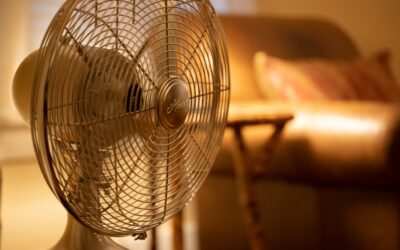
When the air gets stuffy and you don’t want to wait on an HVAC service call, a free standing fan is the fastest, cheapest way to move air through a room. No installation, no ductwork, just plug it in and feel the breeze. But the category covers everything from old-school pedestal fans to sleek bladeless towers, and the right pick depends on your room size, noise tolerance, and whether you care about features like remotes and oscillation. This guide breaks down the types and what actually matters when you’re shopping.
Why Choose a Free Standing Fan
The appeal is simple: portability and zero commitment. Unlike a ceiling fan, a free standing model requires no wiring, no mounting, and no ladder. You move it wherever you need it, from the bedroom at night to the living room by day, and store it away when the season ends.
They’re also dramatically cheaper to run than air conditioning. A fan doesn’t lower the room temperature, but it creates a wind-chill effect on your skin that makes you feel cooler, letting you raise the thermostat a few degrees and cut energy bills. For spot cooling and air circulation, nothing matches the value.
The Main Types Compared
Free standing fans split into a few distinct designs, each with clear strengths. Matching the type to your space is the most important decision you’ll make:
- Pedestal fans: a fan head on an adjustable-height pole; powerful airflow, great for larger rooms
- Tower fans: a tall, slim column with a small footprint; quieter and good for tight spaces
- Bladeless fans: safe around kids and pets, easy to clean, often with air-purifying features
- Floor / box fans on stands: high-volume airflow for garages, workshops, and big open areas
Pedestal fans push the most air and let you direct it precisely by adjusting the height and tilt. Tower fans trade some raw power for a smaller footprint, lower noise, and a more modern look that blends into living spaces.
Sizing the Fan to the Room
Airflow is measured in cubic feet per minute (CFM), and bigger rooms need higher CFM to feel a difference. A small bedroom or office is well served by a compact tower or a smaller pedestal, while a large living room or open kitchen needs a powerful pedestal or a high-CFM floor fan.
Blade diameter is a quick proxy for power on pedestal fans: 16-inch blades suit most rooms, while larger 18-inch and up models move serious air for big spaces. Don’t oversize for a tiny room, though, a too-powerful fan in a small bedroom just feels like a wind tunnel.
Features Worth Paying For
Modern fans pile on features, and some genuinely improve daily use while others are gimmicks. Here are the ones that earn their place:
- Oscillation: the head sweeps side to side to cover a wider area; nearly essential
- Multiple speeds: at least three settings let you fine-tune airflow and noise
- Remote control: genuinely useful, especially for a bedroom fan at night
- Timer: shuts the fan off after a set period so it doesn’t run all night
- Adjustable height and tilt: directs air exactly where you want it
For bedrooms, a quiet model with a remote, a timer, and a sleep mode that gradually lowers the speed is worth the premium. For general cooling, oscillation and strong airflow matter most.
Noise: The Overlooked Factor
Fan noise can make or break the experience, particularly in a bedroom. Some people love a fan’s white noise for sleeping; others find a loud motor or rattling blades maddening. Tower and bladeless fans generally run quieter than pedestal fans at comparable airflow.
Check the decibel (dB) rating if it’s listed, lower is quieter. A fan that hums softly on low but roars on high gives you flexibility, since you can run it gently overnight and crank it up when you need real cooling during the day.
Safety and Placement
Where you put the fan affects both performance and safety. Set it on a flat, stable surface where it won’t tip, and keep the cord clear of walkways. For the best cooling, position the fan to create cross-ventilation, point it toward an open window to push hot air out, or place it across the room from a window to pull cooler air in.
If you have young children or pets, a bladeless fan or one with a fine protective grille is the safer choice, since curious fingers can’t reach the blades. Never run a fan with a frayed cord or damaged grille.
Cleaning and Maintenance
Fans collect dust fast, and a dirty fan blows that dust right into your air while running less efficiently. Bladeless fans are the easiest to clean, just wipe the loop and base. Traditional fans need occasional disassembly to clean the blades and grille.
Unplug the fan, remove the front grille if possible, and wipe the blades with a damp cloth. A vacuum brush attachment lifts dust from the grille. Cleaning every few weeks during heavy use keeps airflow strong and prevents that musty, dusty smell when you first turn it on each season.
Energy Use and Running Costs
One of the strongest arguments for a free standing fan is how little it costs to run. A typical pedestal or tower fan draws somewhere between 30 and 100 watts, a tiny fraction of the 900 to 3,500 watts a window or central air conditioner pulls. Running a fan around the clock costs only a few cents a day in most areas.
The smartest strategy in summer is to pair the two: run the AC a few degrees warmer and let a fan create the wind-chill effect that keeps you comfortable. You feel just as cool while the compressor cycles less, which can meaningfully trim a hot-weather electric bill over a full season.
The Bottom Line
A free standing fan remains one of the smartest, lowest-cost ways to stay comfortable, especially paired with air conditioning to spread cool air and lower your bills. Choose a pedestal for power, a tower for quiet and small footprints, or bladeless for safety and easy cleaning. Match the airflow to your room size, prioritize oscillation and a remote, and keep it clean. Do that, and you’ll have flexible, season-long comfort you can move wherever the heat follows you.