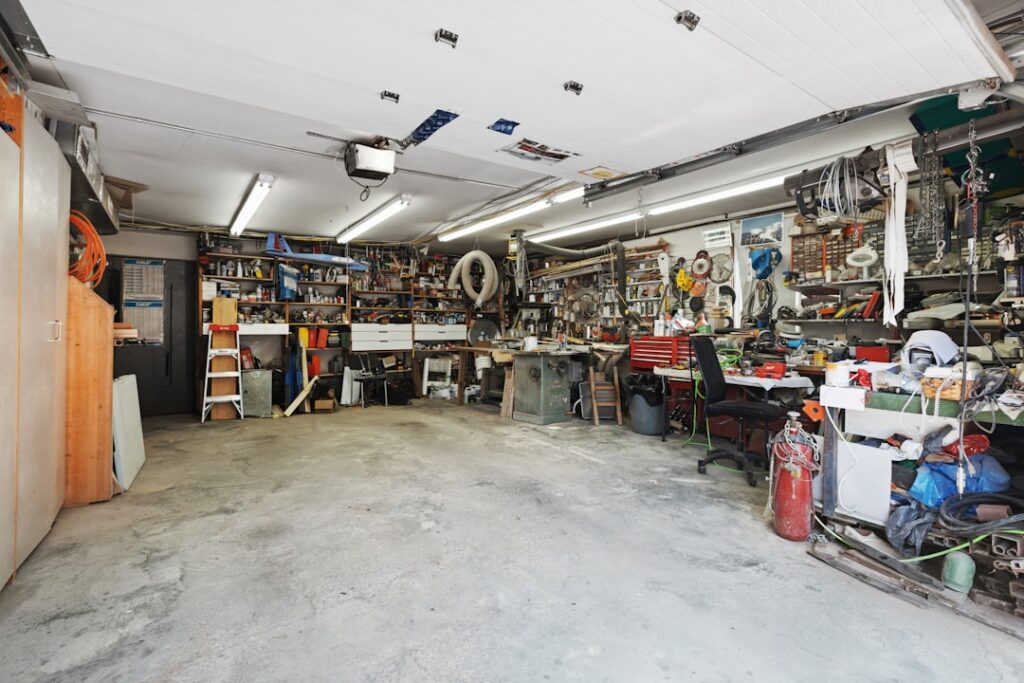
The idea of dropping your car off in the morning and parking it back inside that evening sounds too good to be true, but modern coating chemistry makes it real. One day garage flooring uses fast-curing polyaspartic and polyurea resins that grind, coat, flake, and topcoat a garage in a single working day, replacing the three-to-five-day wait a traditional epoxy floor demands. For busy homeowners, that speed is the whole selling point.
Part of our Epoxy, Concrete & Garage Floors guide — explore the full guide →
This guide explains how one-day systems work, what temperatures they need, how much they cost, and where they fall short. Fast is not automatically better, so understanding the tradeoffs helps you decide whether a same-day floor is worth the premium over conventional epoxy.
What Makes a One-Day Floor Possible
The magic is in the resin. Traditional epoxy cures slowly, needing 12 to 24 hours between coats and up to a week before you can park a vehicle on it. Polyaspartic and polyurea coatings, by contrast, cure through a much faster chemical reaction, often becoming walkable in one to two hours and vehicle-ready in 24 hours or less. That speed lets an installer complete grinding, base coat, flake broadcast, and clear topcoat all before dinner.
A typical one-day system is a hybrid: a polyurea or polyaspartic base coat, a full broadcast of decorative color flakes, and a clear polyaspartic topcoat. The whole build lands around 20 to 30 mils thick, comparable to a quality flake epoxy floor. The difference is timeline, not necessarily thickness, and the fast cure is what compresses a multi-day job into eight or nine hours of work.
If you’re running out of room even with a clean garage floor, a backyard shed takes the overflow — seasonal gear, tools, lawn equipment. And if you’re parking outside while the garage doubles as a workshop, a carport keeps your car covered without needing a second garage.
We may earn a commission when you purchase through our links.
Polyaspartic vs Polyurea: The Chemistry Behind the Speed
Both resins belong to the polyurea family, and installers often use the terms loosely, but there are practical distinctions. Polyurea is extremely fast-setting and abrasion-resistant, frequently used as the base coat because it penetrates and bonds aggressively to prepared concrete. Its rapid set is both a strength and a challenge, since it can cure in minutes and leaves little room for correction.
Polyaspartic is a slower, more forgiving cousin engineered with a longer working window, which is why it is the go-to for the flake broadcast and clear topcoat where an installer needs time to work the surface. Polyaspartic also holds a significant advantage over epoxy: it is UV-stable, so it will not amber or yellow in sunlight the way standard epoxy does. That single property makes one-day systems ideal for garages with sunny doors or windows.
Temperature and Humidity Requirements
Fast-cure resins are more tolerant of cold than epoxy, which is another reason installers favor them. Many polyaspartic systems can be applied in temperatures from as low as 0°F up to about 100°F, whereas epoxy typically stalls below 55°F and refuses to cure properly in a cold winter garage. That cold tolerance means one-day floors can be installed year-round in most climates, a genuine convenience for northern homeowners.
Humidity and slab moisture still matter. Even fast resins can bubble or cloud if applied over a damp slab or in high ambient humidity, so a good installer runs a moisture test and adjusts the primer accordingly. The fast cure actually raises the stakes on prep and mixing, because there is no time to fix mistakes; the coating sets whether or not you are ready. This is precisely why one-day systems reward professional installation over DIY attempts.
The One-Day Installation Timeline
A professional crew follows a tight, well-rehearsed sequence. The morning starts with diamond grinding to open the concrete pores and remove any old coating, followed by vacuuming and repairing cracks and pits with a fast-setting patch. By mid-morning the base coat goes down and flakes are broadcast into it to refusal, meaning the crew keeps throwing chips until the surface will not absorb more.
After the base cures for an hour or two, the crew scrapes and blows off the loose excess flake, then rolls the clear polyaspartic topcoat over the locked chips. By late afternoon the floor is walkable, and it is typically ready for foot traffic that evening and vehicle traffic within 24 hours. Compared with epoxy’s multi-day dance of coats and cure waits, the compressed schedule is the product’s defining advantage.
Cost of One-Day Garage Flooring
Speed and premium chemistry carry a price. One-day polyaspartic flake systems typically run $7 to $12 per square foot installed, with many two-car garages of 400 to 600 square feet totaling $3,000 to $6,000. That is a noticeable step up from a conventional epoxy flake floor at $5 to $9 per square foot, and the difference reflects both the costlier resin and the concentrated labor of a same-day crew.
Polyaspartic materials cost roughly two to three times more per gallon than standard epoxy, which explains much of the premium. Because the working time is so short, these floors are almost never sold as DIY kits; the value is in the trained crew that can execute the whole system before the resin sets. When you weigh the cost, factor in the convenience of losing your garage for one day instead of a week, plus the UV stability you would not get from epoxy at any price.
Pros of Going With a Same-Day System
The advantages are real and go beyond speed. You reclaim your garage in a single day, with vehicles back inside within 24 hours instead of a week. The polyaspartic topcoat is UV-stable, so it resists the yellowing that plagues epoxy near sunlight. These coatings are also more flexible than rigid epoxy, which helps them tolerate the seasonal expansion and contraction of a concrete slab without cracking.
Durability is excellent as well. Polyaspartic and polyurea resist abrasion, chemicals, road salt, and hot tire pickup better than most epoxies, and the finish resists staining from oil and brake fluid. The high-gloss clear coat is easy to sweep and mop, and the flake texture adds slip resistance. For a garage that doubles as a workshop or hobby space, the combination of toughness, quick return to service, and color stability is hard to beat.
Cons and When Epoxy Still Wins
One-day systems are not perfect. The premium cost is the obvious drawback, and for a homeowner on a tight budget a conventional epoxy floor delivers most of the durability for less money if you can spare the extra days. The fast cure also demands flawless preparation and professional skill; there is zero margin to fix a run, a missed spot, or a moisture problem once the resin flashes off.
The rapid set can also produce a slightly less mirror-smooth finish than a patient multi-coat epoxy in expert hands, and a rushed or inexperienced crew can trap air or leave roller marks that cannot be corrected. Choose an installer with a documented track record specifically in one day garage flooring, ask for references and photos of local jobs, and confirm the mil thickness and warranty in writing. Done by the right crew, a same-day floor is a superb long-term surface; done by a rushed one, the speed becomes a liability.
There is also a comfort tradeoff worth mentioning: some polyaspartic and polyurea coatings carry a strong solvent odor during application, and the fast cure means fumes are intense but short-lived. Ventilation matters, and most crews keep the garage door open throughout, so plan for the space to air out for a few hours even though the floor itself is walkable quickly. Once cured, the coating is inert and odorless.
Caring for a Same-Day Floor
Maintenance is one area where one-day systems shine, because the seamless, non-porous surface leaves nowhere for dirt or oil to hide. Routine care is simply sweeping or dust-mopping, then mopping with a mild cleaner and warm water when needed. Avoid harsh solvents and citrus degreasers, which can dull the clear coat over time, and skip abrasive scrubbing pads that could scratch the gloss.
For the longest life, wipe up automotive fluids reasonably promptly, place a mat under a project bike or a welding area, and use furniture glides under heavy shelving. Because polyaspartic resists road salt and most household chemicals, a garage floor in a snow-belt climate handles winter brine well, but rinsing off accumulated salt each spring keeps the finish looking its best. Treated this way, a quality same-day floor commonly holds its appearance for fifteen to twenty years before it needs a fresh clear coat rather than a full replacement.