An ornamental aluminum fence delivers the classic, upscale look of wrought iron without the rust, heavy weight, or constant repainting that real iron demands. Lightweight yet strong, powder-coated aluminum fencing has become the go-to choice for homeowners who want to define property boundaries, enclose a pool, or frame a garden with a refined, timeless appearance. It resists corrosion, needs almost no maintenance, and installs on sloped or level ground with ease, making it one of the best long-term values in residential fencing.
Part of our Decks & Outdoor guide — explore the full guide →
- What Makes Aluminum Fencing "Ornamental"
- Grades of Aluminum Fence
- Key Benefits of Ornamental Aluminum
- Popular Styles and Options
- Ideal Uses for Aluminum Fencing
- Cost of an Ornamental Aluminum Fence
- Installation Overview
- Maintenance and Longevity
- Aluminum vs Wrought Iron vs Steel
- Understanding Powder-Coat Finishes
- Gates, Hardware, and Accessories
- Handling Sloped and Uneven Terrain
- The Bottom Line
What Makes Aluminum Fencing “Ornamental”
Ornamental aluminum fencing refers to decorative picket-style panels that mimic the elegant vertical bars and finials of traditional wrought iron. Instead of solid privacy panels, you get an open, see-through design that looks graceful while still marking a boundary. The aluminum is extruded into hollow pickets and rails, then finished with a durable powder coating, most often glossy black, that gives it the classic iron appearance while remaining completely rust-proof.
Grades of Aluminum Fence
Aluminum fencing is sold in strength grades so you can match the product to the job:
- Residential grade: lightest and most affordable, ideal for gardens, decorative boundaries, and light-duty yards.
- Commercial grade: heavier rails and pickets for higher-traffic properties and stronger enclosures.
- Industrial grade: the thickest, strongest profiles for maximum security and durability.
For most homes, residential or commercial grade offers the right balance of strength and cost. Pool enclosures often call for commercial grade to satisfy safety codes.
Key Benefits of Ornamental Aluminum
- Rust-proof: aluminum does not corrode like iron or steel, even in coastal and wet climates.
- Low maintenance: the powder coat never needs painting; just rinse it clean.
- Lightweight: far easier to handle and install than iron.
- Elegant appearance: the look of wrought iron at a fraction of the upkeep.
- Rackable panels: panels flex to follow sloped terrain without gaps or steps.
- Long warranties: quality brands offer lifetime finish warranties.
Popular Styles and Options
- Flat-top: a clean, simple horizontal top rail for a modern look.
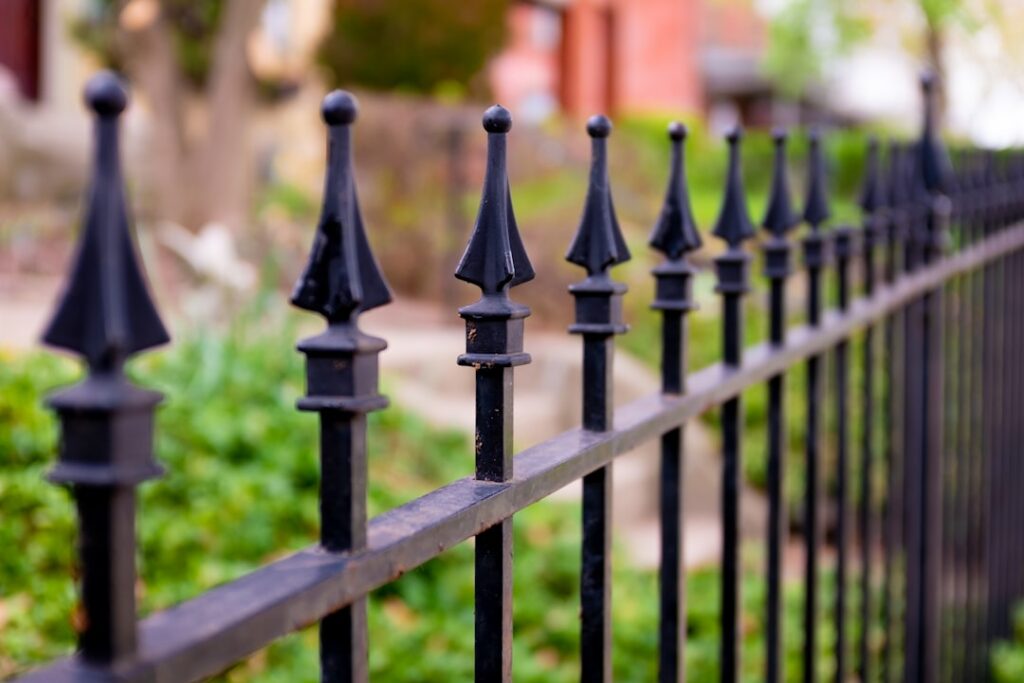
- Spear-top (finials): pointed picket tops for classic elegance and added deterrence.
- Puppy pickets: extra bottom pickets that close the gap to keep small pets contained.
- Staggered or arched: decorative top profiles for curb appeal.
- Two- and three-rail designs: more rails increase strength and height.
Heights typically range from 3 feet for gardens to 6 feet for security and privacy screening, with pool codes often requiring at least 4 feet.
Ideal Uses for Aluminum Fencing
Ornamental aluminum shines in specific applications:
- Pool enclosures: the open design meets safety codes while preserving sightlines; self-closing, self-latching gates are required.
- Front-yard boundaries: defines the property with elegance without blocking views.
- Garden and landscape borders: a refined frame for plantings.
- Sloped lots: rackable panels follow grade changes smoothly.
Because it is see-through, aluminum is not the choice when full privacy is the goal; wood or vinyl privacy fencing serves better there.
Cost of an Ornamental Aluminum Fence
- Material only: roughly $25 to $45 per linear foot depending on grade and height.
- Professional installation: adds $20 to $40 per linear foot.
- Total installed: commonly $35 to $60 per linear foot.
- Gates: $200 to $600 each depending on size and hardware.
Enclosing a typical backyard of 150 linear feet might run $5,000 to $9,000 installed, competitive with quality wood and far cheaper over its lifetime thanks to zero repainting.
Installation Overview
Aluminum fencing is one of the more DIY-friendly systems because the panels and posts are pre-fabricated:
- Plan and call 811: lay out the line and always locate underground utilities first.
- Set the posts: dig post holes about 24 to 30 inches deep, set posts in concrete, and keep them plumb and evenly spaced to match panel width.
- Attach panels: bracket the pre-assembled panels to the posts, racking them to follow any slope.
- Hang gates: install self-closing hinges and latches, especially on pool gates.
- Add caps: finish posts with decorative caps.
Proper post depth and spacing are the keys to a straight, sturdy fence, so measure carefully before setting concrete.
Maintenance and Longevity
Aluminum fencing is about as carefree as fencing gets. The powder-coat finish resists chipping and fading, and aluminum will never rust. Routine care involves nothing more than an occasional rinse with a hose to remove dust and pollen, or a wash with mild soap for stubborn grime. If the finish is ever scratched down to bare metal, a matching touch-up paint prevents any cosmetic oxidation. With this minimal care, a quality aluminum fence easily lasts 30 years or more.
Aluminum vs Wrought Iron vs Steel
- Aluminum: rust-proof, lightweight, low-maintenance, and mid-priced; the best all-around residential choice.
- Wrought iron: beautiful and extremely strong but heavy, expensive, and prone to rust requiring regular repainting.
- Steel: stronger than aluminum and often cheaper, but heavier and susceptible to rust if the coating is breached.
Understanding Powder-Coat Finishes
The durability that makes aluminum fencing so appealing comes largely from its powder-coat finish, and understanding it helps you judge quality. Powder coating is a dry finishing process in which pigmented powder is electrostatically applied to the aluminum and then baked on, forming a hard, uniform shell that bonds far more durably than liquid paint. The best fences use an architectural-grade AAMA-rated powder coat that resists chipping, chalking, and fading for decades. When comparing products, look for:
- AAMA 2603 or higher ratings: indicating tested weather resistance.
- A thick, even coating: with no thin spots at edges or welds.
- A long finish warranty: often 20 years or lifetime on quality brands.
- A pre-treatment step: that etches the aluminum so the coating adheres firmly.
A quality powder coat is the reason a good aluminum fence never needs repainting, so it is worth paying a little more for a well-finished product rather than a bargain fence that may chalk within a few years.
Gates, Hardware, and Accessories
A fence is only as functional as its gates and hardware, and aluminum systems offer a full range of accessories to complete the installation:
- Self-closing hinges: required on pool gates to swing shut automatically.
- Self-latching gate latches: latch on their own and can be positioned out of a child’s reach for pool safety.
- Magnetic and key-lockable latches: for security and convenience.
- Decorative post caps and finials: to customize the look.
- Walk gates and double drive gates: sized for pedestrians or vehicles.
For pool enclosures in particular, local codes dictate specific gate hardware, self-closing, self-latching, and opening outward away from the pool, so confirm these requirements before ordering. Investing in quality stainless-steel hardware ensures the gates operate smoothly and resist corrosion just as well as the fence panels themselves.
Handling Sloped and Uneven Terrain
One of aluminum fencing’s standout advantages is how gracefully it follows changing ground, and understanding your options helps you plan a clean-looking run. There are two main approaches:
- Racked (raked) panels: the pickets stay vertical while the top and bottom rails follow the slope, keeping a smooth, continuous line. Most residential panels rack a certain number of inches per section.
- Stepped panels: each panel stays level and steps down the slope, creating a staircase effect with gaps under the panels on steep grades.
Racking produces the more polished look and avoids leaving gaps that pets could slip through, which is why rackable panels are so popular. On very steep terrain, however, stepping may be necessary. Confirm the maximum rack capacity of the panels you buy against the slope of your yard, and set your posts to accommodate the chosen method before pouring concrete.
The Bottom Line
An ornamental aluminum fence gives you the timeless elegance of wrought iron with none of its headaches. It never rusts, never needs painting, follows sloped ground with rackable panels, and installs quickly thanks to prefabricated sections. Choose a grade suited to your purpose, residential for decorative borders and commercial for pool enclosures and security, verify local code on height and pool-gate hardware, and set your posts deep and true in concrete. Do that, and you will enjoy a graceful, virtually maintenance-free fence that protects and beautifies your property for decades to come.