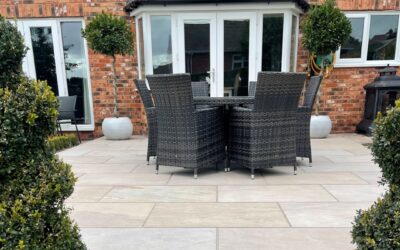
Backyard renovations have grown into a $20 billion-plus segment of US home improvement, with outdoor living spaces now considered a primary room rather than a seasonal extension. The outdoor flooring market reflects that shift, offering composite decking, 20 mm porcelain pavers, Brazilian hardwoods, snap-down interlocking tiles, and stamped concrete overlays at price points spanning $3 to $40 per square foot installed. Knowing which segment fits your project saves both money and years of disappointment.
Part of our Windows & Doors guide — explore the full guide →
- Market Segments and Where They Fit
- Composite Decking Trends
- Porcelain Paver Boom
- Tropical Hardwoods Hold the Premium Tier
- Pricing Snapshot for a 400 Sq Ft Patio
- Climate Matters More Than Aesthetics
- Underlayment and Substructure Costs
- Slip Resistance and Safety
- Trends to Watch
- Permitting and Local Codes
- Installer Credentials That Matter
- How to Approach Your Project
Market Segments and Where They Fit
The market splits roughly into five categories by use case. Composite decking dominates raised deck and porch construction. Porcelain pavers serve patios, pool decks, and rooftop terraces over pedestal systems. Tropical hardwoods like ipe and cumaru remain the top choice for marine and high-traffic boardwalks. Concrete pavers and stamped overlays compete in ground-level patio applications. Snap-down interlocking tiles serve rentals and quick balcony refreshes.
Once your patio flooring is in place, think about how you’ll use the space. A gazebo adds shade and structure, while a good outdoor furniture set turns it into a spot you’ll actually want to hang out in. A deck box is also worth considering if you need somewhere to stash cushions and outdoor gear.
We may earn a commission when you purchase through our links.
Composite Decking Trends
Capped wood-plastic and PVC composites continue to take share from pressure-treated lumber. Trex leads in volume with its Enhance, Select, and Transcend lines at $4 to $8 per linear foot, while TimberTech AZEK leads in premium PVC at $7 to $11 per linear foot. Deckorators has gained market share with mineral-filled cores that resist water absorption better than wood composites. Installed costs range $10 to $24 per square foot depending on substructure complexity.
Porcelain Paver Boom
The fastest-growing segment is 20 mm porcelain pavers installed dry over plastic pedestal systems like Eterno Ivica and Buzon. Brands like Florim, Daltile, MSI, and Crossville offer 24-by-24 and 24-by-48 pavers in wood, stone, and concrete looks at $7 to $20 per square foot. The pedestal system lifts pavers 1 to 14 inches above the substrate, allowing utilities to run underneath and water to drain freely. Installed costs run $18 to $35 per square foot, premium but maintenance-free for decades.
Tropical Hardwoods Hold the Premium Tier
Brazilian ipe, cumaru, garapa, and tigerwood remain the gold standard for marine boardwalks, premium decks, and pool surrounds. Ipe rates 3,684 on the Janka hardness scale, harder than most steel-toed work boots. Material runs $9 to $18 per square foot for kiln-dried 1×6 deck boards, with installed costs reaching $20 to $32 per square foot because of stainless steel fasteners, pre-drilling every board, and annual oiling with products like Penofin Brazilian Hardwood Formula.
Pricing Snapshot for a 400 Sq Ft Patio
- Pressure-treated pine deck: $1,200 to $2,400
- Stamped concrete overlay: $3,200 to $7,200
- Snap-down composite tiles: $1,600 to $3,600
- Capped composite deck: $4,000 to $9,600
- Porcelain pavers on pedestals: $7,200 to $14,000
- Ipe hardwood deck: $8,000 to $12,800
Climate Matters More Than Aesthetics
Coastal salt environments destroy mild steel fasteners within 5 to 10 years. Specify 316 stainless steel or coated structural screws like FastenMaster TrapEase for any deck within 5 miles of saltwater. Freeze-thaw climates favor porcelain pavers and PVC over wood-plastic composites that can absorb water through cap micro-cracks. Sunbelt climates with sustained 100-plus-degree exposure benefit from light-colored surfaces and ventilated substructures to reduce heat absorption.
Underlayment and Substructure Costs
The visible surface is often less than half the total project cost. A typical 400-square-foot raised deck includes:
- Pressure-treated framing and footings: $2,500 to $6,000
- Joist tape and flashing: $400 to $900
- Stairs and railings: $1,800 to $5,500
- Hidden fasteners and trim: $600 to $1,400
- Permits and inspection: $200 to $800
Factor these into the budget early, not as surprises at signing.
Slip Resistance and Safety
Pool decks, hot tub surrounds, and shaded patios that stay wet need slip-resistant surfaces. Look for DCOF wet ratings of 0.42 or higher on porcelain pavers. Composite decking tends to score 0.50 to 0.65 wet, and brushed or grooved hardwoods deliver similar performance. Smooth painted concrete is the worst performer, often dropping below 0.30 when wet. Add anti-slip clear coats like Sure Step or Slip Doctors GS-1 for $1 to $2 per square foot on slick surfaces.
Trends to Watch
Two trends shaped 2024 and 2025 in this category. First, large-format porcelain plank pavers in 8-by-48 wood looks rivaled traditional composite decking aesthetically while delivering maintenance-free performance. Second, integrated lighting and low-voltage systems became standard in mid-tier composite installs from Trex Outdoor Lighting and TimberTech Beacon Pro. Both trends increased upfront cost by roughly 8 to 15 percent but added measurable resale value to outdoor projects.
Permitting and Local Codes
Most US jurisdictions require permits for any deck attached to a house or rising more than 30 inches above grade. Inspectors typically check ledger board attachment, joist spacing, post sizing, and railing height. Skipping permits saves time upfront but costs dearly on resale when a home inspector flags non-permitted work. Pull the permit, schedule inspections at the milestones the building department requires, and keep all documentation in the home’s permanent file. Insurance claims after storm damage almost always require permit documentation.
Installer Credentials That Matter
The North American Deck and Railing Association (NADRA) certifies professional deck builders through testing and continuing education. NADRA Master Deck Professional status indicates the top tier of the trade. Trex PRO Platinum, TimberTech Registered Contractor, and Fiberon Master Contractor designations come from each manufacturer and require completed certification programs. Hiring a certified pro adds 10 to 20 percent to the labor bill but ensures the warranty stays intact and the workmanship matches the material investment.
How to Approach Your Project
Start with how the space will actually be used. A weekly grilling spot for a family of four needs a different floor than a quarterly host-the-neighbors patio. Budget the substructure first and the finish surface second, because failing framing makes any deck unsafe regardless of the boards on top. Get three written bids from licensed deck builders, verify references on jobs completed in the past 24 months, and commit only when the warranty terms and material specs are on paper.
Prefer to explore on your own?
See how new flooring looks in your actual room in seconds — free, no signup.
Try the free Floor Studio →