Most “outdoor” rugs sold at big box stores fail within 18 months — they fade in UV, hold water against the deck and rot the boards beneath, or grow mold along the underside in the first humid week of summer. A genuinely outdoor rug waterproof enough to live on a patio year-round comes down to material, weave construction, and backing. After cycling through dozens of rugs on covered porches, uncovered decks, and pool surrounds across three climates, the same handful of buying criteria separate the rugs that look great after three years from the ones you toss after one.
Part of our Roofing guide — explore the full guide →
What “Waterproof” Actually Means for Outdoor Rugs
No rug is fully waterproof in the sense that water cannot pass through it. The relevant property is whether the rug absorbs water (bad — leads to mold, rot, and weight gain) or sheds it (good — water passes through and dries quickly).
The best outdoor rugs use synthetic fibers that absorb less than 1% of their weight in water and weave constructions that allow drainage. They get wet in a downpour, drain within 30 minutes, and dry fully in a few hours of sun. Materials like wool, cotton, and jute are not waterproof — they hold water for days, mildew quickly, and have no place outdoors.
Best Materials for Truly Waterproof Outdoor Rugs
Three synthetic materials dominate the outdoor rug market, each with strengths:
- Polypropylene (olefin): Most common. Hydrophobic, fade-resistant, easy to hose off. Less soft underfoot. Found in most $50-200 rugs
- PET (recycled plastic bottles): Eco-friendly story. Soft hand feel close to indoor rugs. Sold by Ruggable, Lorena Canals, and most major brands now
- Solution-dyed nylon: Premium. Color goes through the entire fiber, so it does not fade. Common in Sunbrella-branded rugs ($300-1,500)
Skip anything labeled “indoor/outdoor” if it contains any natural fibers. Cotton, wool, jute, and sisal in any blend will fail outdoors. The one exception is polypropylene rugs styled to look like jute — these handle weather well and give the natural look.
Top Brands and Models
Brands that consistently produce rugs that survive multiple seasons:
- nuLOOM polypropylene flatweaves ($60-200 for 5×8): Best value pick. Available in dozens of patterns at Wayfair, Amazon, and Costco
- Ruggable Outdoor Collection ($150-400 for 5×7): Two-piece system with washable rug cover and grippy pad. Cover is machine washable
- Loloi Rainier ($180-500): PET fiber, soft enough to mistake for indoor. Fade-resistant
- Sunbrella by RugVista ($400-1,500): Highest UV resistance on the market. The 10-year fade warranty is genuine
- Tantillo by Surya ($200-600): Tribal and global patterns, polypropylene, holds up well in coastal salt air
- IKEA TOFTBO ($30-80): Cheap, basic, surprisingly durable. Best for covered porches where it gets indirect weather
Avoid mystery-brand Amazon rugs without a clear material spec. Many sellers blend plastic backing with hidden cotton or jute layers that rot underneath where you cannot see.
Backing Matters as Much as the Top
The single biggest cause of deck and concrete patio damage from outdoor rugs is the wrong backing. A rubber or latex backing traps moisture between the rug and the surface beneath, leading to:
- Black mold on the deck boards or concrete underneath
- Discoloration of stain or sealer on wood decks
- Wood rot starting at the rug perimeter
For decks and any surface that needs to breathe, choose a flatweave rug with no rubber backing. Use a separate Ruggable-style grip pad designed for outdoor use that allows airflow underneath. For pool decks and concrete, rubber-backed rugs are fine but lift and hose underneath weekly.
Sizing and Placement
Common sizing mistakes ruin the look of outdoor furniture groupings:
- Dining set: Rug should extend at least 24 inches beyond the table on all sides so chair legs stay on the rug when pulled out. A 6 ft table needs a 9 x 12 rug minimum
- Conversation set: All four legs of the sofa and chairs on the rug looks intentional. Front legs only is acceptable but feels less anchored
- Small balcony: 4 x 6 or 5 x 7 covers the usable area without crowding
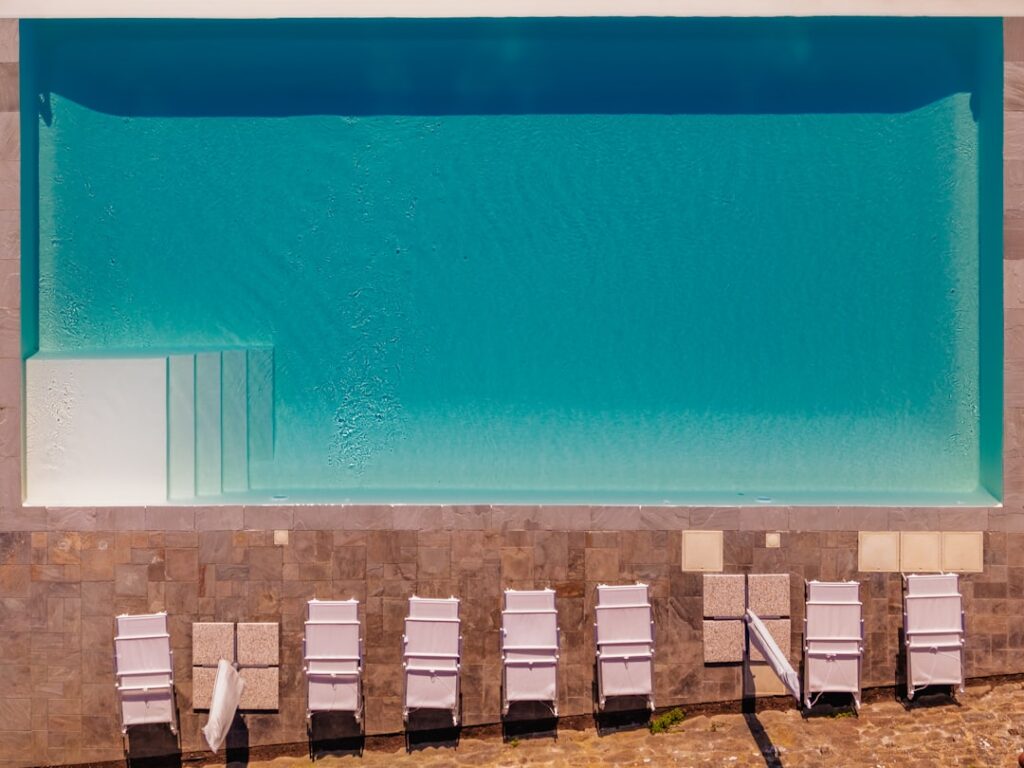
- Pool deck: Strip rugs 2 ft x 5 ft along the long edge work better than large rugs that stay perpetually wet
Leave at least 6 inches of patio surface visible around the rug perimeter to define the seating area visually.
Care That Doubles the Lifespan
Even the best outdoor rug fails fast without basic upkeep:
- Hose down monthly to flush out pollen, dust, and salt
- Lift and air-dry the underside every 4-6 weeks during humid months
- For stains, scrub with mild soap (Dawn) and a soft brush, then rinse thoroughly
- Pretreat oil and grease stains within 24 hours — set-in oil never fully comes out of polypropylene
- Roll and store indoors during winter in cold-climate regions. Even waterproof rugs degrade faster from freeze-thaw cycles
- Apply a UV protectant spray (303 Aerospace Protectant, $14) twice a season for solid-color rugs
If a rug develops a musty smell, mix 1 cup vinegar in 1 gallon water, scrub the entire rug, rinse thoroughly, and dry in direct sun for at least 6 hours. Sun is the best mildew killer there is.
What You Will Spend
For a 5×8 outdoor rug in 2026, expect $60-150 for an entry polypropylene rug, $180-400 for a quality PET or premium poly rug, and $400-1,500 for solution-dyed nylon (Sunbrella) options that genuinely last 7-10 years. The math usually favors mid-tier — a $200 rug replaced every 3 years beats both the $80 disposable and the $1,200 specialty option for most homeowners.
Common Buying Mistakes
Buying based only on pattern without checking material, ignoring backing on a wood deck, sizing too small for the furniture, and leaving the rug in standing water during winter all kill outdoor rugs prematurely. Start with material, confirm the backing, then choose pattern within those constraints.