A patio that bakes in afternoon sun is a patio nobody uses. The right outdoor sun shades for patio areas can drop the surface temperature by 15 to 25°F, block up to 95 percent of UV rays, and turn an unusable slab into the most popular room in the house. The catch is that there are half a dozen very different shade systems, ranging from a $40 umbrella to a $6,000 motorized screen, and the best pick depends on your climate, your budget, and how much sun you are fighting. Here is how a contractor sorts through the options.
Part of our Decks & Outdoor guide — explore the full guide →
- Shade Sails: Big Coverage, Small Price
- Retractable Awnings: Shade on Demand
- Pergola Covers and Louvered Roofs
- Roller and Screen Shades
- Patio Umbrellas: The Easy Entry Point
- Matching the Shade to Your Climate
- Installation: DIY or Hire a Pro
- Maintenance and Fabric Care
- What to Budget and Where to Spend
Shade Sails: Big Coverage, Small Price
Shade sails are triangular or square panels of tensioned fabric anchored to posts, walls, or the house. They cover a lot of square footage for the money and bring a clean, modern look. A single triangular sail spanning a seating area runs $50 to $200 for the fabric alone, with hardware and posts adding $150 to $500 if you do not already have anchor points.
The fabric to look for is HDPE knitted shade cloth, which breathes and lets hot air escape while blocking 90 to 95 percent of UV. Avoid solid vinyl sails in hot climates; they trap heat underneath and can billow like a boat sail in wind. Angle every sail with at least a 20 to 30 percent slope so rain sheds off instead of pooling.
Retractable Awnings: Shade on Demand
A retractable awning mounts to the house wall and extends over the patio with a hand crank or motor, then rolls back flush when you want sun or need to protect it from a storm. This is the go-to for patios directly off the back of the house. Manual models start around $300 to $800, while motorized units with wind sensors run $1,500 to $4,000 installed depending on width.
- Projection (how far it reaches out) typically ranges from 8 to 12 feet.
- Width commonly spans 10 to 20 feet to cover a full seating and dining zone.
- Acrylic marine fabric like Sunbrella resists fading and mildew and carries 10-year warranties.
The big advantage is control. You get shade when the sun is brutal and open sky when you want it, and retracting the awning in bad weather dramatically extends its lifespan.
Pergola Covers and Louvered Roofs
If you already have a pergola, adding a shade solution transforms it. A simple fabric canopy stretched between the beams costs $100 to $400. A retractable pergola canopy that slides on a track runs $600 to $2,000. At the top end, a motorized aluminum louvered roof lets you tilt the slats to dial in sun, shade, or full weather protection, and those systems run $4,000 to $12,000 installed.
Louvered roofs are the premium choice for good reason: they close tight against rain, open to let heat escape, and turn a pergola into a genuine three-season room. For homeowners who want one permanent, do-it-all solution, this is where the money goes.
Roller and Screen Shades
Outdoor roller shades mount above an opening and drop down like an interior blind, but in weather-rated mesh. They are ideal for blocking low-angle western sun that horizontal shades miss, and for screening a porch or pergola side that faces the glare. Manual roller shades cost $100 to $400 per opening; motorized versions run $500 to $1,500 each.
The mesh comes in openness factors from 1 to 14 percent. A tighter 3 to 5 percent weave blocks more sun and offers more privacy, while a 10 percent weave preserves the view. In a hot climate, lean toward the tighter weave on west-facing exposures where the afternoon sun does the most damage.
Patio Umbrellas: The Easy Entry Point
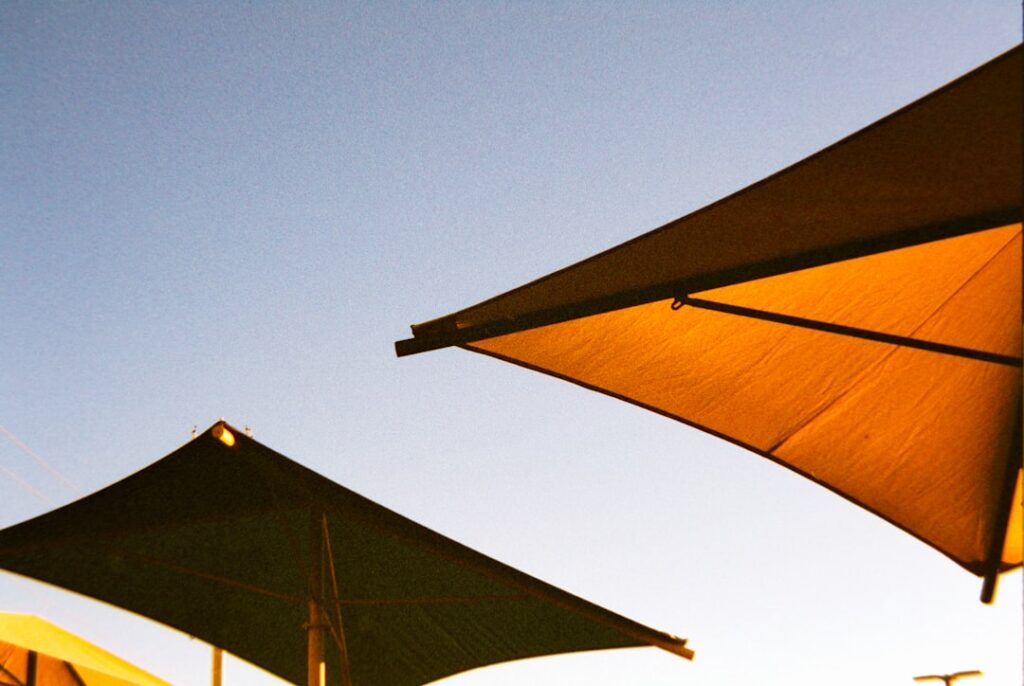
Never underestimate a good umbrella. A quality cantilever or offset umbrella shades a full seating area without a pole in the middle of your table, tilts to track the sun, and requires zero installation. Standard market umbrellas run $40 to $150, while a sturdy 10 to 13-foot cantilever model with a solid base costs $200 to $600.
Spend on the frame and the base, not just the canopy. Aluminum or fiberglass ribs survive wind that snaps cheap steel, and a base heavy enough for your umbrella size, often 50 to 125 pounds, keeps it from tipping. Solution-dyed acrylic canopies outlast polyester by years in direct sun.
Matching the Shade to Your Climate
The right choice depends heavily on where you live. In the hot, dry Southwest, breathable HDPE shade sails and louvered roofs that vent heat are ideal. In humid Southern climates, prioritize mildew-resistant acrylic fabrics and good airflow. In windy coastal or plains areas, retractable systems you can close down beat fixed sails that catch gusts. And in mixed climates with real winters, a retractable awning or motorized system you can stow protects the fabric from snow load and ice.
UV protection ratings matter too. Look for a UPF or UV-block rating of 90 percent or higher on any fabric, especially if children or older adults use the space. The difference between a 70 percent and a 95 percent block is felt directly on your skin.
Installation: DIY or Hire a Pro
How the shade mounts determines whether it is a weekend project or a job for a contractor. Umbrellas need no installation at all beyond setting a base. Shade sails are a very doable DIY project if you are comfortable digging post holes and setting anchors, though getting the tension and drainage angles right takes some care. Roll-up and simple roller shades bolt to an existing structure and are within reach of most handy homeowners.
Where I steer people toward a pro is anything motorized, hardwired, or structurally demanding. Retractable awnings carry real load and must lag into wall framing or masonry with the correct anchors; a failed mount can drop a heavy awning and damage the wall. Louvered roofs and large exterior screen systems involve electrical work, precise leveling, and sometimes permits. For those, the installation labor of $500 to $2,000 buys you a system that is anchored correctly and warrantied. Trying to save that money on a heavy motorized unit is a false economy if it pulls loose in the first windstorm.
Maintenance and Fabric Care
A shade is only a bargain if it lasts, and lasting comes down to simple care. Hose off shade fabric a couple of times a season to remove pollen, dust, and bird droppings before they set into stains. For acrylic marine fabrics like Sunbrella, a mild soap-and-water scrub handles most grime, and the solution-dyed fibers resist fading for a decade or more. HDPE shade cloth needs almost nothing beyond an occasional rinse.
The single biggest thing you can do to extend the life of any retractable shade is to bring it in during storms and high wind. Wind is what shreds fabric and bends frames, so retract awnings and roll up shades when a storm is coming, and stow removable sails and umbrellas for the winter in freeze-prone climates. Check hardware once a season, tightening any loosened bolts and lubricating moving parts on retractable mechanisms. A shade that gets this basic attention will outlast one that is left out in every storm by many years, which changes the real cost per season dramatically.
What to Budget and Where to Spend
For a modest patio, a $150 umbrella or a $250 shade sail setup delivers real relief for very little money. A mid-range retractable awning at $1,500 to $2,500 is the sweet spot for most homeowners who want shade on demand off the back of the house. And if you are building a lasting outdoor living space, a louvered roof or high-end motorized system at $5,000 and up pays off in daily usability and home value.
Whatever you choose, spend on fabric quality and mounting hardware rather than cutting corners. The best outdoor sun shades for patio use are the ones built with UV-stable fabric and anchored to survive your local wind, because a cheap shade that shreds in one storm costs more than the good one you should have bought first.
If you are unsure where to start, spend a few days noticing when and where the sun actually hits your patio. Track which direction the glare comes from and what time the space becomes unusable, then choose a shade that blocks that specific exposure. A west-facing seating area punished by late-afternoon sun needs a different solution than a south-facing patio that bakes at midday. Matching the shade to your real sun pattern, rather than buying the first attractive option, is what turns an unused slab into a space you actually enjoy.