Most American homeowners underbuild their patios by 30 to 40 percent. A six-person dining table needs a 12 by 14 foot pad just for chairs to slide back, plus walk-around space. Planning a patio area starts with what you’ll actually do there, then works backward through dimensions, materials, drainage, and budget. This guide covers each step the way a contractor would walk you through it.
Part of our Decks & Outdoor guide — explore the full guide →
Sizing for How You’ll Use It
The footprint depends on activities, not on what fits against the back of the house. A small bistro setup needs 10 by 10 feet. A six-person dining table with chairs requires 12 by 14 minimum, 14 by 16 if you want the space to feel generous. An outdoor sectional with coffee table runs 14 by 16, and adding a fire pit at one end pushes that to 16 by 20.
Add a 36-inch walkway perimeter when the patio butts into landscaping or other zones, plus a 48-inch clear path between dining and lounging areas if you plan both. Most undersized patios feel cramped because the design ignored circulation.
Materials and Real Pricing
Poured Concrete
The lowest cost and most versatile. Standard broom-finished concrete runs $6 to $10 per square foot installed. Stamped concrete (looks like stone or brick) doubles that to $12 to $20. Concrete pours fast, takes any shape, and lasts 25 to 35 years. The downside is hairline cracking, which is essentially unavoidable, and limited repair options.
Concrete Pavers
Belgard, Techo-Bloc, Pavestone, and Unilock concrete pavers run $14 to $22 per square foot installed. They handle freeze-thaw better than poured slab, can be lifted and reset if settlement occurs, and offer dozens of color and texture options. Permeable pavers ($16 to $26 per sq ft) handle stormwater on-site, a code requirement in some jurisdictions.
Flagstone
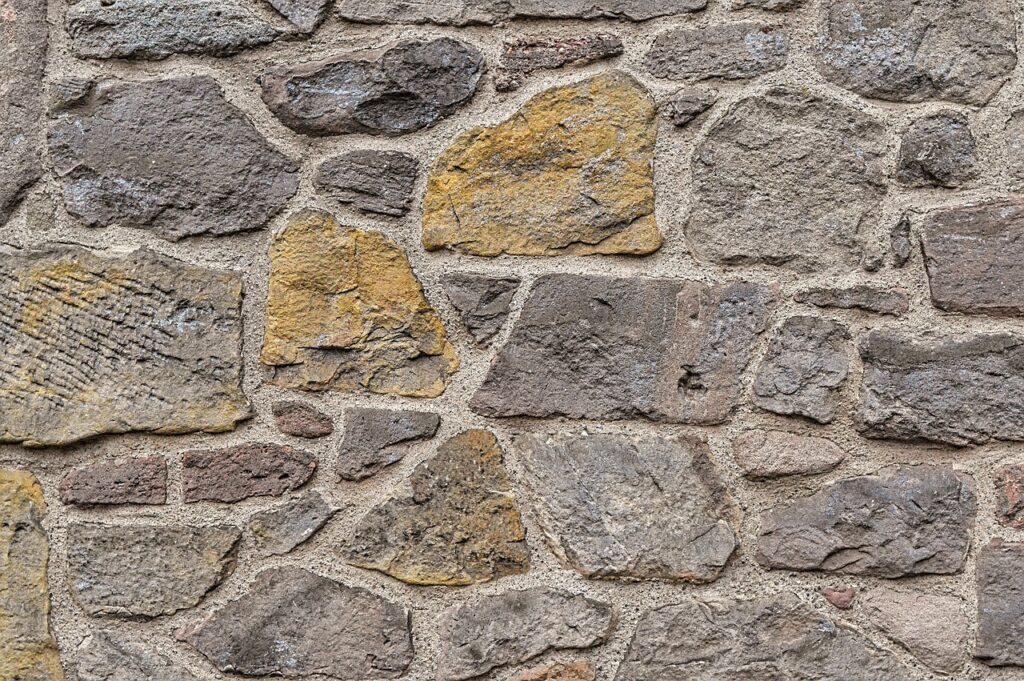
Bluestone, Pennsylvania flagstone, and Arizona sandstone in irregular or cut-pattern set on mortared concrete base run $20 to $32 per square foot. The natural variation looks high-end, and the rough surface is non-slip wet or dry. Bluestone in particular develops a patina that improves with age.
Travertine
Tumbled travertine pavers run $14 to $22 per square foot installed. The stone stays cool barefoot (important in southern climates), has a natural anti-slip texture, and pairs well with pool decks. Use only filled-and-honed grade for patios, since unfilled travertine collects debris in its pits.
Brick
Clay brick set in sand or mortar runs $15 to $25 per square foot. Classic look, handles freeze-thaw, narrow joints reduce weed pressure. Set patterns (herringbone, basket weave, soldier course) add labor cost but read intentional.
Subbase Construction Determines Lifespan
Cheap installs fail at the subbase, not the surface. The right specification varies by climate but the floor of acceptable construction looks like this: excavate 7 to 10 inches below finished grade, install 4 to 6 inches of compacted Class 5 (3/4 inch minus aggregate) in 2-inch lifts each compacted with a 200-pound plate compactor, then 1 inch of bedding sand under pavers or 4-inch reinforced slab for concrete and flagstone.
Skipping a single 2-inch compacted lift creates settlement within 18 months. Skip the geotextile fabric between subgrade and aggregate (Mirafi 140N) and you get aggregate migration into the soil base, especially in clay regions.
Drainage Is Not Optional
Every patio area needs to drain away from the house at a minimum slope of 1/4 inch per foot, or 2 percent grade. For a 16-foot deep patio, that’s 4 inches of fall from house to far edge. Less slope and water sits at the foundation; more slope and furniture wobbles on the surface.
French drains, channel drains (NDS Spee-D or Aco Drain), or pop-up emitters at the patio edge handle runoff. In areas with heavy soil, plan an exit point at least 10 feet from the foundation. Permeable pavers eliminate this concern by infiltrating water through the joints.
Shade, Privacy, and Comfort
A patio that bakes in afternoon sun goes unused. Plan shade through one of three approaches:
- Pergola or arbor: a 12 by 14 cedar or pressure-treated structure runs $4,500 to $9,000 built, $1,500 to $3,500 in kit form from Sunjoy or Backyard Discovery
- Retractable awning: SunSetter or Marygrove powered awnings run $2,800 to $6,000 installed on the house wall, deploy on demand
- Shade sails: Coolaroo or ShadeFX commercial-grade sails run $300 to $1,500 each plus posts, work in modular configurations
Lighting the Space After Dark
Layer three sources: ambient (string lights overhead, integrated pergola LED, or path lights along edges), task (sconces near grill stations or food prep areas), and accent (uplights on landscape, recessed deck/patio lights). Use 12V or 24V low-voltage systems from Volt, FX Luminaire, or Kichler with hardwired transformers, not solar lights, which underperform consistently.
Color temperature matters. 2700K to 3000K reads warm and inviting. Anything cooler (4000K+) looks commercial.
Budget Examples for Common Patio Sizes
- 12×12 concrete patio: $1,000 to $1,500 broom finish, $2,000 to $3,000 stamped
- 14×16 paver patio: $3,200 to $5,000 with mid-tier Belgard or Techo-Bloc
- 16×20 flagstone patio: $6,500 to $10,000 with bluestone or Pennsylvania stone
- 20×24 travertine pool deck: $7,000 to $11,000 installed
Add 10 to 15 percent for design, permits, and contingency. Replacing existing patio (demo and disposal) adds $2 to $4 per square foot to the project total.
Permits and Setbacks
Most jurisdictions require permits for patios over 200 square feet, those with structural elements (pergolas, fireplaces), or those connected to a house. Setback requirements typically run 5 to 10 feet from property lines for ground-level patios, more for elevated decks. Check with local building department before committing to a footprint.
Patios within wetland buffers, on lots with septic systems, or near drainage easements may face additional restrictions. Outdoor kitchens with gas lines or electrical require separate plumbing and electrical permits and inspections beyond the basic patio permit.
Maintenance Realities
Concrete patios need sealing every 3 to 5 years with a quality acrylic or silicone-modified sealer ($30 to $50 per gallon, covers 200 sq ft). Pavers need joint sand replenishment every 2 to 3 years with polymeric sand like Sakrete Permasand or Techniseal HP NextGel. Flagstone with mortared joints needs spot repair when freeze cycles loosen joints. None of these are dramatic, but skipping them shortens the patio area lifespan significantly.