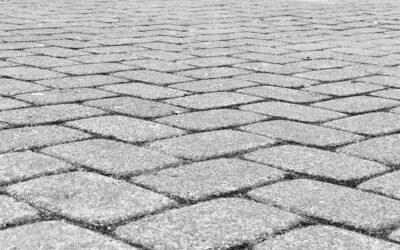
Nothing dresses up a yard faster than a well-built paver and rock walkway, and the mix of solid stepping surfaces with loose gravel between them costs a fraction of a full paver patio. The rock does the drainage and filler work while the pavers give you a clean, level place to plant your feet. Done right, this combination handles foot traffic for decades with almost no upkeep. This guide covers the layout, materials, and base prep that separate a walkway that stays put from one that shifts and sinks.
- Why Combine Pavers With Loose Rock
- Choosing Your Pavers
- Picking the Right Rock
- Base Preparation: The Part You Cannot Skip
- Setting Spacing That Feels Natural
- Edging Keeps Everything Contained
- Cost and Time Expectations
- Keeping It Looking Sharp
- Design Ideas to Elevate the Look
- Avoiding Common Problems
- Final Thoughts
Why Combine Pavers With Loose Rock
A full concrete-paver path can run $12 to $25 per square foot installed. Swapping much of that surface for decorative gravel drops the price toward $6 to $12 per square foot while adding texture and a modern look. The loose stone also drains rainwater on the spot instead of forcing you to grade for runoff, which makes this style a favorite in rainy regions and around downspouts.
Visually, the pairing lets you use large-format concrete or natural flagstone pavers as stepping points, spaced so an average stride lands on each one. The gravel border frames the pavers and hides small settling movements that would show as cracks in a solid slab.
Choosing Your Pavers
Stepping pavers should be at least 16 inches across so your foot lands comfortably. Popular choices include square concrete pavers, irregular bluestone or flagstone, and poured concrete stepping rounds. Thickness matters more than width for durability; aim for pieces at least 1.5 to 2 inches thick so they resist cracking under weight.
- Concrete pavers: $2 to $6 each, uniform, easy to level, widest color range.
- Natural flagstone: $3 to $8 per square foot, organic shape, no two alike.
- Porcelain pavers: Premium at $8 to $15 per square foot, but fade-proof and stain-resistant.
Picking the Right Rock
The gravel between pavers needs to be walkable, so skip the big landscaping cobble underfoot. Angular crushed stone in the 3/8-inch range, sometimes sold as pea gravel’s firmer cousin, locks together and stays put better than rounded pea gravel, which rolls under shoes. Decomposed granite packs down almost like a solid surface and is excellent for accessible paths. For a decorative accent border only, larger 1- to 3-inch river rock works well.
Base Preparation: The Part You Cannot Skip
Most failed walkways trace back to a weak base. Excavate 6 to 8 inches deep along the path. Lay down a woven landscape fabric to block weeds and separate soil from stone. Add 4 inches of compacted crushed gravel base, tamping in 2-inch lifts with a hand tamper or a rented plate compactor.
Over the base, spread a 1-inch layer of coarse sand and screed it flat. Set each paver into the sand, tapping it level with a rubber mallet and checking with a torpedo level. A slight overall slope, about a quarter inch per foot away from the house, keeps water moving off the path.
Setting Spacing That Feels Natural
Walk the route before you commit. Place pavers at a comfortable stride, roughly 24 inches center to center for most adults, then adjust. Gaps that are too wide force an awkward reach; too tight and the loose rock strip disappears. Once the spacing feels right, mark each spot, set the paver, and fill the surrounding area with your chosen rock to just below the paver’s top edge so nothing rolls off onto the lawn.
Edging Keeps Everything Contained
Loose rock migrates without a border. Steel or aluminum landscape edging gives the cleanest modern line and costs about $2 to $4 per linear foot. Poured concrete curbing, brick soldier courses, or even pressure-treated 2x4s also work. Whatever you choose, pin it firmly so the gravel stays on the path and out of the grass, where it can chip a mower blade.
Cost and Time Expectations
A DIY 3-foot-wide, 30-foot walkway runs roughly $400 to $900 in materials, depending on paver choice. Plan a full weekend for excavation and base work, then a second day for setting pavers and spreading rock. Renting a plate compactor for $60 to $90 a day pays for itself in a firmer, longer-lasting result.
Keeping It Looking Sharp
Maintenance is refreshingly light. Rake the gravel level every few months, top off the stone every couple of years as some works into the soil, and pull the occasional weed that finds a foothold. A leaf blower clears debris in seconds. If a paver settles, lift it, add sand underneath, and reset it in minutes. That easy repair is the quiet advantage a paver and rock walkway holds over a solid slab that would need saw-cutting and patching.
Design Ideas to Elevate the Look
Small touches turn a functional path into a focal point. Line the walkway with low landscape lighting or solar path lights to make it glow at night and improve safety. Plant creeping thyme or moss between pavers for a soft, living accent that releases fragrance underfoot. Mix paver shapes, like large squares interspersed with smaller accent stones, for visual rhythm. A gentle curve reads more natural and inviting than a dead-straight line, so let the path wander slightly toward a garden bed or seating area.
Avoiding Common Problems
Two issues plague poorly built paths. Weeds pushing up between stones come from skipping the landscape fabric or using nutrient-rich soil as a base; a solid fabric layer and clean crushed stone prevent most of them. Sinking or wobbling pavers trace back to inadequate compaction, so never shortcut the tamping step. If frost heave is a concern in your region, extend the gravel base deeper to give water somewhere to go. Address drainage up front and your walkway will stay level and weed-free for years.
Final Thoughts
This walkway style rewards careful base prep and honest spacing more than fancy materials. Get the compacted gravel foundation right, contain the rock with solid edging, and set your pavers at a natural stride, and you will have a path that looks custom while staying friendly to both your budget and your weekends.