
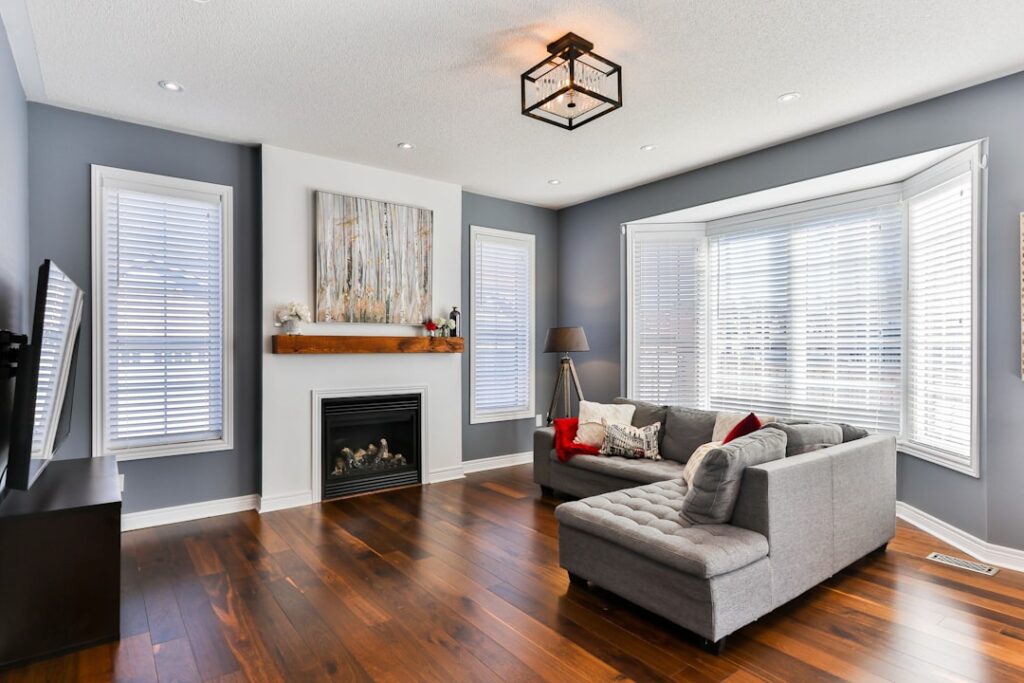
Pecan is one of the few American hardwoods that delivers dramatic plank-to-plank color variation without crossing into exotic species pricing, and most buyers do not realize it is technically a hickory cousin. Pecan hardwood flooring sits at Janka 1,820 on the hardness scale, which puts it well above red oak and white oak for dent resistance, with a warm honey-brown tone that ages to a deep amber over years. This guide walks through the species traits, grading, finish considerations, realistic pricing, and where pecan belongs in a home compared to its better-known cousin hickory.
Pecan as a Species: What You Are Actually Buying
Botanically, pecan is a member of the hickory family (Carya illinoinensis). In the flooring trade, “pecan” and “hickory” are often sold under combined labels or grouped together because the wood properties are similar. Some manufacturers separate true pecan boards based on heartwood color, while others bundle them as “hickory/pecan” with mixed visuals.
When buying, ask whether the product is graded as pure pecan, pure hickory, or mixed. Pure pecan tends toward warmer honey tones with less dramatic color variation than mixed hickory/pecan. The visual difference matters if you have a specific design intent.
Hardness and Dent Resistance
Pecan tests Janka 1,820. For comparison:
- Red oak: 1,290
- White oak: 1,360
- Hard maple: 1,450
- Pecan: 1,820
- Hickory: 1,820
- Brazilian cherry: 2,820
The 40 percent hardness premium over red oak means pecan resists denting from high heels, dropped utensils, and dog claws noticeably better. Pecan is genuinely a good choice for kitchens, mudrooms, and homes with active families.
Color and Visual Character
Pecan ships in three character zones:
- Sapwood (lighter outer wood): Pale cream to light tan. Higher contrast against heartwood.
- Heartwood (darker inner wood): Honey brown to medium reddish-brown with occasional darker streaks.
- Transition zones: Streaks where sapwood and heartwood meet, often the most dramatic visual feature.
The color variation is what defines pecan flooring. Premium “select” grades minimize this variation for a more uniform look, while “character” or “rustic” grades celebrate it. Character grade is the more authentic, modern-design choice and typically costs the same or less than uniform select grade.
Solid vs Engineered
Solid 3/4-inch pecan flooring is the traditional choice for above-grade installations over plywood subfloor. It refinishes 5+ times over its life and delivers the deepest character. Pricing runs $5.99-$10.99 per sq ft material.
Engineered pecan with a 3-6 mm veneer over multi-ply substrate is the right answer for slab installations, basements, and homes with radiant heat. The dimensional stability is better, install methods are more flexible (float, glue-down, or nail), and refinish count is 2-4 depending on veneer thickness. Pricing runs $4.49-$8.99 per sq ft.
For most US households, engineered pecan with a 4 mm or 6 mm wear layer is the smarter buy. The visual on the surface is identical to solid and the installation flexibility is significant.
Plank Widths and Finish Options
Pecan ships in widths from 2-1/4 inches (traditional strip) to 7-inch wide plank. The wide-plank format showcases the color variation better and reads more current. Strip widths read traditional and tend to minimize visual character.
Finish options at the factory typically include:
- Natural matte urethane: Shows true wood color, low gloss, modern. Most popular current finish.
- Satin urethane: Slightly more sheen, traditional appearance.
- Hand-scraped: Surface texture applied at the factory for rustic visual.
- Wire-brushed: Open-grain texture, popular farmhouse choice.
- Smoked: Heat-treated for darker amber color throughout the plank, not just surface stain.
Site-finished pecan offers more flexibility on stain color but adds 30-50 percent to project cost and requires 5-10 days of finish curing.
Installation Considerations
Pecan is dense enough that pre-drilling at row ends and butt joints prevents splitting. Use a quality pneumatic nailer with 16-gauge cleats at 80-90 PSI for nail-down installation over plywood.
Acclimation matters more than for less dense species. Leave the cartons in the install room 7-10 days, with at least 2 inches of stack between rows for airflow. Aim for 6-9 percent moisture content matched to the in-service humidity of the home.
Glue-down installation over a properly prepped slab works well for engineered pecan. Use a quality moisture-mitigating adhesive like Bostik Ultra-Set SingleStep2 or Mapei Ultrabond ECO 985. Verify slab moisture to ASTM F2170 before installing.
Realistic Project Cost
For a 1,200 sq ft installation:
- Engineered pecan with prefinished surface: $8,500-$13,500 turnkey including labor.
- Solid pecan prefinished: $11,000-$16,500 turnkey.
- Solid pecan site-finished: $13,500-$20,000 turnkey.
Engineered pecan from brands like Bruce, Mohawk Anderson, Mullican, and Hallmark Floors delivers excellent value and is the most common purchase. Site-finished solid is the premium choice for custom homes and historic restorations.
Pecan vs Hickory: Which to Choose
The two species are nearly identical in hardness and overlap visually. Three small differences:
- Pecan tends to have less dramatic light-to-dark contrast within a board. Hickory shows more dramatic streaks.
- Pure pecan is sometimes priced 5-10 percent above hickory of the same grade because volume is lower.
- Hickory has broader brand availability. Pecan-specific SKUs are fewer.
For most buyers, the practical decision comes down to which sample they prefer in their room lighting. Pull samples of both, view them side-by-side at home, and decide based on visual rather than the label.
Long-Term Care
Sweep daily. Damp-mop weekly with a hardwood-safe cleaner like Bona Hardwood Floor Cleaner or Pallmann Clean. Avoid vinegar, ammonia, steam mops, and excess water.
Place felt pads under all furniture. Add walk-off mats at entries. Trim pet nails regularly. With reasonable care, expect 20-30 years before the first refinishing is needed. Solid pecan can be refinished 5+ times, which means a properly maintained solid pecan floor will outlast the home’s roof, siding, and most other improvements.
Prefer to explore on your own?
See how new flooring looks in your actual room in seconds — free, no signup.
Try the free Floor Studio →

