Putting a pergola over fire pit seating sounds cozy, but it is one of the easiest ways to set your backyard structure on fire. Heat rises in a column, and a wood fire can push hot gases and embers well above the flames. The honest answer is that a wood-burning pit directly under a pergola is a bad idea in almost every case, while a gas fire table with the right overhead clearance and an open roof can work when you follow the maker’s instructions and local fire code.
Part of our Decks & Outdoor guide — explore the full guide →
The difference comes down to fuel, roof type and distance. Gas burners produce a controlled flame with no flying sparks, and many manufacturer manuals list a minimum overhead clearance. Wood fires throw embers, produce much more radiant heat and have no predictable flame height. From there, the choice of an open slatted roof, a solid cover or a retractable canopy changes everything. Here is how clearance works, how designs compare, and what to know about heat shields, lighting and when to hire help.
- Can You Put a Pergola Over Fire Pit Areas Safely?
- Roof Type Changes the Answer
- Pergola Over Fire Pit Ideas That Reduce Risk
- Heat Shields and Materials
- Backyard Fire Pit Lighting Ideas Under a Pergola
- Steps to Plan a Safer Setup
- Troubleshooting Heat Problems
- Cost Considerations
- When to Call a Licensed Professional
- Frequently Asked Questions
Can You Put a Pergola Over Fire Pit Areas Safely?
Sometimes, with conditions. A pergola over fire pit seating is only reasonable when the fire source is a listed gas appliance rated for use under a partial cover, the roof is open enough to let heat escape, and the clearance meets or exceeds what the appliance manual specifies. Your local fire marshal or building department has the final word, and some jurisdictions and HOAs prohibit any open flame under a structure.
For wood fires, the safe approach is to move the pit out from under the pergola rather than trying to engineer around it. Placing the fire in the open a comfortable distance away, with the pergola framing a seating zone nearby, gives you the look without the risk.
Wood-burning fire pits
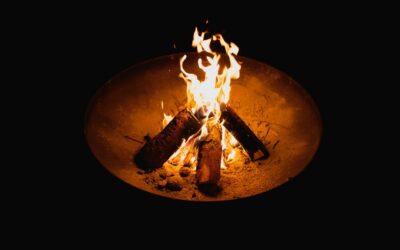
Wood fires send embers upward on every gust and log shift. Those embers can land on rafters, shade fabric, climbing vines and cushions. Radiant heat also dries out wood framing over time, which makes it easier to ignite. General guidance for wood pits is to keep them at least 10 feet from any structure, and many codes call for 25 feet. Those distances rule out placing one under a pergola.
Gas and propane fire tables
Gas fire pits burn cleaner and produce a steadier flame, which is why they are the only realistic option under an overhead structure. Many units list an overhead clearance in the manual, often somewhere in the range of several feet above the burner, and larger burners need more. Treat the manual as the minimum, not a target, and add extra space for a pergola with wood rafters. Propane tanks must stay outdoors in open air and be stored per label, never inside an enclosed space.
Roof Type Changes the Answer
The roof over the fire matters as much as the distance. Heat and combustion gases need a way out.
- Open slatted roof: the best choice. Gaps between rafters let heat vent straight up. Widen spacing over the fire zone if you can.
- Louvered roof: acceptable with louvers fully open while the fire burns. Never run a fire with louvers closed.
- Retractable canopy or shade sail: fabric must be fully retracted. Most outdoor fabrics are not fire-rated and melt or ignite easily.
- Solid roof or polycarbonate panels: traps heat and gases. Treat it like a covered porch: follow the appliance rules for covered spaces, which often forbid use entirely.
Enclosed sides compound the problem. Curtains, privacy screens and walls reduce airflow, which raises temperatures at the rafters and allows carbon monoxide to build up. Any fire source needs open air on multiple sides.
Pergola Over Fire Pit Ideas That Reduce Risk
Many pergola over fire pit ideas you see online are photographed with a fire that is actually positioned off to one side. Borrow those layouts:
- Offset layout: the pergola covers a dining or lounge area while the fire pit sits in the open a safe distance away, linked by pavers.
- Half-covered design: the pergola covers only part of the patio and the gas fire table sits under the open end.
- Taller pergola: a gas fire table under a tall, open-roof pergola built with extra headroom over the burner zone.
- Metal or aluminum pergola: noncombustible framing is safer than wood, though heat can still damage finishes, fabric and anything attached to it.
- Freestanding pit with a spark screen: for wood fires in the open, a mesh screen cuts down on stray embers.
Heat Shields and Materials
A heat shield or deflector hung between the fire and the rafters can reduce radiant heat reaching the wood, but it does not make an unsafe setup safe. Metal deflectors spread heat and protect the finish on the underside of the pergola. Keep these points in mind:
- Use a deflector only as an extra layer of protection above a gas fire that already meets clearance.
- Remove climbing plants, dried vines and hanging baskets from the rafters above the fire.
- Choose fire-resistant or noncombustible materials near the fire: stone, concrete, metal and masonry pavers.
- Store cushions, throws and outdoor rugs away from the fire when not seated.
Backyard Fire Pit Lighting Ideas Under a Pergola
Lighting is part of what makes a pergola feel finished, and it needs a little care near heat. Keep string lights and LED strip lights well away from the fire zone, never coil, cover or bunch LED strips, and use outdoor-rated fixtures with UL-listed drivers or power supplies sized to the load with headroom. Solar and rechargeable lights with lithium batteries should not be mounted above the flame, since heat shortens battery life and can cause failures. For hardwired fixtures or a new outdoor outlet, hire a licensed electrician: outdoor outlets need GFCI protection, and the breaker must be turned off and confirmed off with a non-contact voltage tester before anyone touches the wiring. Low-voltage landscape lighting is often the easiest DIY route because it runs off a plug-in transformer.
Steps to Plan a Safer Setup
- Check rules first. Ask your fire department, building department and HOA about open flame near structures and any permit needs.
- Pick the fuel. Choose a listed gas or propane fire table if the fire must be near the pergola. Keep wood fires in the open.
- Read the manual. Note overhead and side clearances, cover rules and ventilation requirements before you buy.
- Measure the pergola. Measure from the burner surface to the lowest rafter, fabric or fixture. Include hanging lights and fans.
- Open the roof. Plan wider slats or a retractable cover that stays open during use.
- Clear combustibles. Remove vines, fabric and stored items near the fire zone.
- Hire for gas. Natural gas lines and connections are licensed-pro work with a permit and leak test.
- Keep safety gear handy. Store a fire extinguisher nearby and never leave a fire unattended.
Troubleshooting Heat Problems
Soot or scorch marks on rafters mean the fire is too close or the flame is set too high. Lower the flame, add clearance or move the fire. If the finish on a wood pergola is blistering, radiant heat is reaching the wood at damaging levels. Fabric that feels hot to the touch, warped vinyl components and melted light housings are all signs to stop using the fire in that spot. If anyone gets a headache, dizziness or nausea near a fire under a covered or partly enclosed structure, shut it off, move to fresh air and treat it as possible carbon monoxide exposure.
Cost Considerations
A basic gas fire table often costs a few hundred to a couple thousand dollars depending on size and materials. Running a natural gas line by a licensed pro commonly adds several hundred to a few thousand dollars based on distance and access. Metal heat deflectors are modest in cost. Modifying a pergola, such as widening slat spacing or adding a retractable canopy, ranges widely from a DIY afternoon to a significant contractor job. Moving a wood pit into the open is usually the cheapest fix of all.
When to Call a Licensed Professional
Hire a licensed gas fitter or plumber for any natural gas line, connection or conversion; these require permits and a leak test, and you should never make gas connections yourself. If you smell gas, leave the area and call your gas utility. Bring in a licensed electrician for outdoor circuits, outlets and hardwired lighting. A contractor or structural pro should review larger pergola modifications, especially if you add solid roofing, which changes wind and snow loads.
Frequently Asked Questions
How high should a pergola be over a fire pit?
Follow the gas appliance manual’s overhead clearance as a minimum and add more for wood rafters. Wood-burning pits should not be placed under a pergola at all.
Can you put a wood fire pit under a pergola?
It is not recommended. Embers and radiant heat can ignite rafters, vines and fabric, and many codes require wood fires to be 10 to 25 feet from structures.
Is a gas fire pit safe under a covered patio?
Only if the appliance is listed for that use and the manual allows it. Many gas fire tables are not approved under solid roofs because heat and gases get trapped.
Do heat shields make a pergola fire pit safe?
A heat deflector adds protection above a gas fire that already meets clearance, but it cannot make an unsafe distance or a wood fire safe.
Does a metal pergola solve the fire risk?
Metal framing does not burn, but fabric, lights, finishes and plants attached to it can. Clearance and ventilation rules still apply.