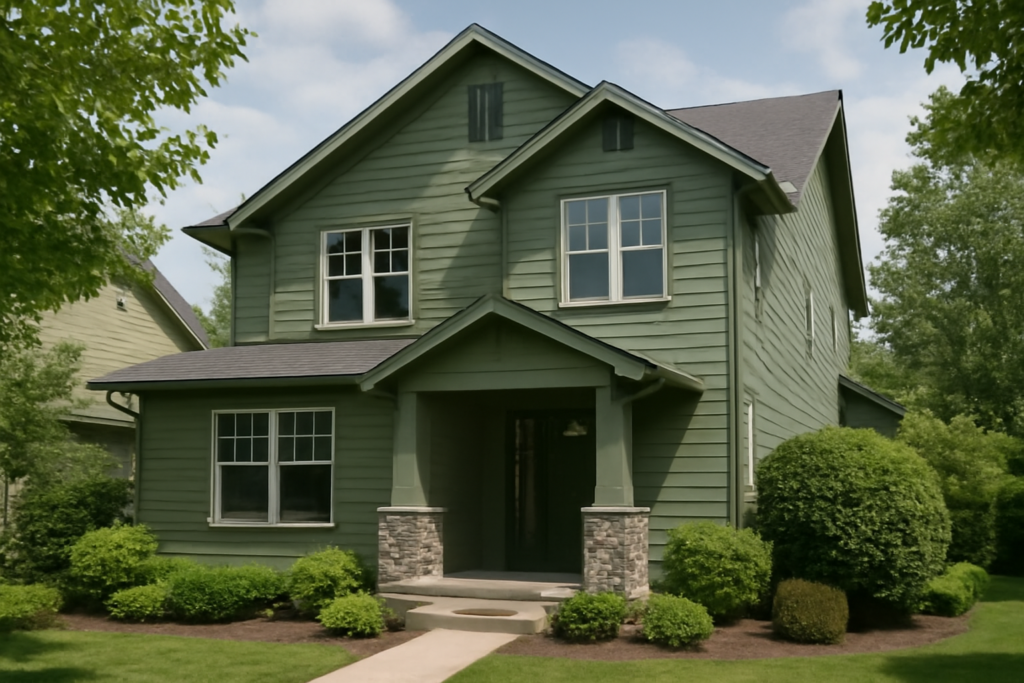
Green has quietly overtaken gray as the exterior color of choice for homeowners who want something timeless but not expected. The most popular green Sherwin Williams exterior paint colors range from barely-there sage to deep, dramatic forest, and they flatter everything from a modern farmhouse to a shingle-style cottage. Green works outdoors because it echoes the landscape — it reads natural against grass, trees, and stone in a way no other color can. This guide walks through Sherwin-Williams’ best green exteriors, their light reflectance values, and how to pair them for lasting curb appeal.
- Why Green Works Outdoors
- Soft and Sage Greens
- Medium and Olive Greens
- Deep Forest and Dramatic Greens
- Pairing Trim, Roof, and Accents
- Testing Before You Commit
- Matching Green to Your Home’s Style
- Green Front Doors and Accents
- Durability and Finish for Exteriors
- Coordinating With Stone and Brick
- Making the Right Choice
Why Green Works Outdoors
Exterior color behaves differently than interior. Full sun washes out light colors and intensifies dark ones, and a home sits against a backdrop of foliage, sky, and hardscape rather than white walls. Green harmonizes with all of it. A sage or olive body settles into a wooded lot; a deep forest green makes white trim pop and reads as sophisticated rather than trendy.
Light reflectance value, or LRV, matters even more outside. Very dark greens with a low LRV absorb heat and can fade faster in harsh sun, while soft greens with a higher LRV stay cooler and age more gracefully. Choosing the right depth for your climate and exposure is as important as choosing the hue itself.
Soft and Sage Greens
The gentlest greens are the most versatile and the fastest-growing in popularity. These read as sophisticated neutrals with a whisper of color:
- Sherwin-Williams Sea Salt (SW 6204), LRV 63: A soft green-gray with a hint of blue. Barely-there color that’s endlessly popular and reads almost neutral.
- Sherwin-Williams Softened Green (SW 6177), LRV 55: A muted, earthy sage that feels calm and organic.
- Sherwin-Williams Contented (SW 6191), LRV 42: A grayed sage with more depth, great for a body color that still feels restrained.
- Sherwin-Williams Evergreen Fog (SW 9130), LRV 30: A sophisticated gray-green that surged to fame as a Color of the Year and works beautifully on siding and doors alike.
These softer greens are the safest choice for a whole-house body color because they flatter almost any roof, stone, and trim. Sea Salt in particular is a near-universal crowd-pleaser.
Medium and Olive Greens
Step up in saturation and you get greens with real presence that still stay grounded and natural:
- Sherwin-Williams Rosemary (SW 6187), LRV 8: A deep, rich herb green with gray depth — dramatic but not black.
- Sherwin-Williams Ripe Olive (SW 6209), LRV 7: A warm, brownish olive that reads as a rich neutral, stunning on craftsman and cottage exteriors.
- Sherwin-Williams Retreat (SW 6207), LRV 15: A medium-dark green-gray with a coastal, weathered feel.
- Sherwin-Williams Pewter Green (SW 6208), LRV 12: An extremely popular deep gray-green that works on siding, shutters, and front doors.
Pewter Green has become one of the most-used exterior greens in the country, especially on modern farmhouses paired with black windows and white trim.
Deep Forest and Dramatic Greens
For homeowners who want a bold, high-contrast statement, deep greens deliver drama that still feels rooted in nature:
- Sherwin-Williams Dard Hunter Green (SW 0041), LRV 6: A classic historic hunter green from the Arts and Crafts palette.
- Sherwin-Williams Greens (SW 6748), LRV 7: A true, saturated green for those who want unmistakable color.
- Sherwin-Williams Jasper (SW 6216), LRV 9: A deep blue-green that reads rich and moody.
Deep greens make white and cream trim shine and pair beautifully with natural wood accents, brass hardware, and stone. Just remember that low-LRV colors absorb heat, so use quality exterior paint and expect a bit more fade over the years in intense sun.
Pairing Trim, Roof, and Accents
Green rarely stands alone — the trim and fixed elements make or break the look. A few reliable pairings:
- Crisp white trim (Pure White SW 7005 or Extra White SW 7006) gives soft and deep greens a fresh, classic edge.
- Creamy off-white trim softens a deep green for a cottage or historic feel.
- Black windows and accents pair especially well with Pewter Green and Evergreen Fog for a modern farmhouse look.
- Natural wood doors and stained accents warm up any green and reinforce its organic character.
Match your green to the undertone of your roof and any permanent stone or brick. A green with a gray undertone suits a gray or black roof; a warmer olive plays well with brown and tan hardscape.
Testing Before You Commit
Exterior color shifts dramatically in real light, so never choose from a chip. Buy sample quarts and paint large patches — at least two feet square — on different sides of the house. Check them in morning, midday, and evening light, since a green can look sage in shade and nearly gray in full sun. Look at them against your roof, trim, and landscaping. Live with the samples for several days before ordering gallons.
Also consider your neighborhood and any HOA restrictions. Green is broadly appealing, but a very saturated forest or bright green may need approval in managed communities.
Matching Green to Your Home’s Style
Different architectural styles wear green differently, so let your home guide the depth and undertone. A modern farmhouse looks best in a crisp Pewter Green or Evergreen Fog paired with black windows and white trim. A classic Craftsman or bungalow suits a warm, earthy Ripe Olive or a historic hunter green that nods to its Arts and Crafts roots. A coastal or cottage home wears soft, weathered greens like Sea Salt and Retreat, which feel sun-faded and relaxed. A traditional colonial can carry a deep, dignified green on the shutters and door against a lighter body.
Getting this match right is what makes a green exterior feel intentional rather than arbitrary. When the color suits the architecture, passersby read it as a considered choice; when it fights the style, even a beautiful green can look out of place.
Green Front Doors and Accents
You don’t have to commit to a whole green house to enjoy the color. A green front door is one of the highest-impact, lowest-cost curb-appeal upgrades available, and it works against nearly any body color — white, gray, brick, or tan. Shutters, window boxes, and porch ceilings are other spots where a hit of green adds character without repainting the siding.
For a front door, deeper greens tend to read best because they hold their richness against the surrounding walls. Pewter Green, Rosemary, and the deep hunter greens all make striking doors. Pair the door with a contrasting or complementary hardware finish — oil-rubbed bronze or matte black for depth, or brass for a warm, classic touch — and the entry instantly feels considered.
Durability and Finish for Exteriors
Exterior green only stays beautiful if you use the right product. Sherwin-Williams exterior lines like Duration and Emerald offer excellent fade resistance and adhesion, which matters especially for deeper greens that absorb more UV and are more prone to fading over the years. A satin or low-lustre sheen is the usual choice for siding — it sheds dirt and resists mildew better than flat while avoiding the plasticky look of a high gloss.
Prep is half the battle outdoors. Clean the siding, scrape and prime any bare or peeling spots, and paint in mild, dry weather — ideally between 50°F and 85°F with no rain in the forecast for 24 hours. Good prep and a quality exterior product will keep a green exterior looking fresh for 10 years or more before it needs attention.
Coordinating With Stone and Brick
Many homes have permanent stone or brick that the green has to live with, and this is where undertones become critical. A green with a gray or blue undertone complements cool gray stone and black-toned brick. A warmer olive or sage plays beautifully against tan, buff, and brown brick or fieldstone. Before committing, hold your green samples directly against the stone and brick in daylight — the fixed material won’t change, so the paint has to be the one that harmonizes with it.
Making the Right Choice
The best of the popular green Sherwin Williams exterior paint colors for your home depends on how much color you want and how your house sits in its setting. For a safe, sophisticated whole-house color, start with Sea Salt or Evergreen Fog. For a grounded farmhouse statement, Pewter Green is hard to beat. For bold historic drama, reach for Rosemary or a deep hunter green. Whichever you choose, test it on your actual walls in real sun, pair it with the right trim, and green will give you an exterior that looks intentional and timeless for years.