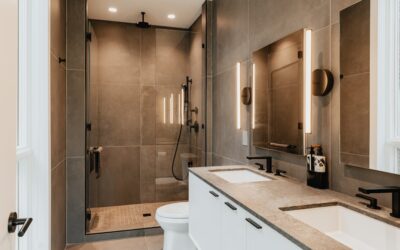
Ever wonder why nearly every professionally built tile shower uses tiny tiles on the floor even when the walls are large-format? It comes down to two things: grip and drainage. Porcelain mosaic tile for shower floor installations gives you the many grout lines that provide slip resistance underfoot, plus enough flexibility to follow the slope toward the drain without lippage. It’s the contractor’s default for good reason, but not every mosaic is right for a wet, sloped, high-traffic surface, so choosing the correct size, finish, and slip rating makes the difference between a shower that’s safe and one that’s a hazard.
Part of our Bathroom Remodeling & Flooring guide — explore the full guide →
Why Mosaics Rule the Shower Floor
A shower floor isn’t flat. It has to slope roughly a quarter inch per foot toward the drain so water clears instead of pooling. Large tiles can’t conform to that slope, especially near a center drain where the floor pitches from four directions, which is why they’d rock or leave gaps. Small mosaic tiles, typically 1 or 2 inches, sit on flexible mesh sheets that bend with the slope, letting each tiny piece stay flat against the mortar as the surface curves toward the drain.
The second reason is safety. Every grout line is a small channel that gives your wet foot something to grip. A floor of 1-inch mosaics has far more grout per square foot than a floor of 12-inch tiles, dramatically improving traction. Porcelain adds durability to the equation: it’s denser and less porous than ceramic, so it resists water absorption and stands up to constant moisture.
The Pros of Porcelain Mosaics
This combination of material and format offers real advantages for a shower pan:
- Slip resistance from the dense grid of grout lines, critical on a wet floor
- Conforms to slope so water drains properly with no ponding
- Low water absorption, since porcelain absorbs less than 0.5 percent, making it ideal for wet areas
- Durability that resists chips, stains, and wear better than ceramic or natural stone
- Design flexibility in hex, penny round, square, and elongated shapes and endless colors
- Low maintenance, as porcelain never needs sealing the way natural stone does
The Cons to Consider
No material is perfect, and mosaics have trade-offs worth knowing before you commit:
- More grout to clean, since all those joints can trap soap scum and need regular scrubbing
- Grout maintenance, as cement grout should be sealed and can discolor over time in a wet zone
- Higher install labor than large tiles because setting and grouting mosaics takes longer
- Some finishes still get slick, so a high-gloss mosaic can be slippery despite the grout lines
The grout-cleaning issue is the most common complaint. You can largely solve it by choosing epoxy grout, which resists staining and never needs sealing, at the cost of a trickier installation and higher price.
Choosing the Right Size and Shape
Mosaic size affects both grip and looks. Smaller pieces give more grout lines and better traction but more cleaning; slightly larger 2-inch mosaics clean a bit easier with modestly less grip. Popular options for shower floors include:
- 1-inch squares: the classic maximum-grip choice, easy to slope
- 2-inch squares: a balance of traction and easier cleaning
- Hexagon: excellent slope conformance and a stylish, timeless look
- Penny round: lots of grout lines and a vintage aesthetic
Hexagons are a favorite because their geometry follows the drain slope beautifully and they pair well with subway tile walls. For a center drain, small mosaics or hexes handle the four-way pitch far better than any larger format.
Slip Ratings Matter
Not all porcelain mosaics are equally safe underfoot. Look for the coefficient of friction rating; a wet dynamic coefficient of friction (DCOF) of 0.42 or higher is the industry benchmark for wet areas per ANSI standards. Choose a matte or textured finish rather than a polished, glossy one for the floor. Polished porcelain looks great on walls but becomes slick when wet, so save gloss for vertical surfaces and keep the floor matte or lightly textured. Many manufacturers label tiles specifically as suitable for wet or shower floor use, which takes the guesswork out.
Grout Selection for Shower Floors
Because grout is such a big part of a mosaic floor, the type you pick shapes long-term maintenance. You have two main routes:
Epoxy Grout
Epoxy grout is nonporous, stain-resistant, and never needs sealing, making it the premium choice for a shower floor that stays wet. It costs $8 to $12 per pound and is harder to work with, but it holds up far better against mildew and discoloration.
Cement Grout with Sealer
Standard cement grout is cheaper and easier to install but must be sealed after curing and periodically resealed. Use an unsanded grout for joints under 1/8 inch, which is typical for tight mosaics. Expect to reseal every 6 to 12 months in a shower.
Whichever you choose, a quality grout in a mid-tone color hides soap scum and water spotting better than pure white.
Installation Essentials
A watertight shower floor lives or dies by what’s under the tile. The mosaics themselves go down over a properly sloped mortar bed and a waterproofing membrane. Key steps a pro follows include:
- Building or setting a pre-sloped pan that pitches 1/4 inch per foot to the drain
- Applying a waterproof membrane like a sheet or liquid system over the slope
- Setting the mosaic sheets in a polymer-modified thinset, back-buttering as needed for full coverage
- Keeping the sheets aligned so the grout lines run continuously across seams
- Grouting after the thinset cures, then sealing if using cement grout
Full mortar coverage under the tile is essential in a wet area to prevent voids where water could sit. This is one job where hiring an experienced tile setter often pays off, since a failed shower pan is an expensive tear-out.
What It Costs
Porcelain mosaic sheets typically run $5 to $15 per square foot for the tile, with designer and hex patterns at the higher end. Because a shower floor is small, often just 9 to 15 square feet, the tile cost is modest, but the labor to set and grout mosaics adds up. Professional installation of a full shower, including waterproofing, runs $1,500 to $4,000 depending on size and complexity, with the small floor being a fraction of that.
Matching the Floor to Your Shower Walls
The floor mosaic and the wall tile should relate to each other, and there are two reliable strategies. The first is to coordinate by keeping the floor a smaller-scale version of the wall in the same color family, so a white subway wall pairs with white hex or 1-inch mosaic on the floor for a clean, classic result. The second is to contrast deliberately, using a darker or patterned mosaic floor beneath light walls to ground the shower and hide dirt between cleanings.
Darker floor grout is a practical choice regardless of tile color, because a shower floor collects soap scum, hard-water spotting, and the occasional dropped-product stain far faster than the walls. A mid-tone gray or charcoal grout on the floor stays looking clean much longer than bright white, which shows every mark. Many designers run a lighter grout on the walls for crispness and a darker grout on the floor for practicality, and the two read as intentional rather than mismatched.
Cleaning and Long-Term Care
A porcelain mosaic shower floor is low-maintenance by tile standards, but the grout needs consistent attention to stay looking good. Squeegee or wipe the floor after showers when you can, and run the exhaust fan to cut the humidity that feeds mildew in the grout lines. Clean weekly with a pH-neutral tile cleaner and a soft brush, working the bristles into the grout joints where soap scum accumulates. Avoid harsh acidic cleaners on cement grout, which can erode it over time.
If you chose cement grout, reseal it every 6 to 12 months in the wet shower environment; a simple water-drop test tells you when the sealer has worn off, since water that soaks in rather than beading means it’s time. Epoxy grout skips this step entirely, which is a big reason it’s worth the extra cost on a shower floor. With routine care, a properly installed and waterproofed porcelain mosaic floor will stay watertight and attractive for the life of the bathroom, easily 20 years or more.
The Bottom Line
Porcelain mosaic tile for shower floor use is the standard because it does exactly what a shower pan needs: grips wet feet, conforms to the drain slope, and shrugs off constant moisture. Choose a matte or textured finish with a DCOF of at least 0.42, pick a size and shape that balance grip with cleaning, pair it with epoxy grout if you want the lowest maintenance, and make sure the waterproofing beneath is done right. Do all that, and you’ll have a shower floor that’s both safe and beautiful for the long haul.
Prefer to explore on your own?
See how new flooring looks in your actual room in seconds — free, no signup.
Try the free Floor Studio →