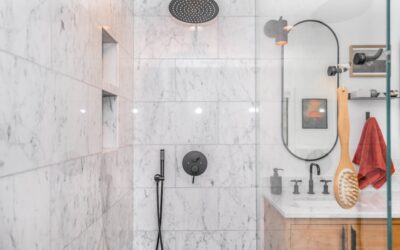
A mosaic tile shower wall is the fastest way to turn an ordinary bathroom into a spa-like retreat, and it does more than just look good. The small tiles, mounted on mesh sheets, wrap smoothly around curves and niches that large-format tile cannot handle, and the dense grid of grout lines gives your feet and hands real grip on wet surfaces. Whether you tile an entire shower enclosure in glass mosaics or run a single accent band of marble penny rounds, the format is forgiving, versatile, and endlessly customizable. This guide covers the materials, the costs, the smartest places to use mosaics, and the waterproofing steps that keep a beautiful wall from becoming a leaky one.
Part of our Bathroom Remodeling & Flooring guide — explore the full guide →
Why Mosaics Suit a Shower
Mosaic tiles are simply small tiles, usually two inches or less, arranged on a 12-by-12-inch backing sheet so you can install dozens at once. That format has three real advantages in a shower. First, the sheets flex, so they conform to curved shower pans, barrel niches, and gentle wall bows without the lippage that plagues big tile. Second, all those grout joints add traction, which is why mosaics are the standard choice for shower floors as well as walls. Third, the small scale lets you create patterns, gradients, and accents that would be impossible with larger pieces.
The trade-off is grout. A mosaic wall has far more grout line per square foot than a large-tile wall, which means more surface that needs sealing and cleaning. Modern epoxy and stain-resistant grouts largely solve the maintenance concern, but it is the honest cost of all that texture and design freedom.
Choosing Your Mosaic Material
The material sets both the look and the upkeep, so match it to how much maintenance you want to sign up for.
- Glass mosaic: nonporous, luminous, and available in every color. Glass never stains and cleans easily, making it a top pick for full shower walls. It shows soap scum a bit and needs a proper thinset, but it is a durable, low-maintenance choice.
- Porcelain and ceramic mosaic: the workhorse. Affordable, water-resistant, and offered in matte, gloss, and stone looks. Excellent for both walls and floors.
- Natural stone mosaic: marble, travertine, and pebble sheets bring organic beauty but are porous and must be sealed regularly to resist water and soap. Best for accent bands rather than the whole wet zone unless you commit to maintenance.
- Metal and shell mosaics: striking as a narrow accent stripe, but usually too delicate or costly for full coverage.
For most homeowners, glass or porcelain mosaic on the main walls with a stone or metal accent band delivers the best mix of durability and personality.
Layout and Design Ideas
You do not have to tile every surface in mosaic to get the effect. In fact, restraint often reads as more expensive. A popular and budget-friendly approach uses larger, plain subway or slab tile on the main field and reserves the mosaic for a vertical accent column, a horizontal band at eye level, or the back wall of the shower as a feature.
The niche is the single best place for a mosaic shower wall accent. Lining a recessed shampoo niche with a contrasting mosaic, say a blue glass or a marble hex, frames it like a jewel box and ties the design together. Running the same mosaic across the shower floor and up into the niche creates a cohesive, custom look. If you want the drama of a fully mosaic shower, choose a subtle tone-on-tone or gentle gradient so the wall feels rich rather than busy, and keep the rest of the bathroom calm to balance it.
What a Mosaic Shower Wall Costs
Mosaic material spans a wide range, and the labor runs higher than for large tile because there are more pieces to align. Expect the following as working numbers.
- Ceramic and porcelain mosaic sheets: roughly $8 to $20 per square foot for material.
- Glass mosaic: about $15 to $40 per square foot.
- Natural stone and specialty mosaic: $20 to $50 or more per square foot.
- Professional installation: typically $10 to $25 per square foot, higher than field tile due to the detailed work.
Because a standard shower has 80 to 120 square feet of wall, a fully mosaic enclosure adds up quickly, which is another reason the accent-band strategy is so popular. You get the mosaic effect on a fraction of the square footage.
Waterproofing Is Non-Negotiable
The most important part of any shower wall happens before the first tile goes up. Tile and grout are not waterproof on their own; water passes through grout over time, so the wall behind the tile must be sealed against moisture. Modern installations use a waterproof backer board or a sheet or liquid membrane, such as a foam board system or a paint-on membrane, applied over the substrate and sealed at every seam and corner.
Set the mosaic sheets in a polymer-modified thinset appropriate for the tile, back-buttering as needed so glass and stone bond fully with no voids that could trap water. For grout, an epoxy or a high-performance stain-resistant grout is worth the extra cost in a shower because it resists mold and rarely needs resealing. Cement grout works too but must be sealed and maintained.
Keeping It Looking New
Maintenance comes down to controlling moisture and soap scum. Squeegee the walls after showering to cut down on hard-water spots, and clean weekly with a pH-neutral bathroom cleaner rather than acidic products that can etch stone and dull grout. Run the exhaust fan during and after every shower to keep humidity down and discourage mildew in the grout lines.
If you used a natural stone mosaic, reseal it on the schedule the sealer recommends, usually once or twice a year in a wet area. Handled this way, a mosaic tile shower wall keeps its texture, color, and spa-like appeal for decades, rewarding the extra installation care with a surface that is as functional underfoot as it is beautiful on the wall.
DIY or Hire a Pro
Mosaic sheets are more forgiving for a first-time tiler than large-format tile in some ways, since the mesh backing keeps the spacing consistent and small pieces conform to minor wall imperfections. A confident DIYer with patience can tackle an accent band or a shower niche successfully, especially with a pre-mixed thinset and a good tile cutter for the edge pieces. The mesh sheets also make it easy to keep courses level as you work up the wall.
That said, the full shower is a different level of commitment because the waterproofing behind the tile is unforgiving; a mistake there does not show up until water damage appears months later. If you are not confident in your ability to install and seal the membrane, backer board, and corners correctly, this is a job worth hiring out, or at minimum having the waterproofing done professionally before you tile the decorative work yourself. The tiling itself may be satisfying weekend work, but the hidden waterproofing is where a professional’s experience protects your home. Budget accordingly, and remember that the labor premium on mosaic reflects the genuine care required to align all those small pieces into a clean, lasting wall.
Prefer to explore on your own?
See how new flooring looks in your actual room in seconds — free, no signup.
Try the free Floor Studio →