That glossy, durable white surface in so many bathrooms is more than meets the eye. A porcelain tub is usually a steel or cast iron base coated with a hard, glass-like porcelain enamel fired on at high temperature. The result is a smooth, glossy, easy-to-clean surface that has been a bathroom standard for generations. Understanding how these tubs are made helps explain how to clean them, why they chip, and how to bring an old one back to life.
Part of our Tile & Grout guide — explore the full guide →
Whether you are caring for an existing tub or considering one for a remodel, here is what you need to know about porcelain tubs.
- What Is a Porcelain Tub?
- Pros and Cons of a Porcelain Tub
- How to Clean a Porcelain Tub
- Dealing With Stains and Rust
- Repairing Chips
- Refinishing an Old Porcelain Tub
- Care Tips to Make It Last
- Porcelain Tub vs. Acrylic and Fiberglass
- How Long Does a Porcelain Tub Last?
- Signs Your Tub Needs Attention
- The Bottom Line
What Is a Porcelain Tub?
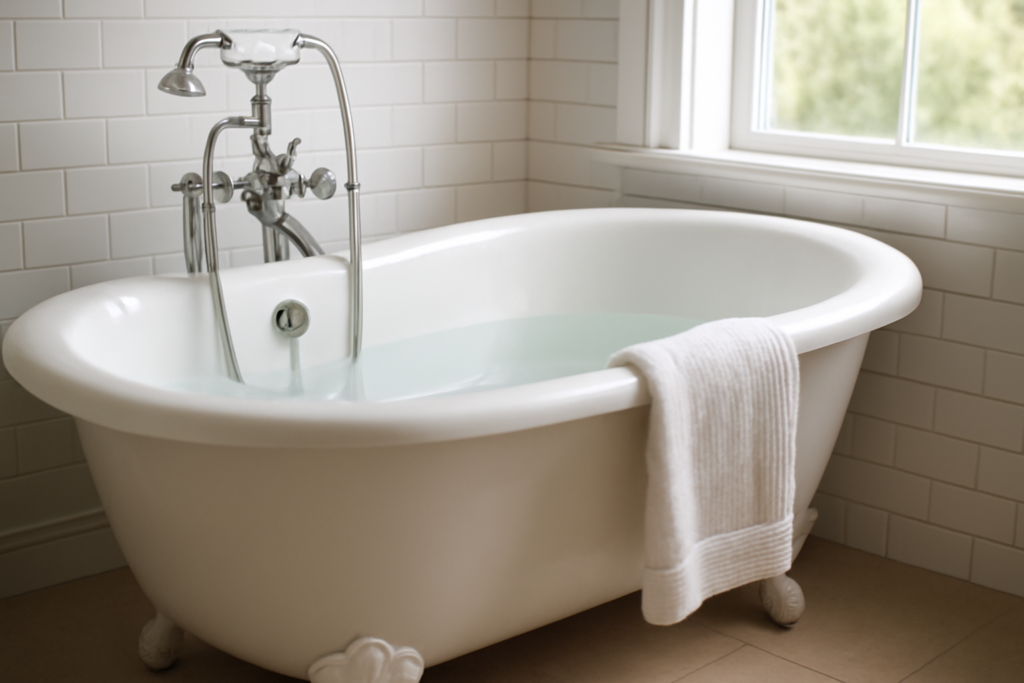
A true porcelain tub is not solid porcelain. It is a metal tub, typically cast iron or stamped steel, coated with porcelain enamel, a powdered glass material fused to the metal at high heat. This creates the smooth, hard, glossy finish people associate with classic tubs. Cast iron versions are heavy, extremely durable, and excellent at retaining heat, while steel versions are lighter and more affordable. Acrylic and fiberglass tubs are sometimes confused with porcelain, but they are plastic-based and feel and behave differently.
Pros and Cons of a Porcelain Tub
Advantages
- Hard, glossy surface that resists scratches and staining
- Very durable, especially over a cast iron base, often lasting decades
- Retains heat well, keeping bath water warm longer
- Classic look that suits both traditional and modern bathrooms
Drawbacks
- Heavy, particularly cast iron, which can complicate installation
- The enamel can chip if struck by a heavy object, exposing the metal beneath
- Chips on steel tubs can rust if not repaired
- Higher upfront cost than acrylic or fiberglass
How to Clean a Porcelain Tub
The enamel surface is durable but can be dulled or scratched by harsh abrasives, so a gentle routine keeps it looking new.
- Rinse the tub after use to wash away soap and residue.
- Use a mild cleaner, such as a non-abrasive bathroom spray or a paste of baking soda and water for tougher grime.
- Scrub with a soft sponge or cloth, never steel wool or harsh scouring pads that can scratch the enamel.
- Rinse thoroughly and wipe dry to prevent water spots and mineral buildup.
For stubborn stains, a paste of baking soda left to sit for a few minutes usually lifts them without harming the finish. Avoid abrasive powders and harsh acids for daily cleaning.
Dealing With Stains and Rust
Hard water can leave mineral and rust stains, especially around the drain. A paste of baking soda, or a cleaner formulated for porcelain enamel, applied gently and rinsed off, usually handles them. If a chip has exposed bare steel and rust has started, address it promptly: clean and dry the area, then use a porcelain touch-up kit to seal it and stop the rust from spreading.
Repairing Chips
Small chips are common in older tubs and are repairable. Porcelain repair kits, available at hardware stores, include a filler and a glossy touch-up coating that matches white enamel. Clean and dry the chip, apply the filler in thin layers per the kit instructions, let it cure, and smooth it level. This both restores appearance and protects the exposed metal underneath from rust.
Refinishing an Old Porcelain Tub
When a tub is worn, stained, or dated but structurally sound, refinishing (also called reglazing) can make it look new without replacement. A professional cleans, etches, and sprays a new coating over the old enamel, restoring a smooth glossy finish, sometimes in a new color. Professional refinishing typically costs a few hundred dollars, far less than the cost of a new tub plus plumbing and tile work, which can run into the thousands. A refinished surface generally needs gentler care and can last many years with proper maintenance.
Care Tips to Make It Last
- Avoid dropping heavy or sharp objects that can chip the enamel.
- Skip abrasive cleaners and scouring pads in favor of soft sponges.
- Use a rubber mat carefully, as some suction mats can trap moisture; lift and dry it regularly.
- Wipe the tub dry after use in hard-water areas to limit mineral stains.
- Repair chips promptly to prevent rust on metal-based tubs.
Porcelain Tub vs. Acrylic and Fiberglass
When shopping for a tub, the porcelain-enamel-over-metal option competes mainly with acrylic and fiberglass. Porcelain over cast iron is the most durable and best at holding heat, with a hard, glossy surface that resists scratching, but it is heavy and costs more. Acrylic tubs are lightweight, warmer to the touch, and easier to install, though the surface scratches more easily and does not retain heat as long. Fiberglass is the most affordable and lightest, but it is the least durable and most prone to fading and cracking over time. If you want a tub that lasts decades and keeps bathwater warm, a porcelain-enamel cast iron tub is hard to beat.
How Long Does a Porcelain Tub Last?
One of the strongest selling points is longevity. A porcelain-enamel tub over cast iron can easily last several decades, often outliving multiple bathroom remodels around it. The enamel surface resists wear remarkably well as long as it is not chipped by heavy impacts and is cleaned with gentle, non-abrasive products. Even when the finish eventually dulls or stains, refinishing can extend its life many more years rather than forcing a costly replacement. That durability is exactly why so many older homes still have their original porcelain tubs in service.
Signs Your Tub Needs Attention
Watch for a few warning signs. Chips that expose bare metal should be sealed promptly to prevent rust, especially on steel tubs. A surface that has gone rough, dull, or persistently stained despite cleaning is a candidate for refinishing. Spreading rust stains around a chip or the drain signal that the metal beneath is corroding and needs repair. Cracks in the enamel that flex or grow are more serious and may mean the tub is failing. Catching these early, with a touch-up kit or professional reglazing, is far cheaper than full replacement.
The Bottom Line
A porcelain tub combines a classic look with serious durability, especially when built over cast iron. Treat the enamel gently with soft sponges and mild cleaners, repair chips before they rust, and consider refinishing rather than replacing a worn but solid tub. With a little care, a porcelain tub can stay glossy and functional for decades, making it one of the most enduring fixtures in the bathroom.
Prefer to explore on your own?
See how new flooring looks in your actual room in seconds — free, no signup.
Try the free Floor Studio →