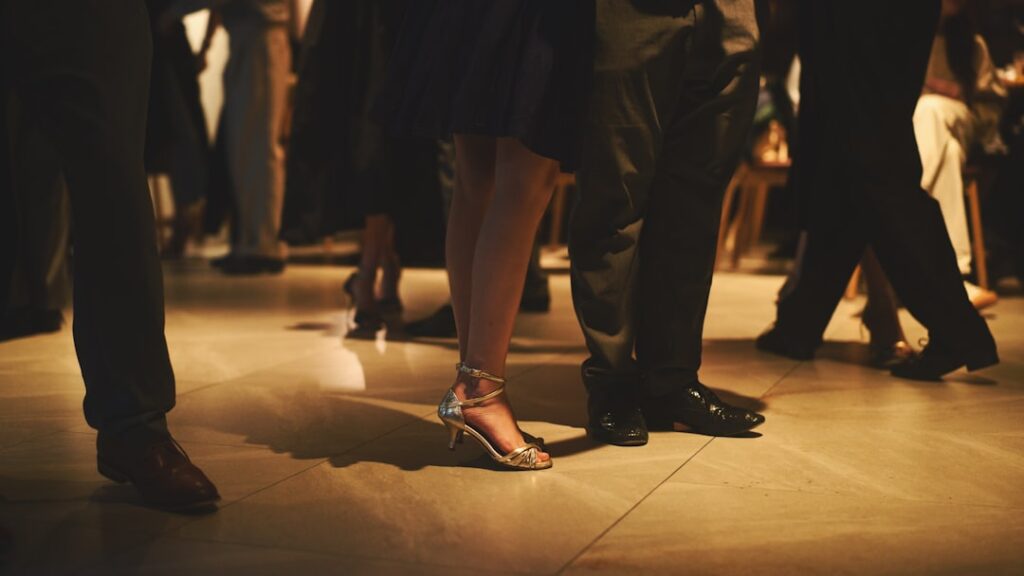
Whether you are planning a wedding reception, setting up a home dance studio, organizing a corporate event, or teaching dance classes in a rented space, a portable dance floor provides the surface you need without permanent installation. Modern portable dance floors come in a variety of formats designed for different dance styles, venues, and budgets.
This guide covers everything you need to know about portable dance floors, from the different types available to sizing, top brands, pricing, and practical advice for choosing the right system.
Types of Portable Dance Floors
Portable dance floors fall into three main categories, each suited to different applications and dance styles.
Snap-Together (Interlocking) Dance Floor Tiles
Snap-together dance floors consist of individual tiles (typically 12×12 inches or 24×24 inches) that interlock to form a continuous surface. These are the most common type for events like weddings, parties, and corporate functions.
Key Features
- Easy assembly: Tiles snap together without tools, often in 15 to 30 minutes for a standard dance floor
- Modular sizing: Build any rectangular size by adding or removing tiles
- Finishes: Available in wood grain, solid colors, black and white checkerboard, LED-lit, and parquet patterns
- Surface: Typically laminate or vinyl over a rigid backing
- Weight: 2 to 5 pounds per tile
- Best for: Events, weddings, galas, social dancing, DJ setups
Pros and Cons
Snap-together tiles are extremely convenient for events. They set up quickly, look polished, and can be reused hundreds of times. However, they are generally not suitable for serious dance training because the surface is either too slippery or too sticky for technical work, and the rigid tiles do not provide the shock absorption that dancers’ joints need.
Marley Dance Floor (Roll-Out Vinyl)
Marley floor is the industry standard for professional dance. It is a heavy-duty vinyl sheet that rolls out flat to create a consistent, controlled-slip surface. The name “Marley” comes from the original manufacturer, but it has become a generic term for all professional-grade roll-out dance vinyl.
Key Features
- Surface: Smooth, matte vinyl with a controlled coefficient of friction
- Rolls: Typically 5.25 feet wide and sold by the linear foot (63-foot rolls are standard)
- Thickness: 1.5mm to 2mm (thicker versions available)
- Installation: Rolls out flat and is taped at seams with vinyl dance floor tape
- Best for: Ballet, contemporary, modern, jazz, tap (with specific Marley types)
Pros and Cons
Marley provides the optimal dance surface for most studio disciplines. It offers the right amount of grip for turns and jumps while allowing controlled slides. The main drawback for portability is weight: a full roll can weigh 100 to 200 pounds. It also requires a smooth, flat subsurface and ideally a sprung or semi-sprung subfloor for shock absorption.
Roll-Out and Fold-Out Dance Floors
These are hybrid products that bridge the gap between event tiles and Marley. They typically consist of vinyl or laminate panels connected by a flexible backing that allows the floor to fold or roll up for transport.
Key Features
- Formats: Folding panel sections (4×4 feet or similar) or roll-up mats
- Transport: Easier to move than full Marley rolls, more compact than tile systems
- Best for: Traveling dance instructors, small practice spaces, home studios
Sizing Your Portable Dance Floor
Choosing the right size depends on the number of dancers and the type of event or practice.
Event Dance Floor Sizing
For social events where guests will be dancing casually, use these guidelines:
- Small gathering (25-50 guests): 12×12 feet (144 sq ft) is usually sufficient
- Medium event (50-100 guests): 15×15 feet to 18×18 feet (225-324 sq ft)
- Large event (100-200 guests): 20×20 feet to 24×24 feet (400-576 sq ft)
- Very large event (200+ guests): 24×24 feet or larger
The general rule is to allow 4.5 square feet per guest, assuming roughly 40 to 50 percent of guests will be dancing at any given time. It is better to have slightly more space than not enough, as a crowded dance floor discourages participation.
Studio and Practice Floor Sizing
- Solo practice: Minimum 8×8 feet for basic moves, 10×10 feet for more freedom
- Partner dancing: Minimum 10×10 feet, ideally 12×12 feet or larger
- Small class (4-8 students): 16×16 feet to 20×20 feet
- Full studio class (10-20 students): 30×40 feet or larger
Event Use vs Studio Use
The requirements for event dance floors and studio dance floors are fundamentally different.
Event Dance Floors
Event floors prioritize appearance, quick setup, and versatility. They need to look good in photos, complement the event decor, and handle guests in dress shoes, heels, and bare feet. The surface should be smooth enough for casual dancing but not so slippery that guests in leather-soled shoes lose their footing.
Snap-together tile systems are the standard for events. They offer the polished look and practical setup/teardown that event venues require. Many event rental companies stock these floors in various sizes and finishes.
Studio Dance Floors
Studio floors prioritize performance and safety. The surface must provide the correct friction for the dance discipline, and the substructure must absorb impact to protect dancers’ joints during jumps and repetitive movements.
For serious dance practice, a Marley surface over a portable sprung subfloor (such as O’Mara Sprung Floors or Harlequin Liberty panels) provides the best combination of surface control and shock absorption. This setup is more expensive and heavier but essential for preventing injuries during intensive training.
Portable Dance Floor Subfloors
What goes under your portable dance floor matters as much as the surface itself, especially for dance training.
Sprung Subfloor Systems
A sprung floor is a floating subfloor with built-in shock absorption. Portable sprung floor systems use interlocking panels with foam, rubber, or spring mechanisms that cushion impact. They are essential for ballet, contemporary, and any dance involving jumps.
Semi-Sprung Options
For lighter use or tighter budgets, closed-cell foam underlayments or interlocking foam tiles placed under Marley provide some shock absorption without the cost of a full sprung system.
Direct-to-Surface
For events and social dancing, snap-together tiles can be placed directly on most hard, flat surfaces including concrete, asphalt, grass (with a flat base layer), and existing flooring. No subfloor is needed for casual use.
Top Brands for Portable Dance Floors
Event Dance Floor Brands
- SnapLock: Industry leader in interlocking event dance floor tiles. Wide range of finishes including wood grain, black, white, and custom prints. Used by major event venues and rental companies.
- Greatmats: Offers both event tiles and practice flooring at competitive prices. Good selection for home studios and small events.
- Portable Floormaker: Specializes in high-end event floors with options for LED-lit and custom-branded tiles.
Studio Dance Floor Brands
- Harlequin: The premier name in professional dance flooring. Their Cascade, Reversible, and Liberty products are used in ballet companies and professional studios worldwide. Premium pricing but unmatched quality.
- Stagestep: Offers a comprehensive range of Marley and sprung floor products. Their Timestep and Bravo Marley floors are popular choices for studios and touring companies.
- Rosco: Known for their Adagio and Dance Floor products used in professional theaters and touring productions.
- O’Mara Sprung Floors: Specializes in portable sprung subfloor systems that pair with Marley surfaces.
Pricing Guide
Portable dance floor costs vary widely depending on the type, size, and quality level.
Snap-Together Event Tiles
- Budget tiles (12×12 inch): $4 to $8 per tile ($4 to $8 per sq ft)
- Premium tiles (12×12 inch): $8 to $15 per tile
- 12×12-foot floor (144 sq ft): $575 to $2,160
- 20×20-foot floor (400 sq ft): $1,600 to $6,000
Marley Dance Vinyl
- Standard Marley: $2 to $5 per square foot
- Premium Marley (Harlequin, Stagestep): $5 to $10 per square foot
- 10×10-foot practice space: $200 to $1,000
- 30×40-foot studio: $2,400 to $12,000
Portable Sprung Subfloor
- Foam underlayment: $0.50 to $2 per square foot
- Panel sprung system: $8 to $20 per square foot
- Complete Marley + sprung system (30×40 ft): $12,000 to $40,000
Rental Costs
Renting a portable dance floor for a single event is often more cost-effective than purchasing:
- 12×12-foot floor: $200 to $600 per event
- 20×20-foot floor: $500 to $1,500 per event
- Delivery and setup: $100 to $300 additional
Setting Up a Portable Dance Floor
Snap-Together Tiles
- Clear and clean the area where the floor will be placed
- Start in one corner and work outward, snapping tiles together row by row
- Install edge and corner trim pieces for a finished look
- Check that all connections are fully locked before use
Marley Floor
- Unroll the Marley in the space and allow it to relax flat for several hours (ideally overnight)
- Align rolls edge to edge with minimal gaps
- Tape seams with professional vinyl dance floor tape (not duct tape or gaffer tape)
- Tape edges to the subfloor or use weighted edge strips to prevent curling
Maintenance and Storage
Proper care extends the life of your portable dance floor significantly:
- Cleaning: Sweep or vacuum before and after each use. Mop Marley floors with a damp mop and vinyl cleaner. Wipe snap-together tiles with a damp cloth.
- Storage: Roll Marley floors face-in on the original core tube. Stack snap-together tiles flat on a pallet or in storage cases. Store in a climate-controlled space away from extreme heat or cold.
- Transport: Use padded cases or bags for tiles. Transport Marley rolls horizontally when possible, or vertically for short periods.
- Inspection: Check for damaged tiles, worn surfaces, or loose connections before each event or practice session.
Indoor vs Outdoor Use
Indoor Events
Most portable dance floors are designed primarily for indoor use. They perform best on flat, hard surfaces like ballroom floors, gymnasium courts, and event center concrete. Indoor use provides the most predictable surface conditions and the longest product lifespan.
Outdoor Events
Outdoor dance floors require extra planning:
- Ground leveling: The ground must be reasonably flat. Use a plywood or platform base over uneven terrain.
- Moisture protection: Place a moisture barrier under the floor to prevent ground moisture from warping tiles or making surfaces slippery.
- Weather contingency: Have a tent or canopy over the dance floor to protect from rain and direct sun.
- Anchoring: Secure edges to prevent tiles from shifting or lifting in wind.
Final Thoughts
A portable dance floor opens up possibilities for events and dance practice in virtually any location. For events and social dancing, snap-together tile systems offer the best combination of appearance, convenience, and value. For serious dance training, invest in quality Marley vinyl over an appropriate subfloor system to protect dancers and provide the right performance surface.
Consider how often you will use the floor, what dance styles it must support, and whether renting or buying makes more financial sense for your situation. With the right portable dance floor, every space becomes a potential dance venue.
Prefer to explore on your own?
See how new flooring looks in your actual room in seconds — free, no signup.
Try the free Floor Studio →