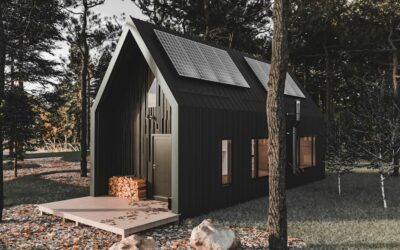
The biggest decision in a tiny house project is not the floor plan or the finishes. It is whether the house sits on wheels or on a foundation. Portable tiny homes promise freedom to move and a way around some building rules, while a tiny home on a foundation is treated much more like a real house, with permits, inspections and the long-term value that comes with them. Each path changes how you finance, insure, park, connect and eventually sell the home.
In short: choose a portable tiny house if you expect to move, want to rent land rather than buy it, or need to build before you know where the house will end up. Choose a foundation build if you own the land, your local zoning allows small dwellings or accessory units, and you want the home to build equity and qualify for standard financing. We explain why, and what to check in your area before you commit.
- Portable Tiny Homes: How Wheels Change the Rules
- Towing Weight, Size and Licensing
- Tiny Homes on Foundations: Treated Like a House
- Side-by-Side Comparison
- Zoning, Insurance and Utility Hookups
- Foundations, Anchoring and Wind
- Decision Guide: Which One Fits You?
- Cost Ranges
- When to Call a Licensed Professional
- Frequently Asked Questions
Rules differ widely from one town and state to the next, so treat everything here as general guidance and confirm with your local planning and building departments.
Portable Tiny Homes: How Wheels Change the Rules
A towable tiny house is usually built on a dedicated tiny home trailer frame, with the walls and floor fastened directly to the steel. Because it rides on an axle and hitch, many jurisdictions classify it as a recreational vehicle or park model rather than a dwelling. That classification is the root of nearly every advantage and disadvantage of houses on wheels.
Advantages
- Mobility: you can relocate for work, family or a better parking spot without selling.
- Build anywhere: construction can happen in a rented shop or driveway, then the house moves to its site.
- Often no residential building permit: as a vehicle, it may fall outside the residential building code, though many builders follow RV or park-model standards anyway.
- Land flexibility: you can rent a spot in a tiny home community, RV park or on a friend’s property where allowed.
Disadvantages
- Zoning limits: many towns do not allow anyone to live full time in an RV outside a campground or park.
- Size and weight caps: road limits restrict width, height and length, which caps your interior space.
- Depreciation: like vehicles, movable tiny homes often lose value over time rather than appreciating.
- Financing: buyers typically use RV loans or personal loans at higher rates and shorter terms than mortgages.
Towing Weight, Size and Licensing
Portable tiny homes are heavy. A 20- to 24-foot house commonly weighs somewhere in the range of 8,000 to 12,000 pounds, and longer models can exceed that. That means you need a heavy-duty pickup with a tow rating comfortably above the loaded weight, the right hitch and a trailer with properly rated axles, tires and brakes.
Most states set a maximum width for vehicles that can be towed without a special permit, commonly around 8.5 feet, and a height limit often in the 13.5- to 14-foot range. Beyond those, you may need oversize permits or a professional hauler. Very heavy combinations can require a higher class of driver’s license, and the trailer itself needs registration and plates. Requirements vary by state, so check with your state motor vehicle agency before you build to the edge of any limit.
Many owners move their tiny house only once or twice. If that is you, hiring a licensed, insured hauler is usually safer and cheaper than buying a truck big enough to tow it.
Tiny Homes on Foundations: Treated Like a House
Tiny homes on foundations are built on a slab, crawlspace, piers or a permanent chassis anchored to a foundation. Most jurisdictions treat them as single-family dwellings or accessory dwelling units, which means they must meet the residential building code. Many local codes have adopted an appendix with relaxed rules for very small homes, such as lofts and ladders, but adoption varies.
Advantages
- Legal full-time living where small dwellings or ADUs are allowed.
- Appreciation: a permanent home on owned land generally holds or gains value like other real property.
- Standard financing and insurance: mortgages, construction loans and homeowners policies become options.
- No road limits: you can build wider than 8.5 feet, add a porch and design for comfort rather than towing.
- Better utility connections: permanent water, sewer or septic and electric service are simpler to approve.
Disadvantages
- Permits and inspections: plan reviews, fees and inspection schedules add time and cost.
- Minimum size rules: some towns still set minimum square footage for dwellings, which can rule out very small homes.
- Not movable: once it is on a foundation, the home stays with the land.
- Land required: you need a buildable lot with utility access.
Side-by-Side Comparison
| Factor | On wheels | On foundation |
|---|---|---|
| Typical classification | RV or park model | Dwelling or ADU |
| Permits | Vehicle registration; local parking rules | Building, electrical, plumbing permits |
| Financing | RV or personal loan | Mortgage or construction loan |
| Long-term value | Usually depreciates | Usually holds or appreciates |
Zoning, Insurance and Utility Hookups
Zoning decides where you can live, not just where you can park. Before buying or building, ask your planning department three questions: Is full-time occupancy of an RV or tiny house on wheels allowed on private property? Are accessory dwelling units permitted, and what size and setback rules apply? Does the zone have a minimum dwelling size?
Insurance follows classification. A house on wheels built to RV or park-model standards can often be covered by a specialty RV policy. Self-built houses without certification can be hard to insure at all. A tiny house on a foundation that passed inspections can typically get a standard homeowners policy.
Utilities work differently, too. Portable homes often use RV-style hookups: a 30- or 50-amp shore power inlet, a fresh water hose connection and a sewer outlet, or off-grid systems like solar, composting toilets and water tanks. Foundation homes connect permanently to the electrical service, a water supply and a public sewer or septic system. In either case, electrical, plumbing and gas work should be done or inspected by licensed trades. A tiny space packs a lot of wiring, propane and water lines close together, and mistakes are dangerous.
Foundations, Anchoring and Wind
Lightweight structures catch wind like a sail. A tiny home on wheels parked long term should sit on leveled supports, with the trailer chocked, and be secured with a tie-down or anchoring system rated for your area’s wind conditions. Trailer stabilizer jacks help level the home and reduce bounce, but they are not a substitute for real anchors, which typically use ground anchors and straps attached to the frame. Your local building department or a structural professional can tell you what is required.
Foundation builds follow the residential code for footings, frost depth and anchoring. Footings must extend below the local frost line, and the house must be fastened to the foundation with anchor bolts or straps to resist uplift. High-wind and hurricane regions add stricter connection requirements. Call 811 before excavating for any footing, pier or utility trench.
Decision Guide: Which One Fits You?
- Do you own land where small homes or ADUs are allowed? If yes, a foundation build is usually the stronger long-term choice.
- Will you move within five years? If yes, wheels make sense, provided you have legal places to park.
- Do you need a mortgage? Foundation builds qualify far more often.
- How big do you want to live? If 8.5 feet of interior width feels cramped, a foundation frees you from road limits.
- Is resale value important? Permanent homes on owned land usually win.
Cost Ranges
A professionally built tiny house on wheels commonly ranges from roughly $50,000 to $150,000, and DIY shells and trailers can come in well below that depending on materials. A permanent tiny home on a foundation varies more, because site work, permits, foundation and utility connections can add tens of thousands of dollars on top of the structure itself. Land cost is the biggest variable for foundation builds; lot rent is the ongoing cost for many portable tiny homes. Get local quotes before budgeting.
When to Call a Licensed Professional
Bring in licensed professionals for any electrical, plumbing, gas and HVAC work, whether the house is on wheels or on a foundation. A structural engineer or experienced builder should review trailer framing attachments, foundation design and wind anchoring, especially in high-wind or heavy-snow regions. Pull permits where required and schedule inspections; they protect your safety and your ability to insure and sell the home later. For moving a heavy house on public roads, use a licensed and insured hauler.
Frequently Asked Questions
Are portable tiny homes legal to live in full time?
It depends on local zoning. Many areas restrict full-time living in RVs outside designated parks, while some allow it on private land or in tiny home communities.
How much does a towable tiny house weigh?
Many 20- to 24-foot models weigh roughly 8,000 to 12,000 pounds, so you need a heavy-duty truck and properly rated trailer components to tow one.
Do tiny homes on foundations need building permits?
Yes, in most places. They are usually treated as dwellings or accessory units and must meet residential building code with inspections.
Which type holds its value better?
A tiny house on a foundation on land you own generally holds or gains value, while houses on wheels tend to depreciate like vehicles.
Can I put a tiny house on wheels on a foundation later?
Sometimes, but converting usually requires meeting residential code, which can mean structural changes, inspections and removing the trailer from vehicle classification.