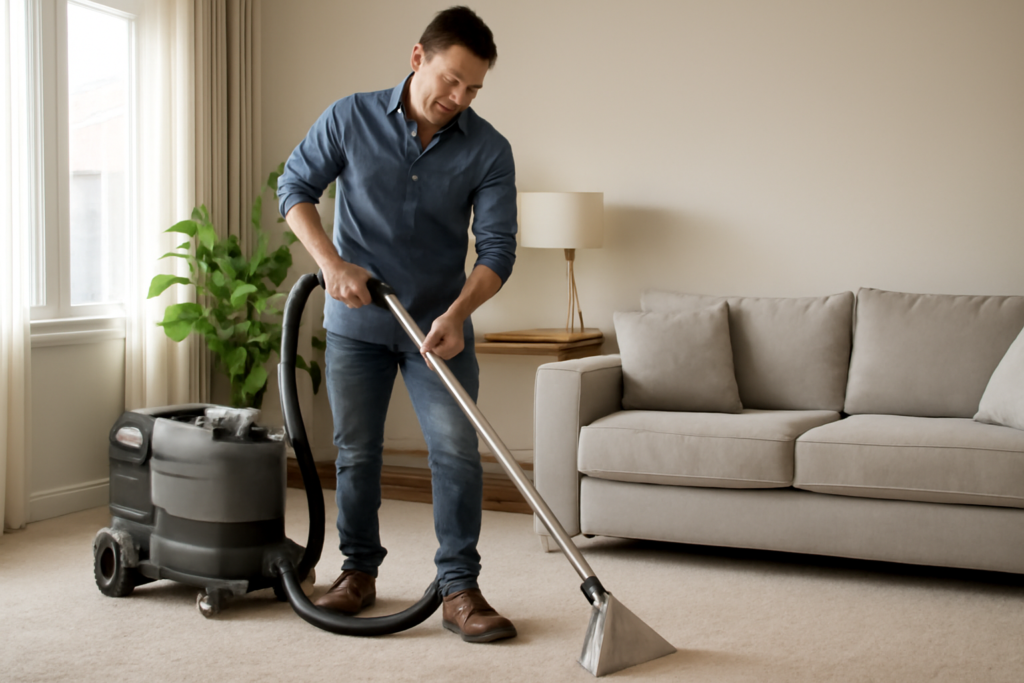
When ordinary vacuuming and spot treatments no longer keep your carpets looking fresh, a professional grade carpet cleaner can restore them to near-new condition. These heavy-duty machines and solutions deliver the deep-cleaning power that rental units and light consumer models often lack. Whether you are a homeowner tackling stubborn stains or someone considering a serious cleaning tool, this guide explains how to choose the right professional grade cleaner, what features matter, and how to use it correctly for deep, long-lasting results.
- What Makes a Cleaner Professional Grade
- Types of Professional Grade Carpet Cleaners
- Key Features to Look For
- What a Professional Grade Cleaner Costs
- Choosing the Right Cleaning Solution
- How to Use a Professional Grade Carpet Cleaner
- Tips for the Best Results
- Renting Versus Buying
- Maintaining Your Machine
- Matching the Cleaner to Your Carpet Type
- Getting Professional Results at Home
What Makes a Cleaner Professional Grade
A professional grade carpet cleaner differs from basic consumer models in power, durability, and cleaning performance. These machines use stronger motors, higher water lift and suction, more powerful spray pressure, and often heated water to break down deeply embedded dirt. They are built with commercial-quality components designed to run longer and clean more thoroughly. The result is better soil extraction, faster drying, and cleaner-looking carpets that stay fresh longer. Professional grade also describes potent cleaning solutions formulated to lift grease, traffic grime, and set-in stains that gentler consumer products leave behind.
Types of Professional Grade Carpet Cleaners
Several machine styles fall under the professional grade umbrella, each suited to different needs:
- Hot water extractors (steam cleaners): The most common deep cleaners, spraying heated solution and extracting it with strong suction. Excellent for whole-room deep cleaning.
- Portable spot extractors: Compact units for stairs, upholstery, autos, and targeted stains.
- Walk-behind and self-contained machines: Larger commercial units for big areas and frequent use.
- Truck-mount systems: The most powerful option, used by cleaning companies and beyond most homeowners’ needs.
For most homeowners wanting professional results, a high-quality hot water extractor offers the best balance of power and practicality.
Key Features to Look For
When comparing machines, focus on the features that drive cleaning performance and convenience:
- Strong suction and water lift, which determine how much moisture and dirt get extracted, affecting drying time.
- Heated cleaning to boost stain-lifting power.
- High-capacity tanks so you refill less often during large jobs.
- Adjustable spray pressure for different carpet types.
- Quality brushes that agitate fibers to release ground-in soil.
- Included attachments for stairs, edges, and upholstery.
- Durable build quality for reliability over many uses.
What a Professional Grade Cleaner Costs
Investing in this category costs more than a basic consumer machine, but pricing spans a wide range. Entry-level professional-quality home extractors run roughly $200 to $500, while commercial-grade portable units cost $500 to $1,500. Larger self-contained and walk-behind machines can reach several thousand dollars. Renting a professional grade unit from a hardware store typically costs $30 to $50 per day plus solution. For homeowners who deep-clean a few times a year, buying a solid mid-range extractor often pays for itself within a couple of years compared with repeated rentals or professional cleaning visits that run $100 to $300 per session.
Choosing the Right Cleaning Solution
The machine is only half the equation, since the solution determines chemical cleaning power. Professional grade formulas are concentrated and matched to specific tasks. Use a general deep-cleaning detergent for whole-room work, an enzyme cleaner for pet and organic stains, and a degreaser for oily traffic lanes. Always match the solution to your carpet fiber, since wool and natural fibers need pH-neutral, wool-safe products, while synthetics tolerate stronger formulas. Avoid overusing detergent, because leftover residue attracts dirt and makes carpets re-soil faster. Following the dilution ratio on the label is essential for good results.
How to Use a Professional Grade Carpet Cleaner
Proper technique makes the difference between a mediocre clean and a professional-looking result. Follow these steps:
- Vacuum thoroughly first to remove loose dirt so the extractor handles embedded soil.
- Pre-treat stains and traffic lanes with a targeted spray and let it dwell a few minutes.
- Fill the tank with hot water and the correct solution dilution.
- Work in overlapping passes, spraying on the forward stroke and extracting on the pull-back stroke.
- Do dry passes with the spray off to pull out extra moisture and speed drying.
- Ventilate the room with fans and open windows to dry the carpet quickly.
Avoid over-wetting, since soaked carpet risks mold, and let it dry fully before replacing furniture.
Tips for the Best Results
A few extra habits elevate your outcome. Move slowly on the extraction stroke to maximize water and soil removal. Overlap each pass slightly so you do not leave streaks. Change the dirty tank water frequently rather than pushing muddy water back into the carpet. Place foil or plastic tabs under furniture legs when you set them back so any residual moisture does not cause stains. Finally, clean once or twice a year in most homes, more often with pets and children, to keep fibers fresh and extend the life of your carpet.
Renting Versus Buying
One of the first decisions is whether to rent a professional grade machine or invest in your own, and the right answer depends on how often you clean. Renting makes sense for occasional deep cleans, while buying pays off for regular use:
- Rent if you deep-clean once a year or less, or need a heavy commercial unit for a single big project. Daily rentals run $30 to $50 plus solution.
- Buy if you clean several times a year, have pets or children, or want a machine ready for immediate spot treatment.
- Consider storage and effort, since owning means maintaining and storing a bulky machine.
For most active households with carpet in several rooms, a solid mid-range extractor pays for itself within two or three years compared with repeated rentals or professional visits.
Maintaining Your Machine
A professional grade carpet cleaner is an investment, and keeping it in good shape ensures years of reliable performance. After every use, empty both the clean and dirty tanks completely and rinse them, since leftover water breeds odor and mildew. Flush the spray lines with clean water to prevent detergent buildup that can clog the jets, and clean the brushes and nozzles of trapped hair and fibers. Wipe down the exterior and let all components air-dry fully before storing to avoid mold. Periodically check hoses and seals for wear, and descale the heating element if you have hard water. Store the machine in a dry place away from freezing temperatures, which can crack tanks and lines. A few minutes of care after each job keeps suction strong and extends the life of the machine considerably.
Matching the Cleaner to Your Carpet Type
Different carpets tolerate cleaning differently, so matching your approach to the fiber protects your investment. Getting this wrong can shrink, distort, or discolor an expensive carpet:
- Nylon and synthetics: The most robust, tolerating hot water extraction and stronger detergents well.
- Wool and natural fibers: Sensitive to heat and high pH, so use lukewarm water, wool-safe pH-neutral solutions, and low moisture to avoid shrinkage.
- Berber and looped styles: Prone to snagging, so use gentle brushing and avoid aggressive agitation.
- Delicate or antique rugs: Often best left to specialists rather than a home machine.
Always check the carpet manufacturer’s cleaning recommendations, and test any new solution in an inconspicuous corner before treating the whole room, so you can confirm it will not affect the color or texture.
Getting Professional Results at Home
A professional grade carpet cleaner puts genuine deep-cleaning power in your hands, letting you refresh carpets, remove stubborn stains, and extend the life of your flooring without always calling in a service. The keys are choosing a machine with strong suction and heat, pairing it with the right fiber-safe solution, and using patient, overlapping technique with plenty of dry passes. With the correct tool and method, you can achieve results that rival what the pros deliver, keeping your carpets clean, healthy, and looking their best for years to come.