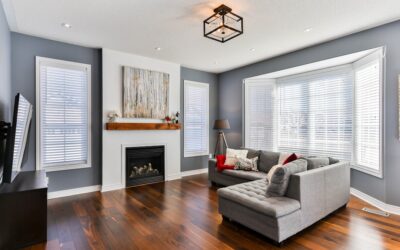
Engineered hardwood now outsells solid wood roughly two to one in US new construction, and for once the trendline reflects the actual product. Modern engineered floors with 4 to 6 millimeter wear layers refinish multiple times, install over concrete slabs, and resist humidity swings better than solid plank. That said, the budget end of the category is a different product entirely, and not understanding the pros and cons of engineered hardwood at the wear-layer level is how homeowners end up with floors that delaminate in five years.
How Engineered Hardwood Is Built
An engineered plank stacks a real hardwood veneer on top of a cross-laminated plywood or HDF core. The cross-grain construction makes the plank dimensionally stable across humidity swings, where solid wood expands and contracts seasonally. The veneer can be sliced thin at 0.6 millimeters or sawn thick at 6 millimeters, and that single spec defines almost everything about how the floor will perform.
NWFA (National Wood Flooring Association) certifies engineered products through its certified products program. Look for the NWFA Responsible Procurement mark on the box.
The Real Pros
Dimensional stability is the headline benefit. Engineered planks expand and contract about 50 percent less than equivalent solid wood. That makes them suitable for basements, slabs, and over hydronic radiant heat where solid wood is a gamble.
Installation flexibility matters too. Engineered planks click-lock float, glue down, or nail down depending on the product. Solid wood almost exclusively nails. The float option is a significant labor savings on slab installs.
- Stable across 30 to 60 percent indoor humidity range.
- Installs over concrete slabs after moisture testing per ASTM F2170.
- Wide-plank widths up to 10 inches without cupping concerns.
- Pre-finished factory surfaces with 7 to 10 layer aluminum oxide topcoats.
- Faster install time, often 50 to 70 percent of a comparable solid installation.
The Real Cons
Wear layer thins refinishability. A 6 millimeter sawn veneer refinishes 4 to 6 times over its lifespan. A 2 millimeter veneer refinishes once. A 0.6 millimeter veneer cannot be refinished at all, only screened and recoated. Budget engineered products almost universally use thin veneers, and that limits the floor to roughly 15 to 20 years before replacement.
Water resistance is still water vulnerability. Despite marketing claims, even waterproof-rated engineered floors can fail at the seams under standing water from a dishwasher leak or burst supply line. The core swells, the veneer telegraphs the damage, and the floor needs partial or full replacement.
Wear Layer Thickness Matters Most
The single spec that determines value in engineered hardwood is the wear layer thickness. Here is what to expect at each tier:
- 0.6 to 1 millimeter: budget products, $2 to $4 per sq ft, not refinishable, 10 to 15 year life.
- 2 millimeter: mid-range, $4 to $7 per sq ft, screens and recoats well, one full refinish possible.
- 3 to 4 millimeter: high quality, $6 to $10 per sq ft, refinishes 2 to 3 times.
- 4 to 6 millimeter sawn-face: premium, $9 to $16 per sq ft, refinishes 4 to 6 times, lifespan comparable to solid.
Brand Comparison
The category leaders in 2026 hit different price points. Bruce, Pergo Outlast, and Mohawk RevWood Plus dominate the $3 to $5 per sq ft tier with thin veneers and click-lock construction. Mannington Restoration, Shaw Floorte Plus, and Bruce Densitek occupy the $5 to $8 mid range. Lauzon Pure Genius, DuChateau, and Mirage hit the $10 to $18 premium tier with thick sawn-face veneers and proprietary finishes.
Big-box exclusive lines from Lowe’s and Home Depot often badge mid-grade product at attractive prices but skip the thicker wear layers. Read the spec sheet, not the marketing copy.
Janka Hardness and Species Selection
The veneer species matters as much as thickness for dent resistance. Janka hardness ratings tell the story. White oak comes in at 1360 lbf, hickory at 1820, Brazilian cherry at 2350, and red oak at 1290. Soft woods like American walnut at 1010 dent easily under chair legs and dog claws.
For high-traffic kitchens and families with pets, look for Janka above 1300 and a hardened topcoat. Most premium engineered products carry aluminum oxide finishes with 25-year residential wear warranties.
Installation Costs Versus Solid
Engineered installation costs vary widely by method. Float-installed click-lock product runs $3 to $6 per sq ft labor. Glue-down installs run $4 to $7 per sq ft. Nail-down installs match solid wood at $4 to $7 per sq ft.
For a 1,000 sq ft installation, expect engineered to come in at $7,000 to $20,000 all-in compared to $8,000 to $18,000 for solid. The cost overlap is significant, and the decision usually comes down to substrate type rather than budget.
When to Choose Engineered Over Solid
- Slab construction or below-grade basements.
- Hydronic radiant heat systems below the floor.
- Wide-plank looks over 5 inches in width.
- Humid coastal climates where humidity routinely exceeds 60 percent indoors.
- Faster installation timelines where labor savings matter.
- Pre-finished factory surfaces with no on-site sanding mess.
When Solid Still Wins
Choose solid hardwood when you have a stable plywood subfloor on the main level of a stick-built home, planning a multi-generation install with full refinishing through 100 years, working in a historic restoration where solid wood is required, or planning a custom on-site stain and finish that engineered products do not accommodate well.
Indoor Air Quality and Certifications
Engineered hardwood uses adhesives that can off-gas formaldehyde. Look for FloorScore certification by SCS Global Services or GreenGuard Gold certification, both of which verify the product meets strict VOC emission limits. CARB Phase 2 compliance is the legal minimum in the US, but the voluntary FloorScore mark sets a higher bar that matters for nurseries, bedrooms, and sensitive occupants.
Final Buying Advice
Understanding the real pros and cons of engineered hardwood at the wear-layer level lets you spend confidently. Pick the right tier for your space and the floor will outlive your tenure in the house. Pick the wrong tier and you will replace the floor before you sell. Read spec sheets, not marketing copy, and bring a sample to the lighting conditions in your actual room before signing the order.
Prefer to explore on your own?
See how new flooring looks in your actual room in seconds — free, no signup.
Try the free Floor Studio →