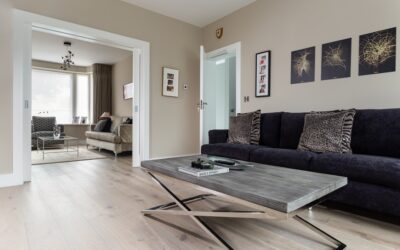
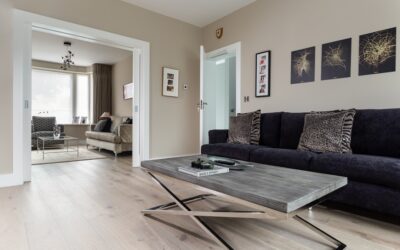
The term laminated hardwood trips up shoppers because it sounds like cheap laminate but actually describes engineered wood, which is the most-installed real hardwood category in North America. A laminated hardwood plank stacks a real-wood wear layer (1 to 6 mm thick) over a cross-banded plywood or HDF core that resists the seasonal swelling and shrinking that warps solid wood. Done right, laminated hardwood installs cleanly over concrete slabs, radiant heat systems, and basement subfloors where solid hardwood simply cannot live. The category covers everything from $3.99 per square foot big-box product up to $14 per square foot architectural plank.
- How Laminated Hardwood Differs from Laminate
- Wear Layer Thickness Matters Most
- Core Construction Options
- Brand Spotlight: Mirage Floors
- Species and Visual Options
- Installation Methods
- Cost Benchmarks for 2026
- Where Laminated Hardwood Excels
- Where Solid Wood Still Wins
- Maintenance Reality
- Common Mistakes to Avoid
- Final Word
How Laminated Hardwood Differs from Laminate
The two products share zero construction in common despite the name confusion:
- Laminated (engineered) hardwood: real wood top layer over plywood or HDF core, can be refinished 1 to 4 times depending on wear layer thickness
- Laminate flooring: photographic image of wood under a melamine wear layer over HDF core, cannot be refinished
Laminated hardwood costs 2 to 4 times what laminate costs but delivers genuine wood appearance, refinishability, and the long-term value buyers expect from real wood.
Wear Layer Thickness Matters Most
The thickness of the top wood layer determines refinishability and longevity:
- 1 mm wear layer: entry-level product, cannot be refinished, 8 to 12 year life
- 2 mm wear layer: mid-tier, light buff and recoat possible, 15 to 20 year life
- 3 mm wear layer: can be sanded once, 25 to 30 year life
- 4 to 6 mm wear layer: can be sanded 2 to 4 times, lifetime potential with care
Premium brands like Mirage, Lauzon, and Bella Cera typically run 3 to 4 mm wear layers. Big-box product often runs 1 to 2 mm, which limits the long-term value.
Core Construction Options
Three core types dominate the market:
- Plywood core (5 to 9 ply): highest stability, best for radiant heat, $5 to $14 per sq ft
- HDF (high-density fiberboard) core: mid-tier, slightly less stable than plywood, $4 to $8 per sq ft
- SPC (stone polymer composite) core with wood top: emerging hybrid, fully waterproof, $5 to $10 per sq ft
Plywood-core engineered hardwood handles temperature and humidity swings better than HDF and is the standard for premium installations over concrete slabs and radiant heat.
Brand Spotlight: Mirage Floors
Mirage, manufactured in Saint-Georges, Quebec, sets the bar for laminated hardwood quality. The Mirage Sweet Memories collection in white oak features a 4 mm sawn wear layer over a 7-ply Baltic birch core, with the proprietary Nanolinx finish carrying a 35-year warranty against wear-through. Pricing runs $9.99 to $14.99 per square foot installed, and Mirage installs cleanly over concrete with proper moisture testing and barrier. The Authentic Plus series adds wire-brushed and hand-scraped textures that hide minor wear better than smooth finishes, making it a strong fit for homes with kids and pets.
Species and Visual Options
Common species in laminated hardwood form:
- White oak: dominant current trend, accepts wide stain range, Janka hardness 1360
- Red oak: traditional warm pink-amber tones, Janka 1290
- Hickory: dramatic grain variation, Janka 1820, hardest common species
- Maple: tight, even grain, modern aesthetic, Janka 1450
- Hard maple birch and yellow birch: Canadian classics, Janka 1260 and 1470
- Walnut: deep chocolate tones, Janka 1010, dents more easily
Hickory and white oak handle dog claws and dropped dishes better than walnut or red oak. Janka hardness tells most of the story for daily durability.
Installation Methods
Laminated hardwood installs three ways:
- Glue-down: directly to concrete or plywood with premium urethane adhesive like Bostik Best, most stable long-term
- Nail-down or staple-down: 18-gauge cleat nails into plywood subfloor, similar to solid hardwood
- Floating click-lock: over premium 3 mm cork or rubber underlayment, fastest install but slightly hollow underfoot
Glue-down delivers the most solid feel and best long-term performance over concrete. Floating click-lock is the easiest DIY option and works over most existing subfloors.
Cost Benchmarks for 2026
Installed costs across the laminated hardwood market:
- Entry-level engineered (1 to 2 mm wear layer): $5.49 to $7.99 per sq ft
- Mid-tier (2 to 3 mm wear layer, plywood core): $7.99 to $11.99 per sq ft
- Premium (4 to 6 mm wear layer, hand-scraped or wire-brushed): $11.99 to $17.99 per sq ft
- Wide plank European white oak (7-inch plus): $14.99 to $24.99 per sq ft
Add $0.75 to $1.50 per sq ft for subfloor leveling and $2 to $5 per linear foot for stair nosings if going up stairs.
Where Laminated Hardwood Excels
Best applications:
- Concrete slabs (with moisture testing and proper underlayment)
- Radiant heat installations
- Basement walkouts where moisture is controlled
- Wide plank installations (5-inch plus) where solid wood movement creates gaps
- Condos requiring acoustic underlayment for STC compliance
Where Solid Wood Still Wins
Solid hardwood retains advantages in specific scenarios:
- Historic home renovations where matching existing floors matters
- Multi-generational installations where 4 to 6 refinish cycles are planned
- Climates with stable indoor humidity year-round
- Above-grade installations over plywood subfloors
Maintenance Reality
Laminated hardwood maintenance mirrors solid wood:
- Sweep or vacuum (with hardwood-safe head) 2 to 3 times per week
- Damp mop with Bona Hardwood Floor Cleaner monthly, never with water and vinegar
- Avoid steam mops entirely, which delaminate the wear layer over time
- Recoat with compatible waterborne finish every 5 to 10 years to refresh appearance
Common Mistakes to Avoid
Frequent missteps with laminated hardwood projects:
- Buying 1mm wear-layer product expecting it to last 30 years (it won’t)
- Skipping moisture testing on slab installs (causes delamination within 2 years)
- Installing without proper acclimation (causes gaps in winter, cupping in summer)
- Using cheap underlayment instead of 3mm cork or rubber (creates hollow underfoot feel)
- Mismatching expansion gap at walls (causes buckling)
Final Word
Modern laminated hardwood delivers real wood appearance, refinishability, and long service life in installations where solid wood would fail. Match the wear layer thickness to your expected lifetime, the species to your hardness needs, and the install method to your subfloor. With premium brands like Mirage, Lauzon, or Mohawk UltraWood, the result rivals solid hardwood at lower total cost and broader application range.
Prefer to explore on your own?
See how new flooring looks in your actual room in seconds — free, no signup.
Try the free Floor Studio →