
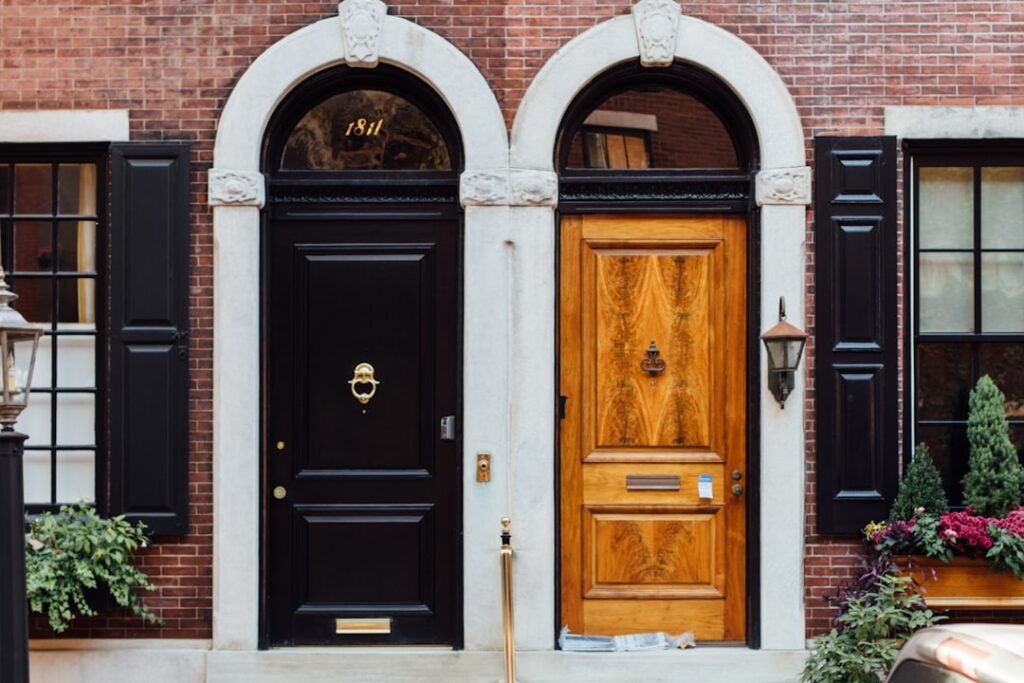
Hardwood doors bring a sense of quality and permanence that hollow builder-grade doors simply cannot match. Whether as a grand front entrance or a set of solid interior doors, real wood adds beauty, sound insulation, durability, and lasting value to a home.
Part of our Windows & Doors guide — explore the full guide →
Yet the world of wood doors can be confusing, with solid wood, solid-core, and hollow-core options all competing for your attention. This guide explains the differences, the best wood species, realistic costs, and how to care for hardwood doors so you can choose with confidence.
Solid Wood vs Solid-Core vs Hollow-Core
Understanding the three main door constructions is the first step, because the labels are easy to mix up. True hardwood doors are built from solid lumber, but two other types are common and worth knowing for comparison.
- Solid wood doors: Made entirely from real wood, either as solid panels or a wood frame with wood panels. These are the heaviest, most durable, and best at blocking sound, and they can be sanded and refinished for decades.
- Solid-core doors: Feature a wood veneer or composite skin over a dense engineered core. They mimic the heft and sound dampening of solid wood at a lower cost, but cannot be refinished as deeply.
- Hollow-core doors: Have a light cardboard or honeycomb interior under a thin skin. They are inexpensive and light but offer little sound insulation or durability.
Best Wood Species for Doors
The species you choose affects appearance, durability, and price. Different woods bring different grain patterns, colors, and hardness, so consider both looks and performance for the location.
- Oak: Strong, widely available, with a pronounced grain; a popular and durable choice.
- Maple: Hard and smooth with a fine, even grain that takes paint and stain well.
- Mahogany: A premium, rich reddish wood prized for entry doors and elegant interiors.
- Walnut: A luxurious dark hardwood with beautiful grain, often used for statement doors.
- Cherry: Smooth and warm-toned, deepening in color over time.
- Knotty alder or pine: Softer woods with rustic character at a more affordable price.
Interior vs Exterior Hardwood Doors
Interior and exterior doors face very different demands. Interior hardwood doors focus on appearance, sound control, and feel, so even a moderately durable species works well in a protected indoor setting. They add a sense of solidity to bedrooms, offices, and bathrooms.
Exterior hardwood doors must also withstand sun, rain, temperature swings, and security concerns. For entries, denser, more weather-resistant species like mahogany and oak are common, and the door needs a quality finish to protect against moisture and UV damage. An exterior wood door in a fully exposed location requires more upkeep than one shielded by a porch or overhang.
The Advantages of Hardwood Doors
Real wood doors deliver benefits that justify their higher price for many homeowners. The solid mass dampens sound noticeably better than hollow doors, making rooms feel more private and peaceful. The substantial weight and feel signal quality every time you open one.
Durability is another major plus, since solid hardwood resists dents and damage and can be sanded and refinished repeatedly to erase years of wear or change the color. Wood also brings natural warmth and timeless style, and a handsome front door can boost curb appeal and home value. With proper care, a quality hardwood door can last for decades.
Hardwood Door Cost
Pricing spans a wide range depending on species, construction, size, and whether the door is interior or exterior. As a general estimate, solid wood interior doors often run from a couple hundred dollars to well over a thousand for premium species and custom designs. Solid-core doors typically cost less than full solid wood, while hollow-core doors are the cheapest by far.
Exterior solid hardwood doors, especially custom entry doors in species like mahogany, can cost considerably more, sometimes several thousand dollars before installation. Installation, hardware, and finishing add to the total. While not cheap, a solid hardwood door is often viewed as a long-term investment given its durability and ability to be refinished rather than replaced.
Caring for Hardwood Doors
Proper care keeps hardwood doors looking their best for years. Dust and wipe interior doors with a soft, slightly damp cloth, and avoid harsh chemicals that can strip the finish. Address scratches or dings promptly, since solid wood can often be sanded and touched up.
- Keep a protective finish or sealant intact, especially on exterior doors exposed to weather.
- Reapply finish or topcoat on entry doors periodically, following the product directions, to guard against sun and moisture.
- Wipe up water and condensation rather than letting it sit on the wood.
- Check and maintain weatherstripping on exterior doors to prevent drafts and moisture intrusion.
- Refinish solid wood doors when wear becomes noticeable to restore beauty and protection.
How to Choose the Right Door
Start by matching the door type to its job. For a quiet bedroom or a refined interior, solid wood or solid-core delivers the heft and sound control you want. For a back hallway closet where budget matters most, a hollow-core door may be perfectly adequate. For a front entry, prioritize a weather-resistant solid hardwood with security and a durable finish in mind.
Then consider style, species, and finish so the door complements your home. Confirm the door size and swing direction, and decide whether you want it pre-finished or finished on site to match your trim. Buying quality hardware and having the door hung correctly ensures it operates smoothly and seals well for the long haul.
Door Styles and Panel Designs
Beyond construction and species, the panel design shapes how a hardwood door looks in your home. Raised-panel doors, with framed panels that sit proud of the surface, read as classic and traditional, while flat or recessed panels lean more contemporary. The number of panels also matters, with two-panel doors feeling modern and six-panel doors feeling traditional.
Shaker-style doors, defined by clean, square-edged panels, suit both transitional and modern interiors and have become very popular. Glass-paneled and French doors bring light between rooms, and arched or specialty designs add character to entries. Choosing a panel style that matches your trim and overall decor helps the door feel like an integrated part of the home rather than an afterthought.
Are Hardwood Doors Worth It?
Hardwood doors are worth the investment for homeowners who value durability, sound insulation, and timeless beauty. Solid wood offers the best longevity and the ability to refinish, solid-core provides much of the feel at a lower price, and hollow-core suits tight budgets and low-demand spaces. Choose the construction and species that fit each room and your budget, care for them properly, and quality hardwood doors will serve your home beautifully for decades.
Prefer to explore on your own?
See how new flooring looks in your actual room in seconds — free, no signup.
Try the free Floor Studio →

