
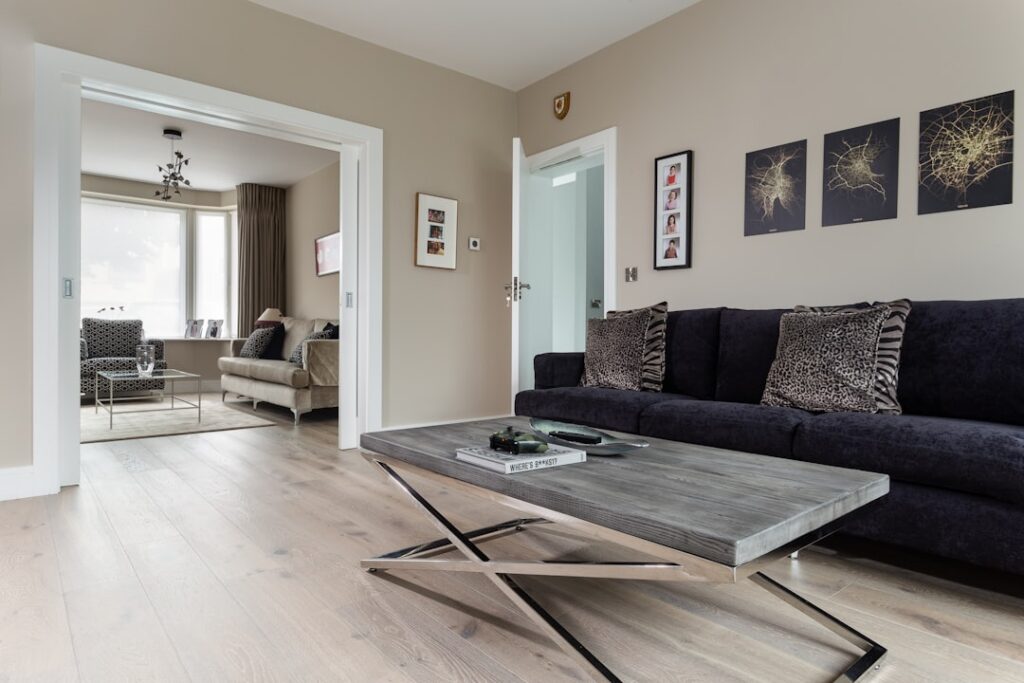
One of the most common points of confusion in flooring is the term laminated wood floors, because it gets used for products that are not actually wood at all. Laminate flooring contains no solid wood layer. It is a photographic image of wood pressed under a clear protective coating over a dense fiberboard core. Understanding that distinction, and how laminate compares to engineered and solid hardwood, is the first step to choosing the right floor for your home and budget.
Laminate vs Engineered vs Solid Hardwood
These three categories are routinely confused, so it helps to define each clearly.
- Laminate: A high-resolution printed image of wood under a melamine wear layer, bonded to a high-density fiberboard core. It contains no real wood veneer.
- Engineered hardwood: A genuine layer of real wood veneer bonded to a plywood or HDF core. It is real wood on the surface and can sometimes be lightly refinished.
- Solid hardwood: A single solid piece of wood through the entire plank that can be sanded and refinished many times.
So laminated wood floors look like wood and wear well, but they are an imitation, not the real thing. That is not a flaw; it is simply what you are buying.
How Laminate Is Built
A laminate plank stacks four layers: a moisture-resistant backing, a dense fiberboard core that gives the plank its strength, the decorative printed layer that creates the wood look, and a clear melamine wear layer that protects against scratches and fading. Quality is measured partly by the AC rating, an abrasion scale from AC1 to AC5. AC3 suits normal residential use, while AC4 and AC5 handle heavy traffic and light commercial settings.
The Pros of Laminated Wood Floors
Laminate became a homeowner favorite for good reasons. It delivers a convincing wood look at a fraction of the cost of real hardwood.
- Scratch resistance: The hard melamine surface stands up well to pets and furniture.
- Easy installation: Click-lock floating planks are among the most DIY-friendly floors available.
- Affordable: Significantly cheaper than hardwood for a similar appearance.
- Low maintenance: Sweep and damp-mop; no sealing or refinishing.
- Fade resistant: Holds color better than many natural materials under indoor light.
The Cons You Should Know
Laminate has real limitations. Traditional laminate is sensitive to standing water, which can swell the fiberboard core and ruin the planks, though newer water-resistant and waterproof lines have improved this considerably. It cannot be sanded or refinished, so once the wear layer is damaged the plank must be replaced. It can sound hollow underfoot without a quality underlayment, and it adds far less resale value than genuine hardwood. Sharp impacts can chip the surface, and chips cannot be sanded out.
What Laminated Wood Floors Cost
Laminate is one of the better values in flooring. Material commonly runs $1 to $4 per square foot, with premium water-resistant and high-AC-rated products reaching $5 or more. Professional installation typically adds $2 to $5 per square foot, though many homeowners install it themselves. For a 200-square-foot room, a mid-grade installed floor often lands around $600 to $1,500. Always add 7 to 10 percent for waste and future repairs.
Installation Tips
Laminate installs as a floating floor, meaning the planks lock together and rest over an underlayment rather than fastening to the subfloor. Acclimate the planks in the room for about 48 hours, work over a clean, dry, flat subfloor, and use a quality underlayment for sound and moisture control. Leave a quarter-inch expansion gap around the perimeter, since laminate expands and contracts with humidity, and stagger end seams at least 8 inches for a natural look and solid structure.
Where Laminate Works Best
Laminate is ideal for bedrooms, living rooms, hallways, and home offices where you want a wood look without the cost or maintenance of hardwood. With a waterproof product it can extend into kitchens and entries. It is a smart choice for families with kids and pets thanks to its scratch resistance. For bathrooms and laundry rooms with frequent standing water, waterproof vinyl is usually the safer pick.
Caring for Laminate Floors
Laminate is low maintenance, but it rewards the right habits and punishes the wrong ones. Sweep or dry-dust regularly to keep grit from scratching the surface, and clean with a damp, well-wrung mop rather than a wet one. The cardinal rule is to avoid standing water and excessive moisture, which can seep into seams and swell the core on non-waterproof products. Skip steam mops and abrasive cleaners, and use a cleaner made specifically for laminate. Felt pads under furniture and entry mats at doors prevent scratches and trap incoming dirt, which does more for the floor’s appearance than any cleaning routine.
If a plank does get badly damaged, the floating design allows individual boards to be replaced, which is why keeping a few leftover planks from your original lot is worth the closet space.
Water-Resistant and Waterproof Laminate
The biggest knock on traditional laminate has always been its vulnerability to water, but the category has evolved. Manufacturers now offer water-resistant laminate that can withstand spills for a period of time, and waterproof laminate engineered with sealed cores and tight-locking joints that resist water penetration entirely. These products expand laminate into kitchens, entries, and other moisture-prone areas where older laminate could not go. If you want laminate in a space that sees the occasional spill, look specifically for a water-resistant or waterproof rating and confirm the manufacturer’s terms, since the level of protection and the warranty conditions vary by product.
Is Laminate Right for Your Home?
Laminated wood floors give you the warmth and look of wood, strong scratch resistance, and easy installation at a budget-friendly price, as long as you accept that it is an imitation that cannot be refinished. Choose at least an AC3 rating for a typical home, step up to a water-resistant line for moisture-prone areas, and pair it with a good underlayment. Do that, and laminate delivers years of attractive, low-maintenance service.
Prefer to explore on your own?
See how new flooring looks in your actual room in seconds — free, no signup.
Try the free Floor Studio →

