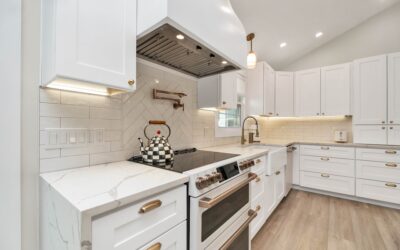
Purple is the color homeowners whisper about and rarely commit to. But purple kitchen cabinets have quietly become one of the most-pinned design moves of 2026, especially in shades that lean toward eggplant, plum, or dusty mauve. Done right, the look is sophisticated and timeless. Done wrong, it screams 1990s teenage bedroom.
Part of our Kitchen Remodeling guide — explore the full guide →
I have helped clients refinish cabinets in everything from Sherwin-Williams Naval to a custom muddy lavender and have seen what works, what dates, and what gets repainted within three years. Here is the honest assessment.
Why Purple Is Trending Now
Designers have leaned into saturated, jewel-tone kitchens for several years, starting with deep greens, then navy, then black. Purple is the logical next stop because it sits between the two color families and reads as both warm and cool depending on the lighting. The Pantone Color Institute named Mocha Mousse for 2025 and a dusty plum is rumored for 2026, which has accelerated paint manufacturer releases in the violet family.
Practically, purple cabinets photograph well, which matters in a market where every kitchen reno gets posted on Instagram and Houzz. Shades that read brown-purple under warm light and gray-purple under cool light have the broadest appeal.
The Shades That Actually Work
Not every purple is kitchen-friendly. Bright lavenders and lilacs read juvenile in large doses. The shades that succeed in real kitchens have heavy gray or brown undertones:
- Benjamin Moore Shadow 2117-30: a deep, almost black plum that reads neutral in low light
- Sherwin-Williams Mature Grape SW 6286: a muted mid-tone violet with strong gray undertones
- Farrow and Ball Brinjal No. 222: a rich aubergine with depth that flatters brass and gold hardware
- Benjamin Moore Caponata AF-650: a dusty grape that pairs well with warm white walls
- Sherwin-Williams Grape Harvest SW 6285: a softer violet that works in north-facing kitchens
Skip pure violets, periwinkles, and any color the can describes as “lilac” or “lavender.” Those skew bedroom and bath, not kitchen.
Pairing Purple Cabinets with the Rest of the Kitchen
Purple is a strong color, so the surrounding palette has to back off. Walls in warm white (Benjamin Moore White Dove OC-17 or Sherwin-Williams Alabaster SW 7008) keep the room from feeling closed in. Countertops in white quartz with subtle veining (Caesarstone Pure White or Cambria Swanbridge) let the cabinets be the star without competing.
For backsplash, a simple white subway tile or a soft beige zellige works better than anything patterned. The cabinets are the pattern.
Hardware is where you can either reinforce the moodiness or warm it up. Brushed brass and unlacquered brass age into a patina that flatters plum tones. Matte black hardware feels more modern and edgy. Avoid chrome and stainless, which fight the warmth of most successful purple shades.
Where to Use Purple in the Kitchen
The safest entry point is an island in purple while perimeter cabinets stay white or light gray. This frames the bold color as an intentional accent rather than a wall-to-wall commitment. A two-tone kitchen with purple lower cabinets and white upper cabinets is the next step up. Full purple kitchens with both upper and lower cabinets in the same shade work in larger spaces with abundant natural light.
In a small or windowless kitchen, full purple cabinets risk feeling cave-like. Stick to an island or a single accent wall in those situations.
Paint Specs and Application
Cabinet paint has come a long way. Benjamin Moore Advance, Sherwin-Williams Emerald Urethane Trim Enamel, and PPG Breakthrough are the three workhorses for cabinet refinishing. All three self-level to a furniture-grade finish and cure to a hardness that resists chips and stains.
The process: degrease with TSP, sand with 220-grit, prime with a bonding primer like Zinsser BIN or STIX, then two thin coats of cabinet enamel with light 320-grit sanding between coats. Allow 16 hours between coats and 7 to 14 days for full cure before normal use. Skipping cure time is the number one reason cabinet paint chips early.
DIY cabinet repainting in a typical kitchen runs $250 to $500 in materials and 25 to 40 hours of labor. Hiring a pro for the same job costs $4,000 to $8,000.
Resale Considerations
Purple kitchen cabinets do polarize buyers. In hot markets and design-forward neighborhoods, a well-executed purple kitchen reads as luxurious and current. In suburban tracts where buyers expect neutral palettes, it can shrink your buyer pool.
The mitigation is simple: choose a shade that leans neutral (Shadow or Mature Grape rather than a saturated violet) and keep walls, counters, and floors classic. A buyer who does not love the color can repaint cabinets for $4,000 to $8,000, far cheaper than ripping out countertops or floors.
Lighting Matters Even More with Purple
Purple shifts dramatically under different color temperatures. Under warm 2700K bulbs, a plum reads warmer and browner. Under cool 4000K bulbs, the same plum reads grayer and cooler. Test your final color under the actual bulbs you plan to use, both during day and night.
Under-cabinet LED strips at 3000K flatter purple cabinets and warm up the kitchen. Skip stark daylight bulbs in this color scheme.
FAQ
Do purple kitchen cabinets hurt resale value?
Done in a sophisticated shade like Shadow or Mature Grape, no. Done in a bright lavender or aggressive violet, yes. Stick with deep, neutral-leaning purples for broadest appeal.
What countertop goes with purple cabinets?
White quartz with subtle veining, light gray quartz, or a warm honed soapstone. Avoid heavily veined marble that competes with the cabinet color.
Can I paint my existing cabinets purple myself?
Yes. Use a quality cabinet enamel like Benjamin Moore Advance, prime with a bonding primer, and allow proper cure time. Plan for 25 to 40 hours of labor over a long weekend or two.
What hardware finish works best with purple cabinets?
Unlacquered or brushed brass for warmth, matte black for a modern edge. Avoid chrome and brushed nickel, which fight the warmth of most purple shades.