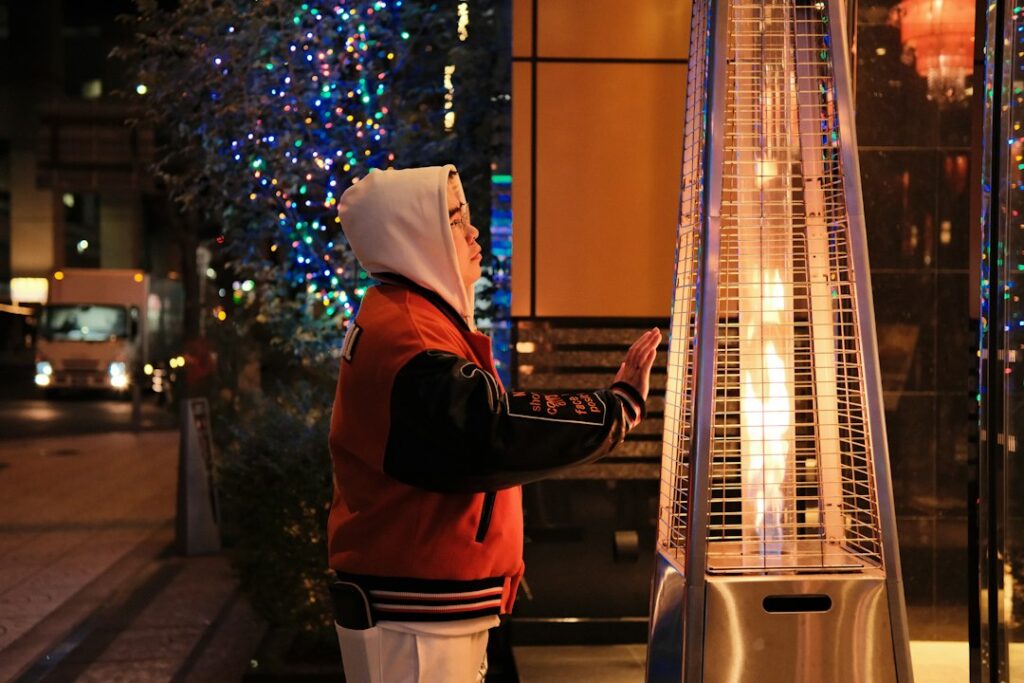
The dancing flame is what sells it, but the flame is also what most buyers misjudge. A pyramid patio heater runs a propane burner at the base of a tall quartz or tempered glass tube, so you see a column of fire rising 4 to 5 feet inside a four-sided steel frame. It looks dramatic at night and adds real warmth, but it heats differently from the familiar mushroom-top heater.
Part of our Decks & Outdoor guide — explore the full guide →
Most glass tube patio heaters are rated around 40,000 to 42,000 BTU per hour, close to a standard mushroom heater. The difference is direction. A mushroom unit bounces heat down from a reflector hood about 7 feet up, creating a warm circle roughly 15 to 18 feet across. A pyramid tower radiates heat sideways through the glass and out the top, so the most comfortable zone is a tighter ring around the heater, often 8 to 12 feet across.
So which should you pick? If ambience and looks are the priority on a restaurant-style patio or pool deck, the glass tube design earns its place. If raw coverage for a large dining table is the goal, a mushroom heater or an overhead infrared unit will usually warm more people per dollar of fuel.
What a Pyramid Patio Heater Is and How It Works
The design is simple. A 20-pound propane cylinder sits hidden in the base cabinet. Gas flows through a regulator and control valve to a burner under the glass tube. When you press the ignition, a pilot lights, then the main burner sends a swirling flame up the tube. A thermocouple or flame sensor shuts off gas if the pilot goes out, and a tilt switch cuts gas if the unit tips past a set angle.
The glass does two jobs. It keeps wind from blowing the flame out and it radiates heat as it warms. The steel pyramid frame, usually four legs meeting at a top cap, supports the tube and adds a small heat shield at the top. That top cap is why some people call this a tower patio heater or tall patio heater rather than a pyramid; the internals are the same.
Heat Output: Pyramid vs Mushroom Heaters
On paper the two styles look similar, so the comparison comes down to where the warmth lands and how long a tank lasts.
| Feature | Pyramid glass tube | Mushroom top |
|---|---|---|
| Typical rating | 40,000 to 42,000 BTU | 40,000 to 48,000 BTU |
| Heat direction | Sideways and up | Downward from hood |
| Comfort zone | 8 to 12 ft circle | 15 to 18 ft circle |
| Runtime on 20 lb tank | About 6 to 10 hours | About 8 to 10 hours |
| Visual appeal | Visible flame column | Minimal glow |
A pyramid propane heater burns roughly 1.5 to 2 pounds of propane per hour on high. With a 20-pound tank, expect 6 to 10 hours depending on the setting. Many owners run on low for most of the evening because the flame still looks full while the tank lasts much longer.
Wind, Stability and Tip-Over Risk
Height is both the charm and the weakness of a flame patio heater. At 7 to 8 feet tall with a relatively narrow base, these towers catch wind like a sail. Most include a tilt switch, but you should not rely on it to keep a heater upright.
- Anchor the base: many models include bolt holes or a sand/gravel compartment. Use them, especially on pool decks or rooftops.
- Level ground only: set the heater on a flat, solid surface such as concrete or pavers, never on grass, gravel or a sloped deck.
- Know the wind limit: turn the heater off when gusts pick up; wind over roughly 10 mph also blows heat away and can distort the flame.
- Traffic zones: keep towers out of walkways and away from where kids play or dogs run.
Wind also affects efficiency. Even a light breeze drags heat away from the glass, so pyramid outdoor heaters work best in sheltered corners with a wall or fence on the windward side, while still keeping full clearance from that wall.
Gas, Fire and Carbon Monoxide Safety
Propane heaters are safe when used correctly, but they burn a lot of fuel in a small space. Keep these rules in mind every time you use one.
Propane Handling
Connect and disconnect cylinders outdoors with the valve closed. After connecting, brush soapy water on the regulator fittings and open the tank; bubbles mean a leak, so shut the valve and retighten or replace the part. Never use an open flame to check for leaks. If you smell gas at any point, shut off the tank if you safely can, move away and call your gas supplier or the fire department. Converting a propane unit to natural gas, running a permanent gas line or repairing valves and regulators is work for a licensed gas professional, not a DIY job.
Clearances and Fire Safety
Follow the clearances in your owner’s manual. As a general rule, most tall propane units need at least 2 to 3 feet of clearance on all sides and several feet of clearance overhead from umbrellas, awnings, tree branches or ceilings. Keep cushions, curtains and table linens away from the tower. Use only a heater that carries a recognized safety listing, and keep a fire extinguisher nearby.
Carbon Monoxide
Propane combustion produces carbon monoxide. Use a propane tower heater outdoors only, in open air, never in a garage, enclosed porch, tent or any room with limited airflow. Keep it away from doors, windows and air intakes, and make sure your home has working CO alarms on each level and near bedrooms.
Cleaning and Replacing the Glass Tube
The glass tube is the most delicate part of a glass tube heater. Soot, water spots and dust dull the flame effect over time, and a cracked tube must be replaced before the heater is used again.
- Turn off the heater, close the tank valve and let everything cool for at least an hour.
- Wear cut-resistant gloves and eye protection before touching the tube.
- Remove the top cap and any retaining brackets, following your manual.
- With a helper, lift the tube straight up and out. Two people should handle a full-length tube; they are heavy, awkward and break easily if they bump the frame.
- Lay the tube on a padded surface such as a folded moving blanket. Never flex it or set it on a hard edge.
- Clean with warm water, mild dish soap and a soft cloth or long bottle brush. Rinse and dry completely.
- Reinstall carefully, making sure the tube seats evenly in its base gasket without pressure on the edges.
Many tubes come in sections of two or three pieces, which makes them easier to handle. Replacement tubes generally cost somewhere in the range of $50 to $150. Order the exact size listed in your manual; a tube that is slightly off can crack from uneven heat.
Troubleshooting a Glass Patio Heater
- Won’t light: tank empty, valve closed, igniter battery dead or pilot tube blocked by spider webs.
- Pilot lights but goes out: thermocouple needs cleaning or replacement; hold the knob longer to heat it.
- Flame is short or orange: low tank pressure, cold weather, or a partly blocked burner.
- Shuts off randomly: tilt switch triggered by an uneven base or wind.
- Black soot on glass: incomplete combustion; clean the burner and check that the air shutter is not blocked.
If a heater keeps shutting off, smells strongly of gas, or shows damaged hoses or a cracked regulator, stop using it and have it serviced by a qualified gas appliance technician.
Is a Pyramid Heater Worth It?
Most models sell in a general range of roughly $200 to $600, with stainless steel and heavier bases at the top of the range. Budget more for a cover, a spare tube section and a second propane tank. For a small seating group, a pool lounge area or a restaurant patio where visual impact matters, a pyramid patio heater delivers both warmth and atmosphere. For larger groups, pair it with a second heater or choose a broader-coverage style.
Frequently Asked Questions
How many BTUs does a pyramid patio heater put out?
Most are rated around 40,000 to 42,000 BTU per hour on high, similar to a mushroom-style propane heater.
How long does a 20 pound tank last in a glass tube heater?
Roughly 6 to 10 hours, depending on the flame setting. Running on low stretches the tank considerably.
Are pyramid heaters warmer than mushroom heaters?
Not usually. They warm a smaller circle around the tower because heat radiates sideways, while mushroom heaters spread heat down over a wider area.
Can I use a pyramid propane heater under a covered patio?
Only if the manual permits it and you maintain the listed overhead and side clearances with plenty of open airflow. Never use one in an enclosed space.
How do I clean the glass tube?
Let the heater cool, remove the tube with a helper while wearing gloves and eye protection, and wash it with warm soapy water and a soft brush.