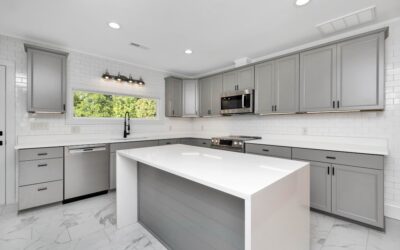
Homeowners are often surprised that the slab is only half the bill on a countertop project. The average quartz countertop installation cost runs about $70 to $150 per square foot installed, meaning a typical kitchen lands somewhere between $2,500 and $6,000 once you add fabrication and labor to the material. Quartz has become the most popular countertop in America because it delivers stone-like beauty without the sealing that granite and marble demand, but its total cost swings widely based on the brand, edge, and complexity of your layout. This guide breaks the price into its real parts so you can budget with confidence and spot an inflated quote.
Part of our Countertops guide — explore the full guide →
- Average Cost Per Square Foot
- What the Installation Labor Includes
- Factors That Drive the Price Up or Down
- Sample Kitchen Budgets
- Quartz Versus Other Countertops on Cost
- Where You Can Save Without Cutting Corners
- Understanding Slab Thickness and Edges
- Choosing a Fabricator and Avoiding Surprises
- Planning Your Quartz Budget
Average Cost Per Square Foot
Quartz is priced by the square foot, and that figure bundles the slab, fabrication, and installation into one number for most jobs. Here is where quartz typically falls:
- Budget quartz: $50 to $70 per square foot installed, often builder-grade or lesser-known brands.
- Mid-range quartz: $70 to $100 per square foot installed, the sweet spot for name brands and popular colors.
- Premium quartz: $100 to $150-plus per square foot installed, high-end lines with dramatic veining and thicker slabs.
A standard 10-by-10-foot kitchen has roughly 40 to 55 square feet of counter, so most quartz kitchens total $3,000 to $6,000 installed. Larger kitchens with an island can climb well past that, especially with premium material.
What the Installation Labor Includes
The labor portion of quartz is significant because quartz is heavy, hard, and unforgiving of mistakes. When a fabricator quotes installation, that price generally covers a full chain of skilled work:
- Templating: Precisely measuring your cabinets, often with a laser digitizer, to build a cutting template.
- Fabrication: Cutting the slab to size, polishing edges, and cutting sink and cooktop openings.
- Transport and setting: Moving slabs that can weigh several hundred pounds and setting them level on the cabinets.
- Seaming: Joining pieces with color-matched epoxy so the seam is tight and low-visibility.
- Cutouts and fitting: Undermount sink attachment, faucet holes, and final leveling.
Labor alone commonly represents $30 to $60 per square foot of the total. Because a cracked slab or misplaced sink cutout is an expensive mistake, this is not a place to hire the cheapest crew you can find.
Factors That Drive the Price Up or Down
Two kitchens of identical size can quote thousands apart. These are the variables that move the number:
- Brand and color: Popular designer patterns and marble-look veining command premiums over solid colors.
- Slab thickness: A 3 cm slab costs more than 2 cm but looks more substantial and often skips the plywood backing 2 cm requires.
- Edge profile: A standard eased or straight edge is included; ogee, mitered waterfall, and bullnose edges add labor.
- Cutouts: Each sink, cooktop, and faucet opening adds cost, and an undermount sink costs more than a drop-in.
- Layout complexity: Islands, corners, seams, and backsplashes all add fabrication time.
- Old counter removal: Tear-out and disposal of existing tops runs $50 to $200-plus.
A mitered waterfall island edge, where the quartz appears to pour down the sides to the floor, is a stunning feature but can add $500 to $1,500 on its own because of the precise 45-degree miter and extra material.
Sample Kitchen Budgets
Putting real numbers to common kitchens helps you plan. For a small galley kitchen with about 30 square feet of counter in mid-range quartz, budget roughly $2,100 to $3,000 installed. A standard 45-square-foot kitchen in mid-range material with an undermount sink runs about $3,200 to $4,500. A larger kitchen with a big island, 60 to 70 square feet in premium quartz with a waterfall edge, can reach $7,000 to $11,000 installed.
Always ask whether the quote is turnkey, meaning it includes templating, tear-out, fabrication, cutouts, seaming, and installation, or whether some of those are add-ons. A suspiciously low per-square-foot number often hides charges that appear later.
Quartz Versus Other Countertops on Cost
Quartz sits in the middle-to-upper range of countertop materials, and understanding where it lands helps you decide if it is the right value. Laminate is far cheaper at $20 to $50 per square foot installed, but it lacks the durability and resale appeal of stone. Granite runs comparable to quartz, roughly $60 to $140 installed, though it requires periodic sealing that quartz does not.
Marble costs similar to premium quartz but stains and etches easily, making quartz the more practical pick for busy kitchens. Solid surface materials land slightly below quartz. Quartz’s appeal is the combination of a hard, non-porous, stain-resistant surface with almost zero maintenance, which many owners find justifies the price over cheaper materials that demand more care or wear out sooner.
Where You Can Save Without Cutting Corners
You can trim the bill in smart ways without ending up with a cheap-looking counter. Choosing a 2 cm slab with a built-up edge instead of a full 3 cm can save money while still looking thick. Selecting a solid or lightly patterned color over a dramatic designer veining pattern lowers material cost significantly. Keeping the layout simple, minimizing seams, and choosing a standard edge profile all reduce labor.
Handling your own tear-out and disposal before the crew arrives can shave the removal fee. What you should not skimp on is the fabricator’s skill and the seam and sink work, because those determine whether the finished counter looks flawless or shows every joint. Get three itemized quotes, confirm the material brand and thickness in writing, and verify the warranty on both product and installation.
Understanding Slab Thickness and Edges
Two technical choices quietly shape both the price and the look of your finished counter: slab thickness and edge profile. Quartz comes primarily in 2 cm (roughly 3/4 inch) and 3 cm (roughly 1-1/4 inch) thicknesses, and the difference matters.
A 3 cm slab is the popular choice for kitchens because it is thick enough to install directly on cabinets without a plywood support layer and reads as substantial. A 2 cm slab costs less but usually needs a plywood substrate for support and often a built-up, laminated edge to look thicker, which adds labor that can erase the material savings. For islands and busy kitchens, most fabricators recommend 3 cm for its strength and cleaner installation.
Edge profiles range from included standard options to premium upgrades. An eased or straight edge comes standard at no extra charge. Beveled and bullnose edges are modest upgrades. Ogee, dupont, and mitered waterfall edges require more fabrication time and cost extra, with a waterfall island edge adding several hundred to over a thousand dollars because of the precise 45-degree miter and the additional slab material it consumes.
Choosing a Fabricator and Avoiding Surprises
The fabricator you hire influences the final result more than almost any other factor, because quartz is only as good as the person cutting and setting it. A skilled shop produces tight, nearly invisible seams, perfectly aligned patterns, and clean sink cutouts, while a careless one leaves visible joints and misaligned veining that you will notice every day.
- Get three itemized quotes so you can compare apples to apples, including templating, fabrication, cutouts, seaming, and installation.
- Confirm the brand and thickness in writing, since some quotes quietly substitute a cheaper line.
- Ask to see the actual slab or a full-size sample, because quartz patterns vary and photos deceive.
- Verify the warranty on both the product and the installation labor.
- Check whether tear-out, plumbing disconnect, and disposal are included or billed separately.
A quote that looks dramatically cheaper than the others usually hides add-ons that surface later, or reflects a less experienced installer. For a surface that will anchor your kitchen for decades, prioritize a fabricator with strong references and clear, complete pricing over the lowest bottom-line number.
Planning Your Quartz Budget
To budget accurately, start with your counter square footage, pick a price tier that matches your taste, and add realistic figures for edges, cutouts, and tear-out. For most homeowners, a mid-range quartz kitchen at $70 to $100 per square foot installed delivers the best balance of beauty, durability, and value. Insist on turnkey, itemized quotes so nothing surprises you on installation day, and prioritize an experienced fabricator over the lowest bid. Do that, and you will land a stunning, essentially maintenance-free countertop that adds lasting value to your kitchen and holds up to daily life for decades.