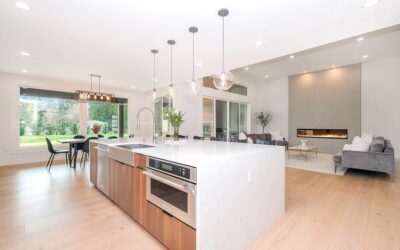
Flip a switch and the entire kitchen island begins to glow from within — the veins in the stone light up like frosted glass and the whole slab turns into a soft lamp. That is the effect behind underlit quartz countertops, and it is one of the most striking upgrades you can make to a modern kitchen or bar. Also called backlit quartz, the technique places LED lighting behind a translucent engineered slab so light passes through the surface. Done well, it turns an ordinary counter into the focal point of the entire room.
Part of our Countertops guide — explore the full guide →
How Backlighting a Quartz Slab Works
The concept is simple even if the execution takes skill. A layer of LED lighting is mounted behind or beneath a translucent slab, and because the quartz lets a portion of light pass through, the surface appears to glow. The key variable is translucency — not every quartz will transmit light. Standard opaque slabs block the LEDs entirely and just look dark. You need a product specifically formulated to be light-transmitting, generally a lighter, thinner, or resin-rich engineered quartz.
Fabricators typically achieve the effect one of two ways. In the first, a thin slab (often 2cm or a specialty backlighting product) is set over a light box or an LED panel with a diffuser so the glow spreads evenly. In the second, LED strips are routed into a frame behind a vertical panel — think a waterfall island side or a backlit bar face — where the light grazes through from behind.
LED Options and How to Light It Evenly
The lighting choice makes or breaks the result. Uneven LEDs create hot spots and dark bands that ruin the seamless glow you are paying for. A few approaches work well:
- LED panel or light sheet: A flat edge-lit acrylic panel produces the most even, diffuse glow across a large horizontal or vertical surface. This is the gold standard for a uniform look.
- LED strip tape with a diffuser: Cheaper and flexible, but strips need a diffusing layer and careful spacing or you will see individual dots and lines through the stone.
- RGBW color-changing systems: These let you dial the glow from warm white for dinner to a colored accent for a party. Expect to pay more for the controller and quality strips.
Whatever you choose, plan for a diffuser layer between the LEDs and the slab, and use a dimmer. A full-brightness backlit counter can be overwhelming; the best installs run dimmed as ambient light.
Best Applications for Backlit Quartz
Underlighting is a feature, not an everyday work surface treatment, so it earns its cost in the right spots. The strongest use cases are vertical and accent surfaces where the glow reads clearly and the surface takes less abuse.
- Waterfall island sides: A backlit vertical panel cascading to the floor is the signature high-end look and a natural fit for LEDs behind a panel.
- Bar tops and home bars: Backlit bar fronts and countertops create instant nightclub-quality ambiance in a basement or entertainment room.
- Kitchen islands: A glowing island anchors an open-plan space and doubles as mood lighting.
- Bathroom vanities and feature walls: Softly lit translucent stone brings a spa feel to a primary bath.
- Reception desks and commercial counters: Restaurants and hotels use the effect to signal luxury.
For a hardworking kitchen prep surface that takes hot pans and heavy chopping, keep the backlighting on the island face or perimeter accent rather than the main work zone.
What Slabs Work Best
Lighter colors transmit light far better than dark ones. Whites, translucent whites, pale grays, and onyx-look or alabaster-style engineered quartz are the usual choices because they glow warmly and evenly. Slabs with visible veining or crystalline patterns produce the most dramatic result, since the veins light up and appear to float within the stone. Thinner slabs pass more light — many backlit installs use 2cm material or a dedicated translucent product rather than a thick 3cm slab, which can look dull and muddy when lit.
Ask your fabricator to test-light an actual offcut of your chosen color before you commit. Translucency varies significantly between products and even between colors within a single line, and a showroom sample under an LED will tell you more than any brochure.
The Cost Premium
Backlighting is a genuine luxury upgrade, and the price reflects that. Start with the quartz itself: standard quartz runs $50 to $120 per square foot installed, and a translucent backlighting-grade product often sits at the upper end of that range. On top of the stone, you are paying for the lighting system, the framing or light box, an electrician, and more complex fabrication.
As a rough planning figure, expect the backlighting to add somewhere between $75 and $200 per square foot on top of the countertop material, depending on the LED system, whether you want color-changing controls, and how much custom framing your fabricator has to build. A single backlit waterfall island panel might add $2,000 to $5,000 to a project once you include the specialty slab, the LED panel, the diffuser, and licensed electrical work. It is a splurge — but for a statement island, the payoff in wow factor is hard to match.
Installation and Maintenance Considerations
This is not a weekend DIY. Backlit counters require coordination between the fabricator, the electrician, and often the cabinet installer, because the light box and wiring have to be built into the cabinetry or island frame before the slab goes down. Plan the electrical rough-in early — you need a switched, dimmable circuit and often a low-voltage transformer tucked into the cabinet.
Once installed, the quartz itself cares for the same as any engineered surface: non-porous, no sealing, clean with mild soap and water, and protect it from heat above roughly 300°F. The main added maintenance is the lighting. Choose quality LEDs rated for long life, and make sure the light box stays accessible so a failed strip or driver can be swapped without pulling the slab. Cheap LED tape is the most common failure point, so spend on the lighting where you can.
Frequently Asked Questions
Will any quartz countertop light up if I put LEDs behind it?
No. Only translucent, light-transmitting slabs glow. Standard opaque quartz blocks the light and looks dark. Always confirm the specific color transmits light before buying.
Do the LEDs make the countertop hot?
Modern LEDs run cool and use little power, so they do not meaningfully heat the surface. They also last for years and are energy efficient, which makes them practical for a feature you may leave on for hours.
Can I backlight a horizontal work surface?
Yes, but it takes an even light panel underneath and careful support so the thinner translucent slab does not flex. Many designers still prefer to backlight vertical panels and island faces, which are easier to light evenly and take less daily wear.
Are underlit quartz countertops worth it?
For a statement island, bar, or feature vanity, absolutely — nothing else delivers the same ambiance. For a purely functional kitchen on a tight budget, the premium is hard to justify. Treat it as accent lighting and architecture rolled into one.
Backlit quartz sits at the intersection of surface and lighting design. Pick a translucent slab, invest in an even, dimmable LED system, and reserve the effect for the surfaces where a soft interior glow will earn its place as the star of the room.