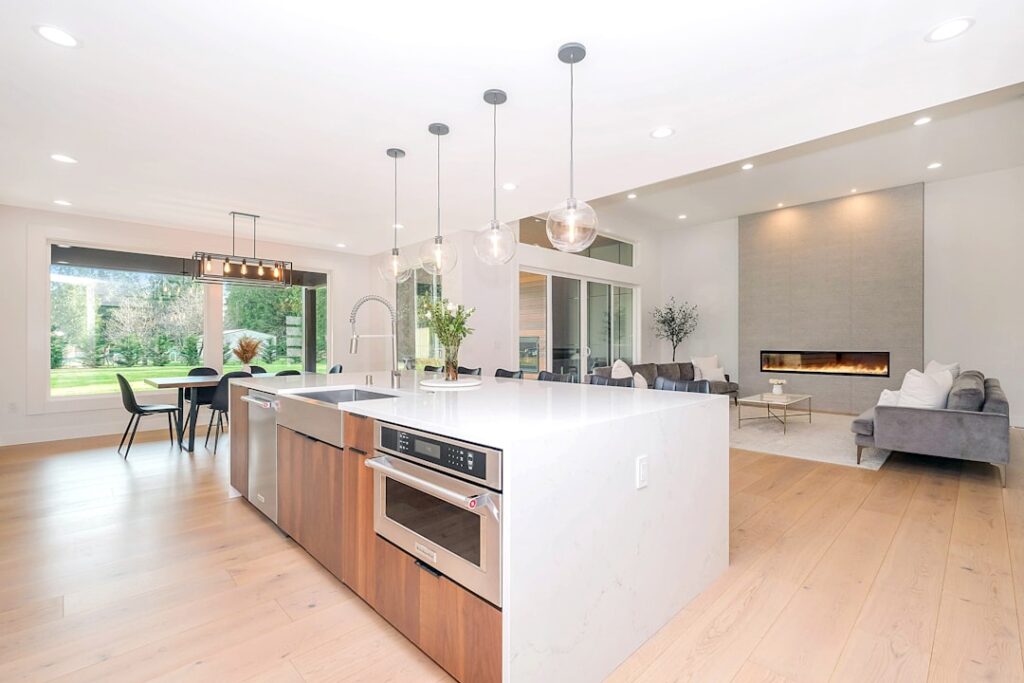
Cool gray surfaces dominated kitchens for a decade, but the pendulum has swung toward something cozier. Warm quartz countertops bring soft creams, beiges, taupes, and golden undertones that make a kitchen feel inviting rather than clinical. They deliver all the durability and low maintenance quartz is known for, paired with a palette that flatters wood cabinets, brass fixtures, and natural light. If you are tired of stark and cold, here is everything you need to choose and live with a warmer surface.
Part of our Countertops guide — explore the full guide →
What Makes a Quartz Countertop “Warm”
Warmth comes down to undertone. Engineered quartz is made of roughly 90 percent ground natural quartz bound with resin and pigment, which lets manufacturers dial in precise colors. Warm varieties lean toward cream, beige, taupe, ivory, and soft brown rather than the blue-grays and stark whites of cool palettes.
Look closely and you will see warm quartz often mimics the look of natural stone like travertine, limestone, or warm marble, with subtle veining in honey, caramel, or greige tones. The effect is a surface that reflects light softly and pairs naturally with organic materials.
Popular Warm Quartz Shades
Within the warm family there is real range, so it helps to know the common directions before you shop.
- Creamy white: Soft off-whites with warm undertones that brighten a kitchen without the chill of pure white.
- Beige and greige: Versatile neutrals that bridge warm and cool, working with almost any cabinet color.
- Taupe and mushroom: Deeper, sophisticated tones that add richness and hide everyday use well.
- Warm marble-look: White or cream bases with golden or caramel veining for a luxurious, natural feel.
- Sandy and oatmeal: Speckled patterns reminiscent of natural stone that camouflage crumbs and water spots.
Why Choose Warm Over Cool
The choice is partly style and partly how a room feels day to day. Warm tones create an inviting, comfortable atmosphere that suits family kitchens, farmhouse and transitional designs, and homes with lots of wood.
There is a practical angle too. Warm, speckled, or veined surfaces tend to disguise crumbs, fingerprints, and minor water spots better than solid stark white, which shows every smudge. For a busy household, that forgiveness translates to a counter that looks clean with less constant wiping.
Pairing Warm Quartz With Your Kitchen
Warm quartz is a team player, but thoughtful pairing makes it sing. Match the surface to your cabinets, hardware, and flooring for a cohesive look.
Cabinets
Cream and beige quartz looks stunning against natural wood, sage green, navy, and warm white cabinets. For a soft monochrome look, pair creamy quartz with off-white shaker doors.
Hardware and Fixtures
Warm metals are the natural partner. Brass, gold, and bronze faucets and pulls amplify the cozy feel, while matte black adds contrast without going cold.
Backsplash and Flooring
A warm-toned tile backsplash or wood-look flooring reinforces the palette. Avoid pairing warm counters with very cool gray floors, which can create an awkward color clash.
Cost Considerations
Quartz pricing is driven by brand, pattern complexity, and slab thickness more than warmth itself. Installed quartz countertops generally run about $50 to $120 per square foot, with premium marble-look warm patterns landing at the higher end.
Factor in edge profiles, cutouts for sinks and cooktops, and removal of old counters when budgeting. Simple solid warm tones cost less than intricate veined designs, so you can find a warm option at nearly any budget level within that range. Watch the hidden line items too: a thicker slab, a waterfall edge down the side of an island, or a fabricator’s minimum-order charge can add hundreds to a small kitchen. Getting two or three quotes that itemize material, fabrication, and installation separately makes it far easier to compare bids and spot where the warm marble-look upgrade is actually costing you.
Choosing the Right Shade for Your Light
The same warm quartz slab can read very differently depending on a kitchen’s light, so test before you commit. Bring a large sample home and look at it in the morning, at midday, and under your evening artificial lighting, because a beige that looks creamy in a showroom can turn slightly pink or yellow under warm LED bulbs. North-facing kitchens get cooler, bluer daylight that mutes warm tones, so a richer taupe or golden-veined slab keeps its warmth, while a bright south-facing room can make a deep warm tone feel heavy.
Lighting temperature matters as much as the color itself. Warm-white bulbs in the 2700K range amplify the cozy undertones and flatter cream and caramel veining, while cooler 4000K bulbs can flatten them toward gray. If you are choosing cabinets and counters together, view the pairing under your actual fixtures, since the interplay between cabinet color, light, and undertone is what ultimately makes a warm kitchen feel harmonious rather than muddy.
Warm Quartz vs Natural Stone Alternatives
Homeowners drawn to warm tones often weigh quartz against the natural materials it imitates, like travertine, limestone, and warm-veined marble. The look can be strikingly similar, but the upkeep is not. Natural marble and limestone are porous and acid-sensitive, so a splash of lemon juice or wine can etch a dull mark, and they need periodic sealing to resist stains. Warm quartz delivers the same creamy, veined aesthetic without that fragility, since its non-porous surface shrugs off the acids and spills that trouble real stone.
The tradeoff is authenticity and heat tolerance. A purist may prefer the genuine depth and one-of-a-kind veining of natural marble, and stone handles brief heat better than quartz, whose resin can scorch. But for a busy kitchen where low maintenance wins, warm quartz captures the soft, organic look most people want while behaving far more forgivingly day to day.
Durability and Maintenance
One of quartz’s biggest advantages is how little it asks of you, and warm colors are no exception. The non-porous engineered surface resists stains and never needs sealing, unlike natural stone.
- Wipe daily with mild soap and water or a gentle cleaner.
- Skip harsh chemicals, bleach, and abrasive pads that can dull the finish.
- Use a trivet under hot pots; quartz resists heat but the resin can scorch with direct, prolonged heat.
- Wipe up spills promptly even though staining is rare, to keep the surface pristine.
With basic care, warm quartz holds its color and finish for decades, shrugging off the scratches and etching that plague some natural stones.
Will Warm Tones Stay in Style?
Trends cycle, but warm neutrals have staying power because they are rooted in comfort rather than fashion. Creams, beiges, and soft taupes have anchored timeless kitchens for generations and tend to feel current far longer than bold or trend-driven colors.
For a kitchen that feels welcoming today and still looks right years from now, warm quartz countertops are a smart, low-maintenance choice. Pick a shade that flatters your cabinets, lean into warm metals, and you get a durable surface that makes the heart of your home feel exactly that warm.