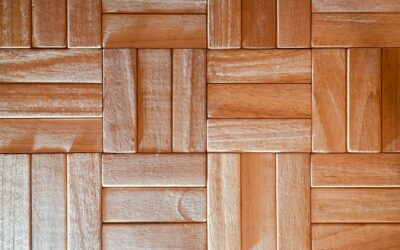
Nearly every “wood-look” laminate, vinyl, and tile product on the market is trying to imitate one species — oak. That tells you something. Real oak flooring has been the default American hardwood for more than a century because it balances hardness, workability, price, and grain character better than almost any competing species. Walk into a 1920s bungalow with original floors and the boards are almost certainly oak. Refinish them, and you get another fifty years.
Red Oak vs White Oak: The First Real Decision
Red oak runs pinkish-tan with wide, open grain and prominent rays. White oak trends golden-brown with tighter grain and better water resistance thanks to tyloses that plug the wood’s pores. Both rate hard — red oak at 1,290 on the Janka scale, white oak at 1,360 — so durability is a wash. The real differences are color and price.
White oak has dominated high-end remodels for the past decade because it takes gray, ash, and fumed stains cleanly. Red oak reads warmer and often costs 10-20 percent less. If you plan a natural or amber finish, red oak is genuinely beautiful and fights the fashion cycle. If you want Restoration Hardware grays, buy white.
Solid vs Engineered Construction
Solid oak is a single 3/4 inch board, sold unfinished or prefinished in widths from 2 1/4 inches up to 7 inches. It can be sanded and refinished six to ten times over a 75-100 year lifespan. Engineered oak uses a 1/8 to 3/16 inch oak veneer bonded to a plywood or HDF core, typically 1/2 to 5/8 inch total thickness. It survives two or three careful refinishes.
Solid wins on longevity and refinishing depth. Engineered wins in basements, over radiant heat, and in humid climates because the cross-laminated core resists seasonal movement. If you live above the first floor on plywood subfloor in a stable climate, solid is the long-game choice.
Grade, Width, and Length
Grade describes knots, color variation, and mineral streaks — not structural strength. Select and Better hides almost all character, giving a uniform, formal look. Number 1 Common (often called “character grade”) shows more knots, streaks, and color variation for a rustic, lived-in result. Number 2 Common accepts larger knots and sapwood. Wider and longer boards cost more because they come from bigger, older trees.
- 2 1/4 inch strip: $3.50-$5.50/sq ft material — the classic budget choice
- 3 1/4 to 5 inch plank: $5-$9/sq ft — current mainstream width
- 6 to 7 inch wide plank: $8-$14/sq ft — contemporary look, more seasonal gapping
- Quarter-sawn or rift-sawn: $9-$16/sq ft — ray-fleck figure, exceptional stability
Finish Options That Matter
Prefinished oak ships from the mill with 7-9 coats of aluminum-oxide urethane cured under UV light. These finishes outlast any site-finished coating and carry 25-50 year warranties. The tradeoff is micro-bevels between planks that collect dust.
Site-finished oak gets sanded flat and sealed in place. The result is a seamless surface that is easier to refinish later. Oil-modified urethane ambers the wood over years. Water-based urethane (Bona Traffic HD is the contractor standard) keeps the wood lighter and dries faster. Hardwax oil finishes like Rubio Monocoat give a matte, natural feel and are spot-repairable — they are rising in popularity but need more frequent refresh coats.
What It Costs Installed
Budget prefinished solid oak runs $7-$10 per sq ft installed in 2025. Mid-range wider-plank oak lands at $10-$14 per sq ft installed. Premium white oak with custom stain, 7 inch planks, and site-finish tops out at $18-$28 per sq ft installed. A 1,500 sq ft main floor in mid-range solid oak typically runs $16,000-$20,000 all-in, including tear-out of existing flooring, subfloor prep, materials, install, finish, and trim.
Real oak flooring costs 2-4 times what luxury vinyl costs. Over a 50-year ownership window, the math usually favors the oak because vinyl gets replaced once or twice in that span while oak gets refinished.
Strengths That Justify the Investment
- Refinishable. Sand, restain, and recoat three to ten times over the floor’s life.
- Proven resale bump. NAR surveys consistently show hardwood returns 70-80 percent of project cost at sale.
- Repairable. Damaged boards are replaced individually; burns and deep scratches sand out.
- Improves with age. Patina deepens the wood’s character rather than destroying it.
- Works with every design era. Farmhouse, mid-century, transitional, modern — oak adapts.
Weaknesses to Plan Around
Water is the chief enemy. Puddles left on oak for more than a few hours cup the boards; a dishwasher flood turns a floor into a replacement project. Keep oak out of bathrooms and laundry rooms unless you are willing to accept risk. Humidity cycles cause 1/16 to 3/32 inch seasonal gaps in winter on wider planks — a cosmetic issue, not a defect.
Dent resistance is mid-pack. High heels, chair legs, and dropped cookware leave marks. Felt pads on every furniture leg are non-negotiable. Pet nails gradually burnish the finish; a recoat every 7-10 years restores the look without a full sand.
Installation Methods
Solid oak nails or staples down to a wood subfloor using 1 1/2 to 2 inch cleats at 6-8 inch spacing. Engineered oak floats with click-lock joints or glues down to concrete with urethane adhesive like Bostik BEST. Radiant-heat installs require engineered product and a strict temperature ramp — most manufacturers cap surface temperature at 81°F.
Acclimate every oak floor on-site for 5-14 days at the home’s year-round living conditions (60-80°F, 30-50 percent relative humidity). Skipping acclimation is the single biggest cause of post-install gaps, cups, and crowns.
Maintenance and Long-Term Care
Sweep or vacuum with a hard-floor attachment at least weekly. Damp-mop with a wood-safe cleaner like Bona Hardwood Floor Cleaner — never wet-mop, never steam. Address spills within minutes. Refresh the finish with a screen-and-recoat every 7-12 years for $2-$3 per sq ft; this avoids a full refinish until damage demands it. A full sand-and-refinish, done once every 25-30 years, runs $4-$8 per sq ft and resets the floor to new. That simple cycle is why a real oak floor installed today will still be beautiful when the grandchildren inherit the house.
Prefer to explore on your own?
See how new flooring looks in your actual room in seconds — free, no signup.
Try the free Floor Studio →