Your countertops can be perfectly clean and still look dull, cloudy, or streaky, and no amount of scrubbing fixes that. Rejuvenate countertop polish is designed for exactly that gap between clean and truly shiny. Made by For Life Products, the Rejuvenate line is a familiar name in the surface-restoration aisle, and its countertop polish promises to restore shine and lay down a thin protective barrier in a single wipe-on step. Here is how it actually works and how to get the best results from it.
Part of our Countertops guide — explore the full guide →
- What Rejuvenate Countertop Polish Is
- How Rejuvenate Countertop Polish Works
- How to Apply Rejuvenate Countertop Polish
- What Results to Expect
- Where It Works Best and Where to Be Careful
- Rejuvenate Polish vs. Sealer vs. Cleaner
- Tips for the Best Long-Term Shine
- Common Mistakes to Avoid
- Is Rejuvenate Countertop Polish Worth It
What Rejuvenate Countertop Polish Is
Rejuvenate countertop polish is a wipe-on, buff-off surface polish and protectant, not a cleaner and not a permanent sealer. You apply it after your counters are already clean and dry, and it leaves behind a thin, glossy protective film that boosts shine and helps repel water and everyday smudges. Think of it as the finishing touch that makes a clean surface look freshly installed rather than a product that scrubs away grime.
It is formulated for hard surfaces and is generally marketed as safe for granite, quartz, marble, laminate, solid surface, and other sealed stone counters. Because it is a topical polish, the shine it adds is temporary and renews with reapplication rather than bonding permanently the way a penetrating stone sealer does. That distinction is the single most important thing to understand before you buy it.
How Rejuvenate Countertop Polish Works
The polish deposits a very thin protective layer across the surface. That layer does two jobs at once: it fills in the microscopic dullness that builds up from daily use, and it creates a smoother, slightly water-repellent top coat that makes the counter easier to wipe down afterward. The result is a more uniform, reflective finish with fewer visible smudges and fingerprints.
Importantly, this is a maintenance product, not a repair product. It will not remove etch marks, deep scratches, or the dull spots where acidic spills have physically eaten into natural stone. What it does well is even out and brighten a surface that is intact but tired-looking, which describes a huge share of the counters in older kitchens.
How to Apply Rejuvenate Countertop Polish
Application is simple, and getting a streak-free result comes down to using a light hand and the right cloth. Follow the directions on your specific bottle, but the general process looks like this:
- Clean first. Wipe the counter with a gentle cleaner and let it dry completely. Any crumbs or residue left behind will get sealed under the polish.
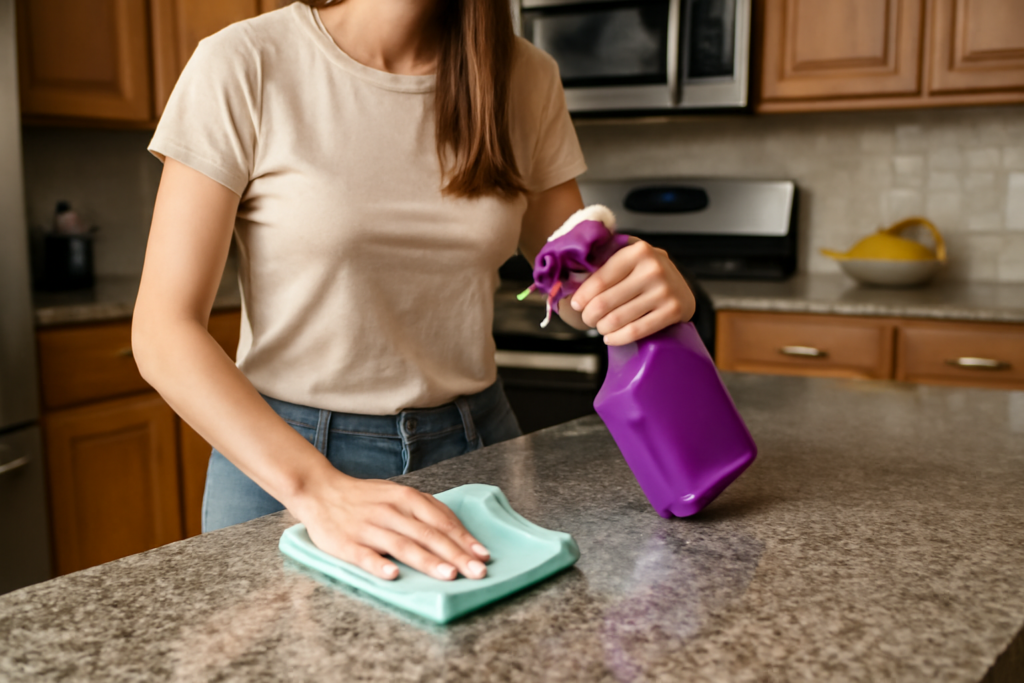
- Apply a small amount. Dispense a modest amount of polish directly onto the surface or onto a clean, dry microfiber cloth. Less is more; too much product is the main cause of streaking.
- Spread evenly. Work in thin, overlapping strokes across the whole surface so no section is missed and none is over-saturated.
- Buff to a shine. With a second clean, dry microfiber cloth, buff the surface until it feels dry and looks even. This step removes haze and brings up the gloss.
- Let it set. Give the polish a short time to settle before setting items back down or wiping with water.
Always use soft microfiber. Paper towels can leave lint and fine scratches that undercut the very shine you are trying to build. Working in smaller sections rather than trying to coat the entire kitchen at once also helps you buff each area before the polish starts to set.
What Results to Expect
On a clean but lackluster counter, the most common result is an immediate lift in gloss and a smoother, silkier feel under your hand. Water tends to bead rather than sheet, and fingerprints and light smudges show less and wipe away more easily for a while. Laminate counters that had gone flat often look noticeably revived, and honed or lightly worn stone picks up a warmer glow.
Set realistic expectations, though. Because it is a topical polish, the effect fades with regular cleaning and use, so plan to reapply periodically to maintain the look. It is a refresher you repeat, not a one-time fix. And on already high-gloss quartz that is in good shape, the visible improvement may be subtle since there is little dullness to correct.
Where It Works Best and Where to Be Careful
Rejuvenate countertop polish shines brightest on surfaces that are structurally fine but visually tired: aging laminate, dulled solid surface, and sealed stone that has lost its luster. It is a fast, low-effort way to make counters photograph and feel better before guests arrive or before listing a home.
Use more caution in a few situations. Because the polish leaves a smooth film, avoid getting it on the floor and take care that it does not make the counter surface slick where you set cutting boards. Test an inconspicuous corner first on any unusual or unsealed material. And remember that it does not replace proper sealing on porous natural stone; if your granite or marble is failing a water-bead test, you still need a dedicated penetrating sealer underneath, with polish as the finishing layer on top.
Rejuvenate Polish vs. Sealer vs. Cleaner
It is easy to confuse these three products, and using the wrong one is a common frustration. A cleaner removes dirt, grease, and germs but adds no shine or protection. A sealer soaks into porous stone and chemically blocks liquids from penetrating, which is essential for granite and marble but does little for nonporous quartz or laminate. A polish like Rejuvenate sits on top and adds gloss plus a light, temporary barrier. For most kitchens the ideal routine is clean regularly, seal porous stone on a yearly schedule, and polish whenever you want to refresh the shine. They work together rather than replacing one another.
Tips for the Best Long-Term Shine
A few habits keep results looking their best. Reapply on a regular cadence that matches how hard you use the kitchen; high-traffic counters need it more often than a guest bath. Keep dedicated microfiber cloths for polishing so they stay free of grit. Clean up acidic spills like lemon, wine, and vinegar quickly, since polish cannot protect against chemical etching. And always polish a fully dry surface, because trapped moisture is a common cause of cloudiness.
Common Mistakes to Avoid
A handful of easy errors account for most disappointing results. Applying too much product is the biggest one; a heavy coat hazes and streaks instead of shining, and it takes far more buffing to correct. Polishing over a dirty or damp surface traps grit and moisture under the film, leaving a cloudy finish that looks worse than before you started. Using paper towels or a gritty rag scratches the very gloss you are building. And expecting the polish to fix etching, chips, or deep scratches sets you up to feel let down, because those are physical damage that no topical product can undo.
One more habit worth breaking: skipping the buffing step because the surface already looks wet and shiny. That wet look is uncured polish, and if you leave it, it dries to a streaky, tacky film. Always finish with a dry microfiber pass, even when the counter appears done.
Is Rejuvenate Countertop Polish Worth It
For most homeowners, Rejuvenate countertop polish is an inexpensive, genuinely useful product for the specific job it is built to do: adding shine and a light protective barrier to clean, intact counters. It will not resurface damaged stone or replace a real sealer, and its effect is temporary by design. But as a quick, repeatable way to make tired counters look revived and repel daily grime a little better, it earns its place under the sink. Keep your expectations aligned with what a topical polish can do, apply it thin and buff it well, and you will get a bright, even finish with very little effort.