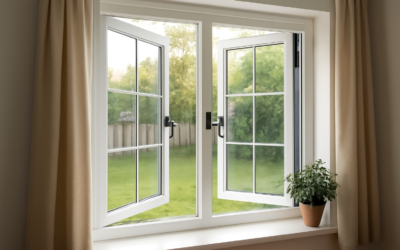
Crank-out windows fail differently than double-hungs — hinges sag, operators strip, sashes bow — and shopping for replacement casement windows means navigating decisions the double-hung crowd never faces. The good news: because a casement sash seals by compressing against its frame like a refrigerator door, replacement casement windows are among the most airtight units money buys, routinely testing three to five times tighter than sliding types. This guide covers the decision that controls half your budget — insert versus full-frame — plus frame materials, glass packages, sizing rules, and the costs I see on actual jobs.
Part of our Windows & Doors guide — explore the full guide →
- Repair or Replace: Run This Check First
- The Big Decision: Insert vs. Full-Frame Replacement
- Frame Material Options and Real Pricing
- Glass Packages Worth Ordering
- Sizing, Egress, and Configuration Rules
- Installation Day: What Good Work Looks Like
- Costs, Payback, and Prioritizing
- Living With New Casements: Operation and Care
- Final Checklist Before You Sign
Repair or Replace: Run This Check First
Casement hardware is replaceable, and plenty of “bad windows” are $40 problems. Before pricing new units, inspect three things. Operators (the crank mechanism) strip and stiffen — replacement dual-arm operators cost $25 to $60 and install with four screws. Hinges at top and bottom sag and let the sash drag its frame; new hinge sets run $15 to $40. Weatherstripping compresses permanently after 15-plus years and is a $20 fix. Replace the whole window when you see the structural stuff: fogged glass between panes (failed IGU seal — glass-only replacement is possible but often uneconomic on old units), rotted wood sash corners or frames, bowed vinyl sashes that no longer meet the frame, or single-pane units not worth heating behind. A house full of 25-to-40-year-old builder-grade casements with two or three of these symptoms is a replacement project, not a parts hunt.
The Big Decision: Insert vs. Full-Frame Replacement
Every window replacement splits into two very different jobs, and casements are no exception.
- Insert (pocket) replacement: the existing frame stays in the wall; a new, slightly smaller complete window slides into the old frame’s pocket. No siding, trim, or interior casing disturbed. Cost per opening: $450 to $900 installed for vinyl, more for clad wood. The tax: you lose roughly 1 to 2 inches of glass in each dimension, and the old frame must be square, level, and rot-free.
- Full-frame replacement: everything comes out to the rough opening — frame, casing, sometimes exterior trim. The new unit installs with its nailing flange or brickmould, fresh flashing, and new insulation around the frame. Cost per opening: $800 to $1,800-plus installed. Buy this when frames show any rot, when the original install leaked, when you want maximum glass, or when re-siding anyway.
My field rule: probe the sill and lower frame corners with an awl. Soft wood anywhere means full-frame — an insert over rot seals a coffin, and you will pay for the opening twice. Sound frames in a 1990s-or-newer house make inserts a legitimate money-saver.
Frame Material Options and Real Pricing
- Vinyl: $300 to $700 per unit; the volume choice; multi-chambered frames insulate well; limited colors, and dark foils can move in hot sun
- Fiberglass: $600 to $1,100; expands at nearly the glass’s own rate so seals stay tight for decades; paintable; the quiet best-value in cold climates
- Composite: $650 to $1,200; wood-polymer blends with better looks than vinyl and less upkeep than wood
- Clad wood: $800 to $1,800; aluminum or fiberglass exterior over a wood interior; the choice where interior millwork matters
- Aluminum (thermally broken): $500 to $1,000; slim frames, best in mild climates
Casement-specific note: sash stiffness matters more than in fixed or sliding windows, because the sash hangs off two hinges and gets levered by wind. Cheap vinyl casements over about 30 inches wide are where bowed-sash complaints live. If you want big vinyl casements, buy a line with steel or aluminum sash reinforcement — ask the dealer directly, because spec sheets bury it.
Glass Packages Worth Ordering
Since the sash compresses shut, the glass package becomes the main thermal variable. A modern double-pane with low-E coating and argon fill delivers a U-factor around 0.27 to 0.30 — the practical standard, and what most rebate programs require. Triple-pane drops to 0.17 to 0.22 for a 10 to 15 percent price premium and noticeably warmer interior glass in northern winters; it also cuts street noise meaningfully. Order low-E tuned to your climate (higher solar gain glass for heating climates, low-gain for cooling ones), warm-edge spacers to reduce condensation at the glass perimeter, and check the NFRC label numbers rather than marketing tiers. Air leakage is the casement’s bragging stat: look for AL ratings of 0.1 to 0.2 cfm/ft², versus 0.3 typical for double-hungs.
Sizing, Egress, and Configuration Rules
Measure each existing opening in three places per dimension and order to the smallest, minus the manufacturer’s specified deduction for inserts. Two code items catch people. Bedroom windows must meet egress: 5.7 square feet of clear opening (5.0 at grade floor), minimum 20 inches wide by 24 inches high of clear passage — and casements are the egress champion, since the whole sash swings clear; special egress hinges let even narrow units qualify. Second, any glass within 24 inches of a door or under 18 inches from the floor needs tempering. Configuration-wise, pairs and triples of casements replace picture-window spans nicely, and remember handing: order left- or right-hinged so prevailing breezes scoop into the house and sashes do not collide over walkways, decks, or shrubs.
Installation Day: What Good Work Looks Like
- Old sash and hardware out; insert jobs keep the frame, full-frame jobs strip to the rough opening
- Sill checked, flashed (full-frame gets a sloped sill pan), and any rot corrected before anything new goes in
- Unit set plumb, level, and square — shimmed at hinge points especially, because casement geometry lives or dies by a square frame; the sash should land evenly on its weatherstrip all the way around
- Low-expansion foam or backer rod and sealant in the perimeter gap; high-expansion foam bows casement jambs and is an instant red flag
- Operation test: the sash should crank open smoothly through 90 degrees, close without slamming a corner first, and lock with light effort on all locking points
Budget 60 to 90 minutes per insert opening for a practiced two-person crew, roughly double for full-frame. A ten-window insert job is two comfortable days.
Costs, Payback, and Prioritizing
Whole-project math for a typical 10-window house: vinyl inserts land around $5,000 to $8,000 installed; fiberglass or composite full-frame runs $10,000 to $16,000. Energy savings alone will not pay that back quickly — figure 7 to 15 percent off heating and cooling when replacing leaky old units — but comfort, operation, and resale carry the case, and casements’ compression sealing maximizes the drafts-eliminated side of the ledger. Federal energy credits (up to $600 per year for qualifying windows under current rules) and utility rebates shave real money; ask for ENERGY STAR-certified units and keep the NFRC labels. If the budget forces phasing, replace the weather-wall windows first — typically north and west exposures — and the worst-condition bedrooms for egress, then finish the rest next season.
Living With New Casements: Operation and Care
New compression-seal windows ask for slightly different habits than the loose old units they replace. Crank sashes fully closed before throwing the locks — the locks are designed to pull an almost-closed sash tight, not to drag one home from two inches out, and forcing them is the top cause of bent tie bars in year one. Lubricate operator gears and hinge pivots annually with silicone spray or white lithium (never oil, which gums), and wash the weatherstrip with mild soap so grit does not abrade the seal faces. In the first cold season, expect some condensation adjustment: far tighter windows raise indoor humidity, and homes that never needed it before sometimes want a bath-fan timer or an HRV tweak. None of this is burdensome — ten minutes per window per year — but it is the difference between hardware that lasts a decade and hardware that lasts three.
Final Checklist Before You Sign
- Awl-test every sill; rot anywhere converts the job to full-frame
- Insert bids and full-frame bids itemized separately, per opening
- Sash reinforcement confirmed on any casement over 30 inches wide
- NFRC numbers in writing: U-factor 0.30 or better, AL 0.2 or better
- Egress compliance named on bedroom units
- Hardware warranty term — operators and hinges are the moving parts you will actually use, and 10-year hardware coverage separates serious lines from box-store specials
Get those six items on paper and a casement replacement is one of the most satisfying upgrades a house can get: tighter than what it replaces, easier to operate, and sealed the way the wall always wished it was.