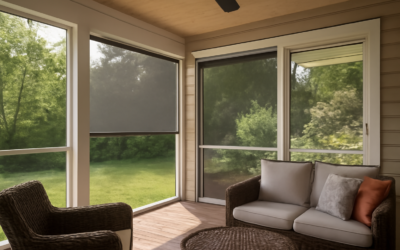
Torn, sagging, or sun-faded porch screens let in exactly the mosquitoes you built the porch to keep out. Most homeowners can re-screen a porch in a weekend, and fiberglass screen for porch openings is the default choice because it is affordable, forgiving to install, and does not dent or crease like metal. The process depends on how the existing screen is attached: either pressed into channels with rubber spline or stapled to the framing and covered with wood trim called battens.
Figure out which system you have, measure the openings, buy a roll a few inches wider than your largest panel, and work one opening at a time. We also cover mesh types, both attachment methods, patching small tears, and the safety details that matter on older porches, including lead paint and ladder work on high openings.
- Choosing a Fiberglass Screen for Porch Openings
- Spline Systems vs Staple-and-Batten Framing
- Tools and Materials
- Step-by-Step: Re-Screening a Spline Channel
- Step-by-Step: Re-Screening Staple-and-Batten Framing
- Fixing Small Tears Without Replacing a Panel
- Safety: Sharp Edges, Ladders, and Lead Paint
- Troubleshooting Porch Screen Problems
- Cost Ranges
- When to Call a Pro
- Frequently Asked Questions
Choosing a Fiberglass Screen for Porch Openings
Standard fiberglass mesh is an 18-by-16 weave, which blocks mosquitoes and most flying insects. It comes in charcoal (black) and gray. Charcoal, often sold as black screen for porch use, reduces glare and is easier to see through from inside, which is why most people pick it. Rolls come in widths from 36 to 96 inches, and the wider rolls suit large porch spans where you want as few seams as possible.
Other mesh options worth weighing:
- Aluminum screen: Stiffer and more durable against scratches, but it dents, creases during install, and can corrode near salt air.
- Pet-resistant screen: A heavy vinyl-coated polyester mesh that stands up to claws and paws. It costs two to three times more and is thicker, so it may need a larger spline.
- Solar or sun-control screen: A tighter weave that blocks a large share of solar heat and glare. Great for west-facing porches, though it darkens the view.
- No-see-um or fine mosquito screen for porch areas near water: A 20-by-20 weave that stops tiny biting midges but reduces airflow slightly.
- Heavy-duty or tear-resistant fiberglass: Some premium fiberglass meshes are thicker for high-traffic doors and low panels near kids.
For most porches, a standard or heavy-duty fiberglass patio screen is the right balance of price, visibility, and ease. Use pet-resistant mesh on the bottom panels if dogs press against them.
Spline Systems vs Staple-and-Batten Framing
Before repairing screen porch panels, look closely at how the current mesh is held.
Spline systems use aluminum or vinyl channels screwed to the porch framing. Screen is pressed into the channel with a round rubber cord called spline, using a spline roller. Many modern screen porch kits for large screens use this method because the panels can be re-tensioned or replaced without removing trim.
Staple-and-batten systems are the traditional approach. The screen is stapled directly to the wood posts and rails, then covered with thin wood strips (battens or screen molding) nailed over the staples. It is cheap and common on older porches, but replacing screens on porch framing like this means prying off the battens first.
Tools and Materials
- Fiberglass screen roll, sized a few inches larger than each opening on all sides
- Spline (match the diameter of the old spline) and a spline roller, for channel systems
- Heavy-duty staple gun with 1/4- to 3/8-inch stainless or galvanized staples, for batten systems
- Stiff putty knife or flat pry bar, and a small hammer
- Sharp utility knife with fresh blades
- Work gloves, safety glasses, and a sturdy stepladder
- Stainless finish nails or brads for reattaching battens
Step-by-Step: Re-Screening a Spline Channel
- Remove the old spline. Pick up one end with an awl or small screwdriver and pull it out of the channel. Lift out the old mesh.
- Clean the channel. Brush out dirt, old screen fibers, and insect debris so the new spline seats fully.
- Lay the new screen. Drape the mesh over the opening with 2 to 3 inches of overlap on every side. Clamp or tape the top edge to hold it.
- Start at the top. Use the convex wheel of the roller to press the mesh lightly into the channel, then the concave wheel to roll the spline in on top.
- Work down the sides. Pull the screen gently taut as you go, but not so tight that it bows the frame or distorts the weave.
- Finish the bottom. Roll in the last run, then trim excess screen along the outside edge of the spline with a sharp utility knife angled away from the spline.
Step-by-Step: Re-Screening Staple-and-Batten Framing
- Pry off the battens with a putty knife, working from one end so they do not split. Number them on the back so each piece goes back where it came from.
- Remove old staples and the old screen. Pull stubborn staples with pliers.
- Staple the top edge of the new mesh every 2 to 3 inches, keeping the weave square to the frame.
- Tension and staple the bottom, then the sides, working from the center outward.
- Trim the excess just inside where the batten edge will land.
- Reinstall the battens with stainless or galvanized brads so they cover the staples and screen edge.
Fixing Small Tears Without Replacing a Panel
Holes smaller than a few inches can be patched. Self-adhesive fiberglass screen patches work well for small punctures. For larger tears, cut a square of matching mesh an inch bigger than the hole on all sides, lay it over the damage, and stitch it on with clear fishing line or attach it with a clear exterior adhesive. A patch is a quick fix; once a panel has several, replacement looks better and keeps pests out more reliably.
Safety: Sharp Edges, Ladders, and Lead Paint
Cut screen edges, old staples, and aluminum mesh have sharp points. Wear work gloves and safety glasses while pulling old material and trimming.
High porch openings and transoms above doors put you on a ladder. Use a stepladder on firm, level decking, keep three points of contact, and never stand on the top two steps. If any openings sit two stories up, hire a pro or use proper scaffolding.
Many older porches have layers of paint on posts, rails, and battens. If the house was built before 1978, test the paint for lead before sanding, scraping, or prying off painted trim. If it tests positive, use lead-safe practices: plastic sheeting under the work area, misting instead of dry scraping, no power sanding, and HEPA vacuum cleanup. Keep children and pets away until cleanup is complete.
Troubleshooting Porch Screen Problems
Screen sags after a few weeks: It was not tensioned enough, or the spline is undersized. Re-roll with a slightly larger spline.
Wrinkles near corners: The mesh was pulled diagonally. Remove the spline along one side and re-roll while pulling straight across.
Screen pulls out of the channel: Old spline shrinks and hardens over time. Replace it instead of reusing it.
Battens split when reinstalled: Pre-drill with a small bit or switch to thinner brads.
Cost Ranges
A roll of standard fiberglass screen for porch work typically costs about $15 to $60, depending on width and length, while pet-resistant and solar mesh cost noticeably more. Spline and a roller add $10 to $25. Professional re-screening often runs roughly $4 to $8 per square foot installed, or about $50 to $150 per panel, with higher prices for large openings, specialty mesh, or repair of rotted framing.
When to Call a Pro
Hire a contractor if framing or posts are rotted, if openings are on a second story, or if lead paint testing comes back positive and you are not equipped for lead-safe work. A pro is also worth the cost for very large spans where seams and tension are hard to manage alone. Check with your HOA if you plan to change screen color or type.
Frequently Asked Questions
Is fiberglass or aluminum screen better for a porch?
Fiberglass is easier to install, will not dent or corrode, and costs less. Aluminum is stiffer and more scratch-resistant, but it creases during installation.
What color screen is best for a porch?
Charcoal or black screen gives the clearest view from inside and reduces glare. Gray is slightly more visible from outside.
Can I reuse the old spline?
Usually not. Old spline hardens and shrinks, so new spline gives a tighter, longer-lasting hold.
How tight should porch screen be?
Snug and flat with no ripples, but not so tight that it bows the frame or distorts the weave.
Do I need to test for lead before replacing porch screens?
If the porch was built before 1978 and you will pry, scrape, or sand painted trim, test the paint for lead first and use lead-safe methods if it is present.