

The garage floor is the single hardest-working surface in a typical American home — taking 4,000-pound vehicle weight on hot tires, oil drips, dropped tools, road salt, and brake dust year after year. Choosing the right residential garage flooring system means picking between four serious options: epoxy, polyaspartic polyurea, interlocking PVC tiles, and roll-out vinyl mats. Each has a defensible use case. Prices range from $2 per square foot for DIY mats to $11 per square foot for professionally installed polyaspartic with full flake broadcast. Understanding the durability ratings, prep requirements, and total install cost makes the choice straightforward.
Part of our Epoxy, Concrete & Garage Floors guide — explore the full guide →
Polyaspartic Polyurea: The Premium Option
Polyaspartic coatings are the current gold standard for residential garage floors. The material cures in 30 to 60 minutes at most temperatures, allowing one-day installation that includes diamond grinding, primer, broadcast flake, and topcoat. UV stability is excellent — polyaspartic resists yellowing for 15 to 20 years where epoxy turns amber in 5 to 8.
Penntek Industrial Coatings, GarageExperts, and Garage Force are the largest residential polyaspartic installers nationally. Pricing runs $7 to $11 per square foot installed, putting a 500-square-foot two-car garage between $3,500 and $5,500. Warranties typically span 15 years on adhesion and chip resistance.

If you’re running out of room even with a clean garage floor, a backyard shed takes the overflow — seasonal gear, tools, lawn equipment. And if you’re parking outside while the garage doubles as a workshop, a carport keeps your car covered without needing a second garage.
We may earn a commission when you purchase through our links.
Traditional Epoxy: Lower Cost, Older Tech
Two-part epoxy was the dominant garage flooring system from 2000 through 2020. 100 percent solids epoxy from manufacturers like ArmorPoxy, Sherwin Williams General Polymers, and Rust-Oleum Pro Series creates a durable finish at lower cost than polyaspartic. Installation requires 24 to 48 hour cure between coats, extending the job over 2 to 3 days.
Pricing runs $4 to $7 per square foot installed. The trade-offs are slower installation, less UV stability (yellowing visible after 5 years on sun-exposed slabs), and lower chemical resistance versus polyaspartic. For garages with limited sun exposure and homeowners staying long-term, epoxy still delivers acceptable value.
Interlocking PVC Tiles
Interlocking garage tiles from Swisstrax, RaceDeck, and Greatmats snap together over any clean, flat slab without adhesives or coatings. The tiles measure 12 by 12 inches or larger, typically 1/2 inch thick PVC or polypropylene. Installation is DIY-friendly — a 500 square foot garage takes one person 4 to 6 hours.
- $2.50 to $7 per sq ft depending on brand and tile thickness
- No subfloor prep beyond cleaning
- Replace individual tiles if damaged
- Allow air and moisture to escape through floor joints
- Easy to remove if you sell the home or change your mind
Best for renters or homeowners not ready to commit to a permanent coating. Trade-offs include reduced impact resistance from dropped tools (the tile pops loose rather than the floor cracking) and a less seamless look than coatings.
Roll-Out Vinyl Mats
Roll-out vinyl flooring from G-Floor, Better Life Technology, and IncStores covers the entire garage floor with a continuous waterproof sheet. Typical thickness runs 55 to 85 mil, with diamond-tread or coin patterns for grip. Installation is the simplest of any system — unroll, trim with a utility knife, and weight down the edges for 24 hours to relax.
Pricing runs $1.50 to $4 per square foot for materials, with self-install saving labor entirely. A G-Floor 75-mil Garage Floor Cover for a 20 by 20 foot space runs about $700 to $900. The vinyl resists oil, gas, brake fluid, and road salt, and rolls back up if you ever sell the house.
Concrete Sealer and Densifier
The lowest-cost option keeps the existing concrete and applies a penetrating sealer like Foundation Armor SX5000 or Eagle Sealer Brand silane-siloxane sealer. Coverage runs $0.50 to $1 per square foot for materials. The sealer waterproofs the concrete from below, prevents salt damage and freeze-thaw spalling, and reduces dusting from concrete particle wear.
The trade-off is purely functional — the floor still looks like raw concrete. No flake, no color, no high-gloss finish. For workshops and storage-only garages where appearance does not matter, sealing is the budget-friendly path.
Surface Prep Requirements
Polyaspartic and epoxy both require diamond grinding to create a proper concrete profile (CSP 3 to CSP 4 per the International Concrete Repair Institute scale). A professional grinder rents at Home Depot for $90 a day plus diamond tooling at $80 to $150. DIY grinding is hard work — the equipment is heavy and dust-intensive even with vacuum attachment.
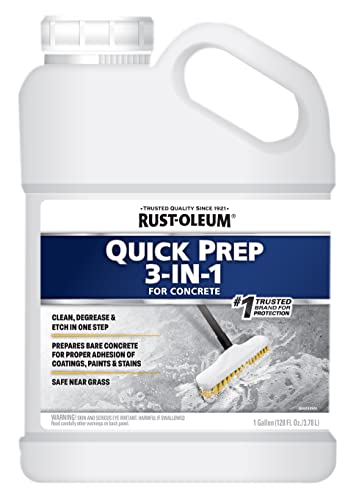
Acid etching with muriatic acid is the alternative for budget-conscious DIY epoxy kits. The chemical reacts with the concrete surface to create texture, but produces inconsistent profile and often leaves residue that compromises long-term adhesion. Skip acid etching for any installation expecting more than 5 years of service life.
Moisture Testing Before You Coat
Concrete slabs hold moisture from below that pushes upward through capillary action. Testing slab moisture before any coating goes down prevents the most common failure mode — bubbling and delamination within 6 to 18 months of installation. Use a calcium chloride test kit ($45 from Vaprecision) or an electrical impedance meter like the Tramex CME4 ($580).
Slabs reading above 3 pounds per 1,000 square feet per 24 hours require a moisture mitigation primer before the main coating. Aquafin EpoLith-P, Koster VAP-I 2000, and Sherwin Williams Hi-Mil Sher-Tar Epoxy all work in this role at $1.50 to $2.50 per square foot extra cost.
Color and Pattern Options
Coatings allow custom color through pigmented base coats plus broadcast vinyl chips in any combination. Standard flake colors include grays, tans, blacks, and white. Custom blends matching team colors, business logos, or unique patterns are available at premium pricing.
Tiles and roll-out mats come in solid colors plus checkerboard, alternating diamond patterns, and racing stripes. Swisstrax Diamondtrax tiles ship in 14 standard colors. G-Floor roll-out sheets come in 8 colors including a metallic silver finish that looks similar to high-end coatings at a fraction of the cost.
What to Avoid
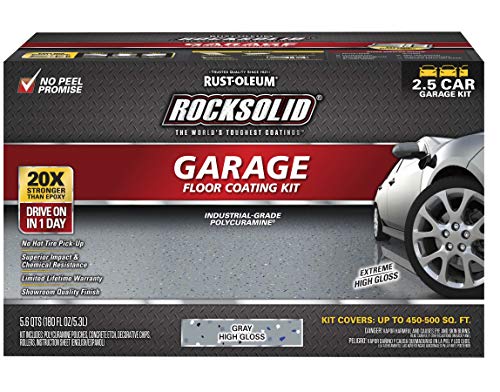
Consumer big-box epoxy kits like Rust-Oleum EpoxyShield Garage Floor Coating ($90 for 250 sq ft) regularly fail within 18 months because they are water-based formulations with limited adhesion to unprepared concrete. The DIY kit instructions emphasize acid etching, which is the weakest possible prep method. Skip these kits for any garage you intend to actually use.
Carpet tiles marketed for garages have no place in a vehicle storage space. They absorb oil and moisture, never come clean, and create slip hazards when wet. Save carpet tiles for finished basements and home offices.
Final Recommendations
For homeowners staying long term in a heated garage with significant vehicle traffic, invest in professionally installed polyaspartic with full flake broadcast at $4,000 to $5,500 for a two-car space. For unheated garages or short-term ownership, interlocking Swisstrax tiles deliver excellent value at $2,000 to $3,500 installed yourself. Budget-conscious DIY installers can apply roll-out G-Floor vinyl for under $1,000. Always test slab moisture before any coating, and never cut corners on diamond grinding.


