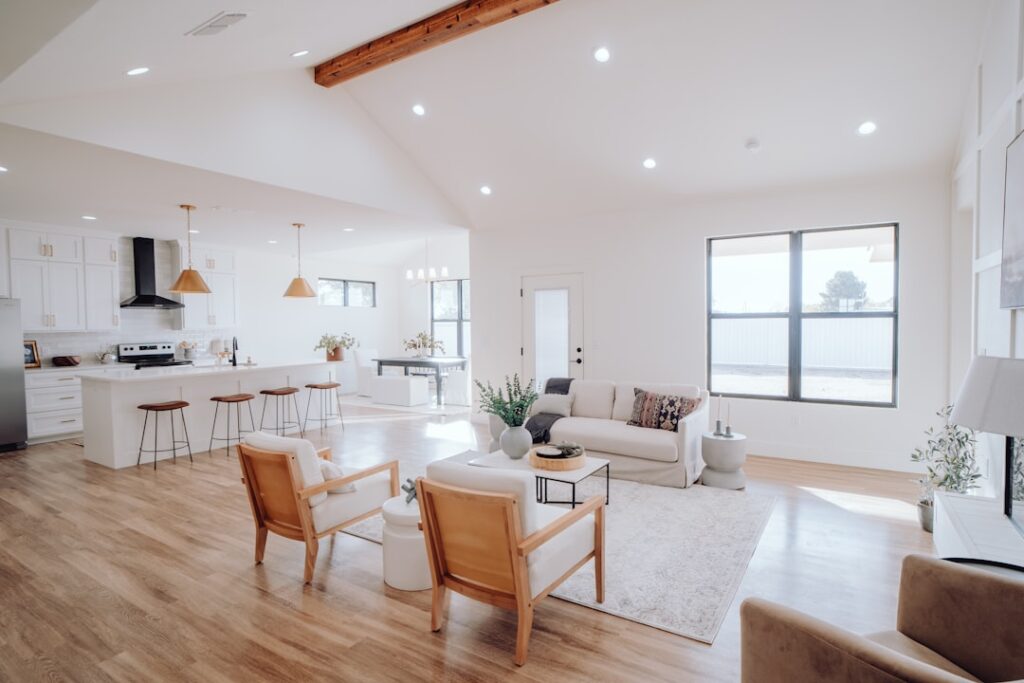
If you have been searching for resiliant flooring, you are looking at the right category, just with a common spelling slip, the correct term is resilient flooring. It covers a whole family of semi-flexible, durable floor coverings that give slightly underfoot and bounce back: vinyl, linoleum, cork, and rubber. These floors are prized for being waterproof or water-resistant, comfortable to stand on, quiet, and budget-friendly compared to hardwood or tile. This guide breaks down each type, what it costs, and where it works best so you can choose with confidence.
- What Resilient Flooring Means
- The Four Main Types
- Vinyl: The Workhorse
- Linoleum and Cork: The Natural Options
- What It Costs Overall
- Pros of Resilient Flooring
- Cons to Weigh
- Rubber: The Commercial Workhorse
- Installation and Maintenance Basics
- Resilient vs. Hard and Soft Flooring
- Health and Indoor Air Considerations
- Choosing the Right Resilient Floor
What Resilient Flooring Means
Resilient describes a floor that is firm but slightly elastic, absorbing impact and returning to shape. That springiness is why these floors feel warmer and softer than ceramic or stone, and why dropped glasses sometimes survive. The category is defined against “hard” flooring like tile and “soft” flooring like carpet, sitting comfortably in between with the durability of the former and the comfort of the latter.
The Four Main Types
Each resilient material has its own personality:
- Vinyl (LVP, LVT, sheet, SPC): The most popular by far. Waterproof, affordable, and available in convincing wood and stone looks.
- Linoleum: Made from linseed oil, cork dust, and jute. Natural, biodegradable, and durable, with color running all the way through.
- Cork: Harvested from cork oak bark. Warm, soft, sound-absorbing, and naturally antimicrobial.
- Rubber: Tough, slip-resistant, and shock-absorbing, common in gyms, kitchens, and commercial spaces.
Vinyl: The Workhorse
Vinyl dominates the resilient category because it is 100 percent waterproof and inexpensive. Luxury vinyl plank and tile mimic hardwood and stone, while rigid SPC cores resist dents in busy areas. Material costs run $1.00 to $5.00 per square foot, with wear layers from 6 to 20 mils determining longevity. For most homeowners wanting a waterproof, low-maintenance floor, vinyl is the default answer.
Linoleum and Cork: The Natural Options
Linoleum is often confused with vinyl but is a different, plant-based material. It is more eco-friendly, lasts 25 to 40 years, and hides scratches because the color goes through the full thickness, though it needs periodic sealing and is only water-resistant, not waterproof. Cork, meanwhile, is the most comfortable underfoot, insulates against cold, and dampens sound, making it a favorite for kitchens and home offices. Both run roughly $3.00 to $7.00 per square foot installed.
What It Costs Overall
Here is a rough installed-cost map:
- Sheet vinyl: $1.50 to $4.00 per square foot.
- Luxury vinyl plank/tile: $3.00 to $7.00 per square foot.
- Linoleum: $4.00 to $8.00 per square foot.
- Cork: $4.00 to $9.00 per square foot.
- Rubber: $4.00 to $12.00 per square foot depending on grade.
Pros of Resilient Flooring
The shared strengths across the category:
- Comfort: Softer and warmer underfoot than tile or stone.
- Durability: Resists dents, scratches, and heavy traffic well.
- Water resistance: Vinyl is fully waterproof; others resist spills.
- Quiet: Absorbs sound better than hard surfaces.
- Value: Generally cheaper than hardwood, tile, or stone.
Cons to Weigh
No floor is perfect:
- Resale: Does not boost home value like genuine hardwood.
- Denting: Heavy furniture can leave marks without protectors.
- Maintenance variance: Linoleum and cork need periodic sealing; vinyl does not.
- Subfloor sensitivity: Thin products telegraph an uneven subfloor.
Rubber: The Commercial Workhorse
Rubber rounds out the resilient family and deserves its own look. Made from natural or synthetic rubber, it is the toughest and most slip-resistant option, which is why you find it in gyms, commercial kitchens, hospitals, and play areas. It absorbs impact and sound beautifully, shrugs off heavy traffic, and resists burns and stains. For homeowners, rubber makes sense in a home gym, laundry room, or mudroom rather than living spaces, where its utilitarian look and rubbery smell when new are less welcome. It comes in rolls, tiles, and interlocking mats, costs $4 to $12 per square foot depending on grade, and easily lasts 20 years in residential use.
Installation and Maintenance Basics
How each resilient floor goes down varies. Vinyl planks usually float with click-lock joints, sheet vinyl and linoleum are typically glued, cork can be glued or floated, and rubber comes as glue-down or loose-lay tiles. Across the board, the subfloor must be clean, dry, and flat within 3/16 inch over 10 feet, and concrete slabs need moisture testing first. Maintenance is light: sweep regularly, damp-mop with a pH-neutral cleaner, and avoid harsh chemicals and steam that can damage seams. Linoleum and cork need periodic resealing every few years, while vinyl and rubber need none. Felt pads under furniture prevent dents, and walk-off mats at doors keep abrasive grit off the surface.
Resilient vs. Hard and Soft Flooring
It helps to understand where resilient sits among the alternatives. Hard flooring like ceramic tile and natural stone is the most durable and waterproof, but it is cold, loud, and unforgiving when you drop something or stand for hours. Soft flooring like carpet is warm and quiet but stains, traps allergens, and wears out faster. Resilient flooring threads the needle, offering much of tile’s durability and water resistance with carpet-like comfort and quiet underfoot. Hardwood, meanwhile, brings unmatched resale appeal and can be refinished, but it costs more and is vulnerable to moisture. For homeowners who want a practical, comfortable, affordable floor that handles real life, resilient is often the sweet spot.
Health and Indoor Air Considerations
Air quality is worth a thought, especially with vinyl. Look for products certified FloorScore or Greenguard Gold, which verify low VOC emissions and make a real difference in a tightly sealed home. Phthalate-free vinyl is now widely available if that is a concern. Cork and natural linoleum are inherently low-emitting and made from renewable materials, which appeals to eco-conscious buyers, and cork is naturally resistant to mold and dust mites. For households with allergies, resilient flooring is generally a better choice than carpet because it does not harbor allergens and wipes clean. Whatever you choose, airing out new flooring for a day or two after installation lets any initial off-gassing dissipate before the room sees heavy use.
Choosing the Right Resilient Floor
Match the material to the room and your priorities. Want waterproof and cheap? Go vinyl. Want eco-friendly and long-lasting? Choose linoleum. Want maximum comfort and warmth? Pick cork. Need slip resistance and impact protection in a gym or mudroom? Rubber wins. Whatever you select, prep the subfloor flat to within 3/16 inch over 10 feet and follow the manufacturer’s acclimation guidance, and your resilient floor will serve quietly and reliably for decades.
Prefer to explore on your own?
See how new flooring looks in your actual room in seconds — free, no signup.
Try the free Floor Studio →