Most homeowners spend plenty of time thinking about the vents that blow air and almost none on the ones that pull it back. A return air vent is the intake side of your heating and cooling system: it draws room air into ductwork, sends it through the filter and back to the furnace or air handler, where it is heated or cooled and pushed out again through the supply registers. Without enough return air, the system starves, rooms pressurize, and you pay more for less comfort.
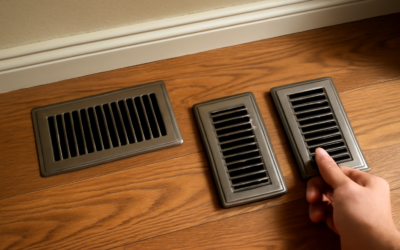
You can usually spot the difference in seconds. Supply registers are smaller, have adjustable louvers or dampers, and push air you can feel. A return air register is typically larger, has fixed fins or a simple grid, and gently pulls air in (hold a tissue near it and it will cling to the grille). If your system is running and a big grille in the hallway feels like it is doing nothing, it may be undersized, blocked or disconnected.
- How a Return Air Vent Works With Your HVAC System
- Sizing a Return Air Register by CFM and Free Area
- Best Places to Put a Return Air Vent
- Combustion Safety and Carbon Monoxide Concerns
- Why Blocked Returns Hurt Comfort and Raise Bills
- Tools and Materials for Replacing a Return Air Vent Cover
- Step-by-Step: Cleaning and Replacing a Return Grille
- Troubleshooting Common Return Problems
- Cost Ranges for Return Air Upgrades
- When to Call a Licensed Professional
- Frequently Asked Questions
The fix is rarely complicated. Most problems come down to too few returns, grilles that are too small for the airflow, or furniture and rugs choking the opening. Sorting out sizing and placement is where the real gains are.
How a Return Air Vent Works With Your HVAC System
Forced-air heating and cooling is a loop. The blower pushes a set volume of air, measured in cubic feet per minute (CFM), through supply ducts into each room. That same volume has to come back. The return air vent is the doorway for that trip home, and the return duct carries the air to the filter rack and the blower cabinet.
When the return side is too restrictive, a few things happen at once. The blower works against higher static pressure, so it moves less air than it is rated for. Cooling coils can get too cold and ice over in summer. Furnace heat exchangers run hotter than intended in winter, which can trip the high-limit switch and shorten equipment life. Rooms that have supply registers but no clear return path, especially bedrooms with doors closed, become slightly pressurized and push conditioned air out through gaps around windows and outlets instead of circulating it.
People search for an hvac return vent, an ac return vent, an air conditioner return or an ac intake vent, and they are all describing the same component. The term “return” is the one most installers use, while “intake” shows up more often in owner manuals and online forums.
Return vent vs supply register at a glance
| Feature | Supply register | Return air vent |
|---|---|---|
| Air direction | Blows conditioned air out | Pulls room air in |
| Typical size | 4×10 to 4×14 inches | Often 14×20 up to 20×30 inches |
| Damper | Usually adjustable | Usually none |
| Filter | Never | Sometimes, in filter-grille designs |
Sizing a Return Air Register by CFM and Free Area
Return sizing starts with how much air your system moves. A common rule of thumb is about 400 CFM per ton of cooling capacity, so a 3-ton system moves roughly 1,200 CFM and a 4-ton system about 1,600 CFM. Your return grilles, together, need to pass that full volume without excessive velocity.
The number that matters is free area, not the nominal size stamped on the box. A 20×25 grille does not offer 500 square inches of opening because the fins and frame block part of it. Stamped steel grilles often have free area around 60 to 75 percent of nominal size; manufacturers list the exact figure on spec sheets. Quiet, efficient returns are usually designed for face velocities of roughly 300 to 500 feet per minute. Beyond that range, you hear whistling and the filter loads up quickly.
A quick way to estimate:
- Find your system’s tonnage on the outdoor unit or air handler label, then multiply by 400 to estimate CFM.
- Divide CFM by your target velocity (use 400 feet per minute as a middle value) to get the free area in square feet.
- Multiply by 144 to convert to square inches.
- Divide by the grille’s free-area percentage to find the nominal size you need.
For a 3-ton system: 1,200 divided by 400 is 3 square feet, or 432 square inches of free area. At 70 percent free area, you need about 617 square inches of nominal grille, which could be one 24×30 return or two 20×16 grilles split between living areas. Filter-grille returns need even more size because the filter adds resistance, and a larger filter face also lasts longer between changes.
Duct size matters too. A huge grille on a tiny duct does little. If the grille is generous but airflow is still weak, the duct behind it, or a crushed flex run in the attic, is the bottleneck. A technician can measure static pressure to confirm.
Best Places to Put a Return Air Vent
Placement is about giving every room a path for air to get back to the system. A central return in a hallway works in compact single-story homes with open floor plans, as long as interior doors usually stay open. Homes with many closed-door bedrooms do better with a return in each bedroom or with transfer grilles and jumper ducts that let air move between a closed room and the hallway.
- High vs low: In cooling-dominated climates, high-wall or ceiling returns help pull warm air that collects near the ceiling. In heating-dominated climates, low returns near the floor pull cooler air back for reheating. Many homes in mixed climates simply use whichever location the framing allows, and that is usually fine.
- Away from supply registers: Do not put a return within a few feet of a supply. Air short-circuits straight back into the system without mixing in the room.
- One per floor, at minimum: Two-story homes need returns upstairs. Without them, warm air piles up on the second floor in summer and the thermostat downstairs never sees it.
- Never in bathrooms, kitchens, laundry rooms or garages: Returns in these spaces pull moisture, cooking grease, lint or vehicle exhaust into the ductwork and spread it through the house. Building codes in most areas prohibit returns in these locations.
Combustion Safety and Carbon Monoxide Concerns
Return placement is also a safety issue when fuel-burning appliances are involved. A return opening in the same closet or small room as a gas or oil furnace, or a gas water heater, can depressurize that space. Negative pressure can pull exhaust gases back down the vent pipe instead of letting them rise and leave the house, a condition called backdrafting. That is how carbon monoxide ends up in living spaces.
Keep these rules in mind:
- Do not add a return grille or open a return duct in a furnace room, mechanical closet or any space with a combustion appliance unless a licensed HVAC contractor designs it.
- Make sure the return duct connections at the furnace cabinet are sealed with mastic or foil tape so the blower cannot draw air from around the appliance.
- Install carbon monoxide alarms on every level of the home and near sleeping areas, and test them monthly.
- Follow the venting and clearance requirements in the appliance maker’s manual and local code, and schedule an annual inspection of the flue, vent pipe and chimney.
- If a CO alarm sounds, get everyone outside and call the fire department or your gas utility from a safe location.
Why Blocked Returns Hurt Comfort and Raise Bills
A sofa pushed against a wall return, a rug laid over a floor return, or a filter that has not been changed in six months all have the same effect: the system breathes through a straw. Airflow drops, run times stretch longer, and rooms farthest from the air handler fall behind. Energy use climbs because the equipment runs longer to deliver the same comfort.
Signs your returns are struggling:
- Whistling or roaring at the grille when the blower starts.
- Doors that slam or swing on their own when the system kicks on.
- A filter that turns gray within weeks.
- Ice on the refrigerant line or indoor coil during cooling season.
- Upstairs bedrooms that stay several degrees warmer than the thermostat setting.
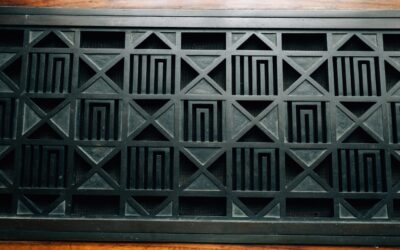
Leave at least 12 to 18 inches of clear space in front of each return. Floor returns should never be covered by rugs, and decorative screens should be open enough not to cut free area. Some designers choose a return air grille with a slimmer profile or a painted finish so it blends in, which is a better choice than hiding it behind furniture.
Tools and Materials for Replacing a Return Air Vent Cover
Swapping an old, rusty grille for a new cover of the same size is a simple job. You will need:
- Tape measure (measure the duct opening, not the old grille face)
- Screwdriver or drill with a Phillips bit
- New grille sized to the opening, or a filter-grille if you want filtration at the wall
- Foil tape or duct mastic for sealing the boot to drywall
- Paintable caulk if the edges need tidying
- Vacuum with a brush attachment
Step-by-Step: Cleaning and Replacing a Return Grille
- Shut the system off at the thermostat so the blower is not pulling dust while you work.
- Remove the old grille by backing out the screws. Filter-grilles usually have latches or thumb screws on the door.
- Measure the opening, width first, then height. Grilles are sold by the duct opening size, so a “20×25” grille fits a 20×25 opening and its face is larger.
- Vacuum the duct throat as far as you can reach. Look for gaps between the duct boot and the drywall, which pull dusty wall-cavity air into the system.
- Seal any gaps with foil tape or mastic. This step improves air quality more than most people expect.
- Install the new grille with fins angled so you cannot see straight into the duct from standing height, then snug the screws without crushing the frame.
- Insert a filter if it is a filter-grille, matching the arrow to the airflow direction (into the duct).
- Restart the system and check for whistling or rattles.
Troubleshooting Common Return Problems
The grille whistles
Velocity is too high. Either the grille is too small, the filter is too restrictive, or the duct behind it is undersized. A larger grille or a lower-resistance pleated filter often solves it. Persistent whistling at a properly sized grille points to a duct issue.
Dust lines around the grille
Dark streaks on the wall or carpet edge mean unfiltered air is being drawn through gaps. Seal the boot to the drywall, and check that the filter fits snugly in its rack with no bypass.
One room never gets comfortable
If the room has supply air but no return or transfer path, close the door and see whether the gap under it is at least 3/4 inch. A small transfer grille through the wall over the door or a jumper duct through the ceiling often fixes this without a new trunk line.
The return feels warm or musty
Leaky return ducts in a hot attic or damp crawlspace pull unconditioned air in. A duct leakage test can locate the problem.
Cost Ranges for Return Air Upgrades
Costs vary by region and access, but general ranges help with planning. A replacement grille runs from a modest amount for basic stamped steel to more for designer, wood or filter-grille styles. Adding a new return in an accessible location with a short duct run typically lands in the low hundreds to around a thousand dollars installed. Installing transfer grilles or jumper ducts falls in a similar range per room. Larger jobs, such as adding a second-floor return trunk or redesigning the return system, can climb into the low thousands, especially when walls must be opened and patched.
When to Call a Licensed Professional
Swapping a grille is DIY work. Cutting new return openings, running new duct, or changing anything near the furnace or air handler is not. Call a licensed HVAC contractor when you need a load calculation, new returns, static pressure testing or duct redesign, and whenever a combustion appliance shares space with the return path. Permits are often required for duct changes and new openings, and the contractor will handle them. Any electrical work on the air handler belongs to a qualified technician as well; turn off the breaker and confirm power is off with a non-contact voltage tester before opening any equipment panel, and never work on powered wires.
Frequently Asked Questions
Can I put furniture in front of a return grille?
Avoid it. Leave 12 to 18 inches of clear space so the system can draw air freely. Blocking a return reduces airflow, raises energy use and can strain the blower.
Should the return grille have a filter?
Only if it is designed as a filter-grille and the furnace cabinet does not already hold one. One properly sized filter location is enough; doubling filters adds resistance.
How many return vents does a house need?
At least one per floor, plus a return or transfer path for each room that is usually closed off. Total free area should match your system’s CFM at roughly 300 to 500 feet per minute.
Why is my AC return vent so loud?
Noise usually means air is moving too fast through too small an opening. A larger grille, a less restrictive filter or a bigger return duct typically quiets it.
Can I close a return vent to push more air elsewhere?
No. Closing returns starves the system of air and raises static pressure. Balance airflow at the supply registers or have a contractor adjust dampers instead.