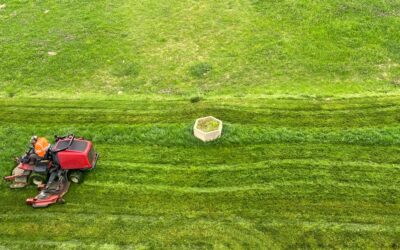
A regular lawn tractor will choke, overheat or snap a belt if you point it at waist-high grass and small saplings. That work calls for a riding brush mower, a machine built with a heavy-gauge deck, a thick bar blade and enough ground clearance to push through growth that would stall a standard mower. If you just bought rural land, inherited a neglected back lot or let a field go for a season, this is the kind of tool that gets it back under control.
Riding brush mowers are not the only option. Tow-behind brush mowers pulled by an ATV, UTV or garden tractor, and walk-behind brush cutters, handle similar jobs at different scales and prices. The right choice depends on acreage, terrain, the thickest stems you need to cut, and what equipment you already own.
- What a Riding Brush Mower Does Differently
- Riding vs Tow-Behind vs Walk-Behind Brush Mowers
- Stem-Diameter Limits and What These Machines Can Cut
- How to Clear an Overgrown Lot Step by Step
- Blade Care and Maintenance
- Fuel, Fire and Debris Safety
- Costs, Rentals and When to Hire Out
- Troubleshooting Common Problems
- Frequently Asked Questions
Here is how each type compares, the stem-diameter limits to respect, how to walk and prep a lot before cutting, blade care, and the fuel and debris safety that goes with any heavy mower.
What a Riding Brush Mower Does Differently
A riding brush mower, sometimes called a riding brush cutter or field mower, looks like a compact tractor but is designed around rough cutting rather than a neat lawn finish. Typical features include:
- Heavy steel deck built to take impacts from stumps, rocks and debris
- Single thick bar blade on a free-swinging or hinged mount that can deflect on hard strikes
- Higher cutting heights and more ground clearance than a lawn tractor
- Front push bar that bends tall grass forward before the deck reaches it
- Larger engine and heavier drivetrain, often hydrostatic, for pushing through dense growth
- Aggressive tires for uneven, lumpy ground
The result is a rough cut, not a lawn. Expect ragged stems and windrows of chopped material. Many owners do one brush pass, let the debris dry, then follow with a regular mower once the ground is smooth.
Riding vs Tow-Behind vs Walk-Behind Brush Mowers
| Type | Best For | Main Tradeoff |
|---|---|---|
| Riding brush mower | 1 to 10+ acres, regular clearing | Highest cost, big storage footprint |
| Tow-behind brush mower | Owners with an ATV, UTV or tractor | Needs a tow vehicle; wide turns |
| Walk-behind brush cutter | Under 1 acre, slopes, tight spots | Slow and physically tiring |
Tow-Behind Brush Mowers
A tow-behind brush mower has its own engine and rides on wheels behind your vehicle. If you already own an ATV or UTV, it is often the most cost-effective way to clear several acres, since you are not buying a second drivetrain. Cutting widths of 44 to 60 inches are common. The downsides are wide turning circles, difficulty on tight or wooded edges, and the need to reach back to the engine controls or use remote-start models.
Walk-Behind Brush Cutters
Walk-behind units, sometimes called field and brush mowers, are self-propelled machines you steer by hand. They excel on slopes, around outbuildings, in narrow trails, and on lots under an acre. They are also much cheaper to buy and store. On large areas, though, you will spend a long day walking behind a vibrating machine.
Stem-Diameter Limits and What These Machines Can Cut
Every brush mower lists a maximum stem or sapling diameter. Common ratings fall around 1 to 3 inches, depending on the machine. Respect that number. Pushing past it overloads the blade spindle, shears belts and can throw heavy chunks of wood.
- Tall grass and weeds: any brush mower handles these easily, even at 4 to 6 feet tall.
- Briars, blackberry canes and brambles: fine for most units, though thorny material wraps around the spindle and should be cleared after each session.
- Saplings up to the rated diameter: approach slowly, let the push bar bend them over, and let the blade work.
- Trees and stumps beyond the rating: cut them with a chainsaw first, flush to the ground, or mark and avoid them.
If most of your lot is woody growth thicker than 3 inches, a brush mower is the wrong tool. A forestry mulcher (usually a rental with an operator) or a chainsaw crew is safer and faster.
How to Clear an Overgrown Lot Step by Step
- Walk the area first. On foot, mark stumps, rocks, holes, old fencing, wire, pipes, septic lids, well heads and irrigation valves with bright flags. Most blade and deck damage comes from hidden objects.
- Remove loose hazards. Pick up bottles, cans, lumber and metal scraps. A brush mower throws debris like a sling.
- Check for wildlife. Walk through ahead of the mower to flush out ground-nesting birds, rabbits and other animals.
- Set the deck high for the first pass. Take off the top growth first, then lower the deck on a second pass. This reduces strain and reveals objects you missed.
- Mow at a slow ground speed with the engine at full throttle. Let the blade keep its speed rather than forcing the machine forward.
- Work across slopes only within the machine’s rated limit, and avoid steep banks entirely. On hills, a walk-behind unit or string trimmer is safer.
- Let debris dry, then rake or mulch it before a follow-up mow with a standard mower for a cleaner finish.
Blade Care and Maintenance
Brush mower blades take a beating, and a dull or bent blade cuts poorly and shakes the whole machine.
- Before each session: check blade bolts, look for cracks or bends, check the belt and grease the spindle if the manual calls for it.
- After each session: clear wrapped vines and grass from the spindle and deck, and knock off packed debris that holds moisture and causes rust.
- Sharpening: these blades do not need a razor edge. A file or grinder that restores a clean, blunt cutting edge is enough. Always rebalance after sharpening.
- Replacement: replace any blade that is cracked, bent or worn thin. Never weld a cracked brush blade.
- Engine: change oil and air filters more often than on a lawn tractor, since brush work is dusty and hard on engines.
Before touching the blade, turn the engine off, remove the key, disconnect the spark plug wire, and let the engine and muffler cool. Wear heavy gloves, and block the blade with a wood scrap when loosening the bolt.
Fuel, Fire and Debris Safety
Dry grass and hot engines are a real fire risk, and brush mowers produce carbon monoxide like any gas engine.
- Refuel outdoors with the engine off and cool. Gas spilled on a hot muffler or exhaust can ignite. Wait several minutes after running.
- Store fuel in approved cans with tight caps, in a ventilated shed or detached building away from pilot lights, water heaters, furnaces and other ignition sources.
- Never run the engine inside a garage, barn or shed, even briefly to warm it up. Carbon monoxide builds up quickly and can be deadly. Keep working CO alarms in the home, especially near an attached garage.
- Clear dry grass from the engine, muffler and deck after each session and before storage. Packed chaff near the exhaust can smolder.
- Carry a fire extinguisher on dry days and avoid mowing tinder-dry fields during high-wind or burn-ban conditions.
- Protect yourself from thrown debris with safety glasses, hearing protection, long pants and boots. Keep people, pets and vehicles well away, since a brush mower can throw rocks and wood chunks a long way.
- Use the rollover and seat safety features as designed, and never carry passengers.
Costs, Rentals and When to Hire Out
As general ranges, walk-behind brush cutters often run around $1,500 to $3,500, tow-behind brush mowers around $2,000 to $5,000, and riding brush mowers from roughly $5,000 to well over $10,000. Many equipment rental shops rent walk-behind and tow-behind units by the day, which makes sense for a one-time cleanup.
Hiring a land-clearing crew is often the better call when:
- The lot has trees and stumps beyond your machine’s rated diameter
- Slopes are steep or the ground has ditches and washouts
- You need a one-time clearing and will maintain it with a regular mower afterward
- The area may hide old wells, septic tanks or buried debris you cannot locate
Troubleshooting Common Problems
Machine bogs down: slow the ground speed, raise the deck and take the growth in two passes.
Heavy vibration: the blade is bent, unbalanced or wrapped with vines. Shut down, disconnect the plug wire and inspect.
Belts slipping or smoking: check tension and clear debris packed around the pulleys.
Engine overheating: clean the air intake screen and cooling fins, which clog fast in dry brush.
Frequently Asked Questions
What size saplings can a riding brush mower cut?
Most are rated for stems around 1 to 3 inches thick. Check your machine’s rating and cut anything larger with a chainsaw first.
Is a tow-behind brush mower better than a riding one?
If you already own an ATV, UTV or tractor, a tow-behind unit is usually cheaper. A riding brush mower is easier to maneuver and more convenient for frequent use.
Can I use a lawn tractor on tall grass?
Only for light overgrowth. Thick, tall grass and saplings overload a lawn tractor’s deck and belts, so use a brush mower instead.
How often should I sharpen a brush mower blade?
Check it before each session and sharpen when the edge is rounded or nicked. Always balance the blade after sharpening.
Is it safe to mow dry fields with a brush mower?
It can be with precautions: clear chaff from the engine, carry an extinguisher and avoid windy days or local burn bans.