
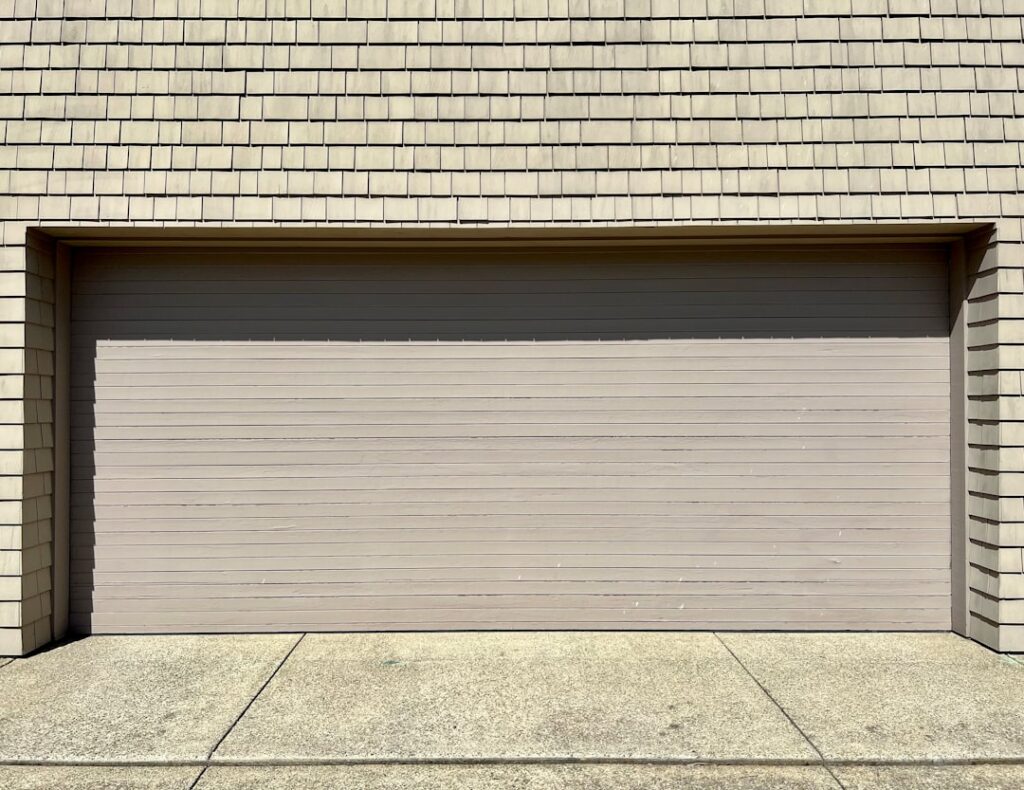
Most homeowners assume any garage door opener will power any door, then discover the hard way that a coiling door refuses to work with a standard rail-mounted unit. A roll up garage door opener is a different animal from the trolley opener bolted to the ceiling of a typical two-car garage. If you own a coiling curtain door on a workshop, barn, or older single-car garage, choosing the wrong roll up garage door opener means a motor that stalls, strips gears, or simply cannot lift the door at all. This guide walks you through the mechanics, the real brands and models, the torque and horsepower numbers that matter, and what you should expect to pay.
Part of our Garage Doors guide — explore the full guide →
What a Roll-Up (Coiling) Garage Door Actually Is
A roll-up door, also called a coiling door, is built from horizontal slats or a single sheet of corrugated steel that wraps around a barrel mounted above the opening. Instead of folding into overhead panels the way a sectional door does, the whole curtain coils tightly around that drum as it lifts. You see these on self-storage units, commercial loading docks, agricultural buildings, and plenty of older residential garages where a full sectional door was never installed.
Because the door coils rather than travels along a horizontal track, there is no trolley to attach a straight-pull opener to. The lifting force has to come from the axle itself. That single fact drives every decision you make about which operator to buy, and it is the reason a big-box trolley kit sitting on the shelf next to it will not do the job.
How It Differs From a Sectional-Door Opener
A sectional door rides on rollers up a vertical track that curves to horizontal near the ceiling. A trolley opener pulls a carriage along a rail, and that carriage tugs the top of the door up and back. The motor never touches the door’s springs or axle directly. This is the setup 90 percent of American two-car garages use, and it is what people picture when they hear “garage door opener.”
A coiling door has no such rail. To motorize it, the operator must grip and turn the barrel the door wraps around. That calls for a side-mounted or axle-mounted drive rather than a ceiling rail. In short:
- Sectional door: trolley opener pulls the door along an overhead rail
- Roll-up door: the operator turns the barrel/axle so the curtain coils and uncoils
- Mounting point: ceiling center for sectional, wall beside the door for roll-up
- Failure mode if mismatched: a trolley opener has nothing to grab on a coiling door
Motor Types: Jackshaft and Side-Mount vs Trolley
The operator style you need is a jackshaft, sometimes called a side-mount opener. Rather than sitting overhead, a jackshaft mounts on the wall to the left or right of the door and drives the torsion shaft directly. It spins the axle, the barrel turns, and the door coils. This is the same drive principle used by heavy commercial roll-up operators, just scaled down for residential curtain doors.
Trolley openers, the belt- or chain-drive units most people know, are the wrong tool here for the reasons above. A jackshaft brings real advantages beyond compatibility, though. It frees up ceiling space entirely, which matters in low-headroom garages or when you want a car lift or overhead storage. It also tends to run quieter because the motor is off the ceiling and away from the living space above.
When a jackshaft is required, not just preferred
- Coiling or curtain-style doors that have no horizontal track
- High-lift or vertical-lift door configurations in tall garages
- Ceilings too low for a standard rail, roughly under 6 to 8 inches of headroom
- Garages where you plan to add a 4-post lift or overhead racks
Real Brands and Models Worth Knowing
For residential and light-commercial coiling doors, the LiftMaster 8500W is the reference-standard jackshaft. It is a wall-mount unit rated for doors up to 14 feet tall and roughly 650 pounds of door weight, with a DC motor and battery backup so it still cycles during a power outage. Expect to pay in the neighborhood of $400 to $600 for the opener itself, before installation.
Chamberlain sells essentially the same hardware to the DIY market. The Chamberlain RJO20 is the retail twin of the LiftMaster jackshaft, usually a little cheaper at $350 to $500, and it targets the homeowner installing it themselves rather than the professional dealer channel. Both brands are owned by the same parent company, so the internals are close cousins.
For true commercial roll-up doors, the ones you see on warehouses and storage facilities, you move into a heavier class of operator entirely. LiftMaster’s commercial line and brands like Manaras, Overhead Door’s RSX, and FAAC build hoist and jackshaft operators rated for doors that weigh several hundred to over a thousand pounds and cycle dozens of times a day. These carry three-phase motor options and price tags that commonly run $800 to $2,500 depending on horsepower and duty rating.
Torque, Horsepower, and Duty Cycle
Horsepower gets the marketing attention, but on a coiling door torque and duty cycle tell the real story. Residential jackshafts like the 8500W run about 3/4 horsepower equivalent from a DC motor, plenty for a balanced single door where properly wound torsion springs carry most of the weight. The opener is not brute-lifting the door; it is nudging a spring-balanced load, which is why a modest motor works.
Commercial operators are rated differently. You will see them spec’d by horsepower (1/3 HP up through 1 or 2 HP), by duty cycle, and by the door’s total weight and cycles-per-hour demand. A door that opens 50 times a shift needs a continuous- or heavy-duty operator, not a residential unit that will overheat. Key numbers to match against your door:
- Door weight: confirm the operator’s maximum lifting weight exceeds your door’s actual weight
- Door height: residential jackshafts typically top out around 14 feet
- Spring balance: the door must be properly counterbalanced so the motor isn’t lifting dead weight
- Cycles per hour: match residential, standard-duty, or continuous-duty ratings to your traffic
- Motor phase: single-phase 120V for homes, three-phase 208/230V for many commercial units
Installation Considerations
The single most important prerequisite is a correctly wound torsion spring system. A jackshaft opener drives the torsion shaft, and if the springs are broken, undersized, or unbalanced, the motor takes the full load and burns out fast. Before you order anything, disconnect any existing operator and lift the door by hand. A balanced door should stay put at knee height, waist height, and shoulder height with almost no effort. If it slams down or shoots up, get a technician to rebalance the springs first.
Wall clearance is the next check. A side-mount operator needs several inches of flat wall space beside the torsion shaft, plus a solid mounting surface, ideally into framing or block. You also need a grounded outlet within reach, since the unit plugs into standard 120V household power for residential models. Winding torsion springs is genuinely dangerous work, so unless you have the winding bars and the experience, this is one project where hiring a garage door pro for $150 to $350 in labor is money well spent.
Budget for the full package, not just the box on the shelf. A residential jackshaft installed by a dealer typically runs $600 to $1,000 all in, covering the opener, wall mounting, spring adjustment, and setup of the safety reversing sensors. Add-ons like a wireless keypad, a second remote, or smartphone control through MyQ push the number up modestly. Skimping on the sensor calibration is a mistake, since a coiling door that fails to reverse on an obstruction is a real safety hazard for kids and pets.
When a Roll-Up Door Needs a Specific Operator
Not every roll-up door is a residential job. Light residential and small commercial coiling doors usually pair fine with a LiftMaster 8500W or Chamberlain jackshaft. But once you cross into heavy steel curtain doors, doors over 14 feet, or anything cycling all day, you need a purpose-built commercial roll-up operator with the matching horsepower and duty rating. Trying to run a warehouse curtain door on a residential jackshaft is the fastest way to cook a motor.
To summarize the decision path: identify your door as coiling rather than sectional, confirm the springs carry the load, size the operator to the door’s weight and cycle demand, and buy a jackshaft or commercial roll-up operator accordingly. Get those four steps right and your roll up garage door opener will cycle smoothly for years. Match a trolley unit to a coiling door, or undersize the motor, and you will be shopping again within a season.


