
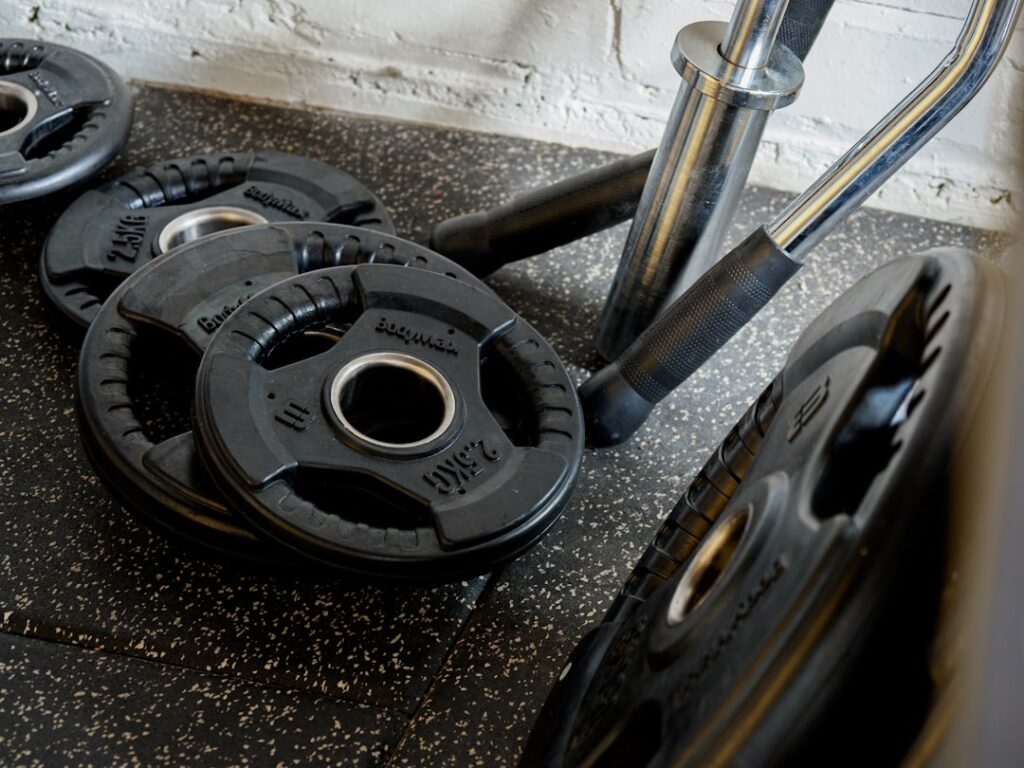
Basements break most flooring. Concrete slabs sweat, foundation walls wick moisture after every storm, and sump pumps fail at 2 a.m. That is why rubber flooring for basement installs has become the go-to choice for gyms, playrooms, and workshops below grade. Rubber shrugs off humidity that destroys laminate, never buckles the way vinyl plank can, and absorbs the kind of dropped weights and dropped tools that crack tile.
- Why Rubber Works Below Grade
- Rolled Rubber
- Interlocking Rubber Tiles
- Rubber Mats and Stall Mats
- Pros of Going Rubber Below Grade
- Cons to Know Before You Buy
- Pricing Breakdown for a 400 Sq Ft Basement
- Installation Steps That Actually Work
- Maintenance
- Is It Right for Your Space
- Mistakes to Avoid
- Final Word
Why Rubber Works Below Grade
Virgin and recycled rubber are both closed-cell materials. Water cannot penetrate the surface the way it soaks into wood or the paper core of laminate. A 3/8-inch rubber mat tossed on a slab shrugs off a 1-inch flood and dries in an afternoon with a fan. You will not find another flooring that forgiving.
Rubber also cuts noise. A finished basement under a busy kitchen transmits footsteps like a drum. A 1/2-inch rubber underlay drops impact noise by 18 to 22 dB, which is the difference between hearing every step and hearing almost nothing.
Rolled Rubber
Rolled rubber sheets come in 4-foot widths and 25 to 50-foot lengths. Thickness runs from 1/4 inch for light use to 3/4 inch for heavy free-weight areas. Expect $1.80 to $4.50 per square foot for recycled material and $5 to $9 for virgin colored rubber.
Rolls give you the fewest seams, which means fewer places for dust and spilled protein shakes to collect. The trade-off is weight. A single 4-by-25-foot roll at 3/8 inch weighs about 180 pounds. Plan on two people and a hand truck to get it down basement stairs.
Interlocking Rubber Tiles
Interlocking tiles, usually 2-foot squares, solve the stair problem. Each tile weighs 10 to 25 pounds and snaps together like puzzle pieces. Prices run $2.50 to $6 per square foot. Brands like Greatmats, Rubber-Cal, and IncStores ship direct.
These tiles let you carry material down one load at a time and cut around posts or water heaters with a sharp utility knife. They also lift back up when you need to access a slab crack or a floor drain. The downside is visible seams every 24 inches, which can trap grit in a workshop setting.
Rubber Mats and Stall Mats
Horse stall mats from a farm store are the budget champion. A 4-by-6-foot mat runs $50 to $70, works out to roughly $2 per square foot, and weighs about 100 pounds. Tractor Supply, Rural King, and most co-ops stock them.
Stall mats off-gas a strong rubber smell for the first two to three weeks. Air them out in the garage before bringing them inside. Colors are limited to black, and the texture is pebbled rather than smooth. For a home gym, nobody cares. For a playroom or craft area, consider upgraded virgin rubber instead.
Pros of Going Rubber Below Grade
- Near-total moisture resistance; small leaks dry without damage
- 20-plus year lifespan even under heavy use
- Outstanding sound dampening versus hard surfaces
- Joint-friendly underfoot during long workouts or standing work
- Non-slip even when damp, which matters after a sump hiccup
- Installs directly over clean concrete with no subfloor required
Cons to Know Before You Buy
Rubber has real drawbacks. Cheap recycled product smells for weeks and can stain vinyl baseboards with the oils it releases. Oils also attack rubber from the other direction; a leaky car battery stored on rubber tiles can eat a hole straight through.
Appearance is polarizing. Most rubber flooring looks industrial. Colored fleck patterns help, but you will not mistake any basement rubber for hardwood or tile. If the basement is meant to feel like a living room extension, rubber belongs only in the gym or laundry zone, not wall to wall.
Pricing Breakdown for a 400 Sq Ft Basement
- Stall mats: $800 to $900 installed DIY
- Recycled interlocking tiles: $1,000 to $2,400
- Rolled 3/8-inch recycled: $720 to $1,800
- Virgin colored rolled rubber: $2,000 to $3,600
- Pro installation on top: $1 to $2 per square foot extra
Installation Steps That Actually Work
Prep the slab first. Grind off old paint or adhesive, fill cracks wider than 1/8 inch with concrete patch, and run a moisture test. Tape a 2-by-2-foot plastic sheet to the slab for 72 hours. If condensation forms underneath, your basement has an active moisture problem that needs a vapor barrier or a dehumidifier solution before any flooring goes down.
For rolls, lay the material out and let it relax for 24 to 48 hours so it can flatten. Double-sided carpet tape works for light gym use; full urethane adhesive like Chemrex 760 is better for rooms that might see water. Tiles usually dry-lay, meaning no glue at all, which makes future repairs painless.
Maintenance
Vacuum weekly with a brush head. Damp mop monthly with a pH-neutral cleaner like Rejuvenate or plain dish soap in warm water. Skip bleach, ammonia, and pine cleaners; they degrade rubber binders over time. Blot spills promptly and keep petroleum products off the surface.
Is It Right for Your Space
Use it where durability and moisture tolerance matter more than aesthetics: home gyms, workshops, laundry rooms, mudrooms, playrooms, and garage entries. Skip it for formal basement living rooms where luxury vinyl plank or engineered hardwood with a proper vapor barrier will look far better.
Mistakes to Avoid
Do not install over standing water or an active moisture problem. The rubber itself handles water, but trapped moisture below encourages mold and mildew against the slab. Fix drainage and vapor issues first.
Skip heavy petroleum-based adhesives on painted concrete. Double-sided tape or loose-lay setups preserve flexibility for future repairs. Never run carpet tape across a slab expansion joint; the joint needs to move and the tape locks the rubber in place, causing it to tear at that line within a season.
Final Word
Match the product to the job and your basement finally stops fighting back. Stall mats cover a gym on a budget. Interlocking tiles work for weekend DIYers moving material downstairs. Virgin rolled goods elevate a finished space with better color and lower odor. Whatever you pick, verify your slab is ready, order 10 percent extra for cuts, and expect two decades of service.
Prefer to explore on your own?
See how new flooring looks in your actual room in seconds — free, no signup.
Try the free Floor Studio →

