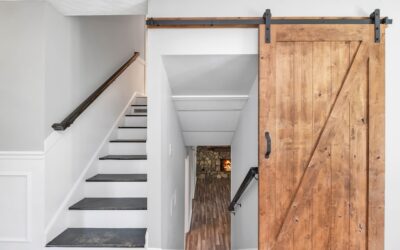
A sliding barn door is only as good as the metal that carries it, and that is where most homeowners underestimate the project. Rustic barn door hardware is the visible track, rollers, and mounting that both hold the door and define its farmhouse character, and choosing the right kit determines whether your door glides smoothly for years or rattles, sags, and jumps the rail. From weight ratings to finish options to the wall-backing you need behind the track, this guide covers everything that goes into a barn door that works as beautifully as it looks.
Part of our Windows & Doors guide — explore the full guide →
What’s in a Barn Door Hardware Kit
A complete sliding barn door kit includes several components working together. The track, or rail, is the horizontal bar mounted above the opening that the door hangs from. Rollers, or hangers, are the wheeled brackets that bolt to the door and ride along the track. The kit also includes track brackets and spacers that hold the rail off the wall, door stops that keep the door from sliding off either end, an anti-jump disc or guide that keeps rollers on the track, and a floor guide that stops the bottom of the door from swinging. Many kits add a handle or pull as well.
Understanding each part helps you evaluate kits and spot cheap ones that skip important pieces like the floor guide or anti-jump hardware.
Popular Rustic Styles
- Classic strap roller: The traditional look, with a long flat strap that runs down the face of the door to the wheel, evoking a genuine barn.
- Bent-strap and top-mount: A cleaner variation where the hanger wraps over the top of the door.
- Horseshoe and teardrop: Decorative roller shapes that add character while doing the same job.
- Industrial pipe-style: Heavier, raw-metal designs that lean into the industrial-farmhouse trend.
- Antique and hammered finishes: Textured surfaces that read as authentically old rather than factory-new.
Finish Options
Finish is where rustic hardware sets the tone. Matte black is by far the most popular, delivering a bold, versatile look that suits nearly any door and wall color. Oil-rubbed bronze offers a warmer, slightly aged appearance. Raw or clear-coated steel shows the metal’s natural character for a true industrial feel. Antique brass and bronze bring warmth to traditional spaces. Choose a finish that coordinates with your other hardware, door handles, light fixtures, and cabinet pulls, so the room feels cohesive rather than mismatched.
Weight Ratings Matter Most
The most important spec in any barn door hardware kit is its weight rating, and it is the one most often ignored. Every kit lists a maximum door weight, and your door must fall comfortably under it. A solid-wood door is far heavier than a hollow-core or MDF door, and hanging a heavy door on an underrated kit leads to sagging, rough rolling, premature wear, and in the worst case, failure.
Weigh or estimate your door before buying, and choose a kit rated above its weight with margin to spare. Standard residential kits commonly handle doors up to a couple hundred pounds, but always confirm. When in doubt, size up; the small extra cost buys smooth operation and peace of mind.
Sizing the Track
The track length is the second critical measurement. A sliding barn door must be wider than the opening it covers, typically by two to three inches on each side, so it fully conceals the gap when closed. The track, in turn, must be roughly double the width of the door so the door can slide completely clear of the opening. Measure your opening, add the overlap to size the door, then double the door width to size the track. Getting this math right prevents the frustrating situation of a track too short to let the door open all the way.
Installation Essentials
Backing Is Non-Negotiable
A barn door and its hardware can weigh well over a hundred pounds, all hanging from the track. That load cannot ride on drywall alone. The track must fasten into solid backing: either the wall studs, or a mounting board (often a decorative wood header) that spans the studs and gives you continuous secure fastening. Installing a backer board is the single most important step, and skipping it is why some barn doors eventually tear out of the wall.
Level and Height
Mount the track perfectly level, or the door will roll open or closed on its own. Set the height so the bottom of the door clears the floor by a small, consistent gap, usually around half an inch, enough to swing free but small enough to look intentional and control light.
Floor Guide and Stops
Install the floor guide to keep the door from swinging away from the wall, and set the door stops at each end of the track so the door cannot roll off. These small parts prevent the most common annoyances of a sliding door.
Common Mistakes to Avoid
- Ignoring the weight rating, leading to sagging and rough operation.
- Skipping the backer board, risking a track that pulls out of the wall.
- An unlevel track, causing the door to drift on its own.
- A track too short to let the door fully clear the opening.
- Forgetting the floor guide, which lets the door swing and bang the wall.
Soft-Close and Upgrade Options
Basic hardware kits let the door slide freely and stop with a bump against the door stops, which some homeowners find jarring. Soft-close upgrades add a dampening mechanism that catches the door near each end of its travel and eases it gently to a stop, preventing slamming and the door bouncing back. This upgrade is well worth considering for bedroom and bathroom doors, where a soft, quiet close matters. Some kits offer soft-close on one or both ends of the track.
Other worthwhile upgrades include a sturdier decorative handle or flush pull, a privacy lock for bedroom and bathroom applications, and higher-grade rollers with sealed bearings that roll more quietly and smoothly. These extras raise the cost modestly but noticeably improve the daily experience of using the door.
Privacy and Sound Considerations
One honest limitation of barn doors is that they hang in front of the opening rather than sealing into a jamb, so they do not block sound or light as completely as a traditional hinged door. For a bathroom or bedroom where privacy matters, plan for it. Size the door with generous overlap on all sides so it covers the opening fully, add a floor guide and edge stops to minimize the gap, and consider a privacy lock designed for sliding doors. Some homeowners add soft weatherstripping or a wall-mounted edge guide to close the gap along the sides. While a barn door will never be as sound- or light-tight as a swinging door, thoughtful hardware choices narrow the gap considerably and make it practical even for private rooms.
Matching Hardware to Door and Room
The best hardware complements both the door and the space. A reclaimed-wood door pairs naturally with raw steel or matte black strap rollers. A painted door in a modern farmhouse looks crisp with sleek black top-mount hangers. Consider the scale, too: a large, heavy door wants substantial, robust hardware, while a lighter interior door can carry a more delicate design. When the door, the hardware finish, and the room’s other metals all agree, the sliding door becomes a signature feature rather than a hardware-store afterthought.
Final Thoughts
Rustic barn door hardware is far more than a decorative accent; it is the mechanical heart of a sliding door that must carry real weight smoothly and safely. Match the kit’s weight rating to your door with margin, size the track to twice the door width, and never mount it to anything but solid backing. Choose a finish that ties into your existing hardware, install the track dead level, and include the floor guide and stops. Get those fundamentals right, and your barn door will glide effortlessly and anchor the room’s farmhouse charm for years to come.