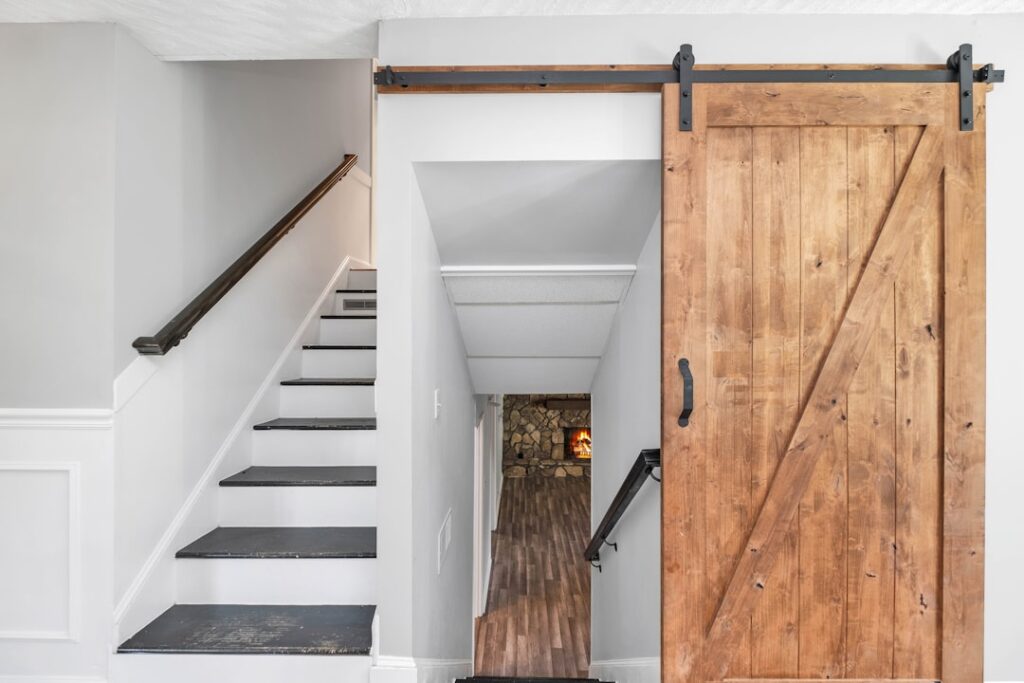
The barn door has shed its rustic-only reputation, and the hardware is what drives that transformation. Sleek modern barn door hardware — think low-profile straight straps, matte black tracks, and hidden soft-close mechanisms — turns a sliding door from a farmhouse cliche into a clean architectural feature that fits contemporary and minimalist homes. Choosing the right kit is about far more than looks, though. Weight ratings, track length, wall backing, and floor guides all determine whether your door glides silently for years or rattles and jumps off its rail. This guide breaks down everything you need to buy and install the right system.
Part of our Windows & Doors guide — explore the full guide →
Why Hardware Matters More Than the Door
You can hang almost any slab on a barn track, but the hardware is what you interact with every day. Cheap kits bind, squeal, and let the door swing away from the wall. Quality hardware rolls smoothly, stays quiet, and holds the door snug against the opening. Since the track and rollers are fully exposed on a barn door, the hardware also becomes a dominant visual element — it is jewelry for the wall, not a hidden hinge.
Modern kits distinguish themselves through minimalist strap designs, clean geometric hangers, and finishes that read intentional rather than decorative. Where traditional barn hardware uses ornate spoked wheels and horseshoe-shaped straps, modern hardware favors straight lines, flat bars, and understated rollers that let the door itself do the talking.
Anatomy of a Barn Door Hardware Kit
Every kit shares the same core components, and understanding them helps you compare products:
- Track (rail): the horizontal steel bar mounted above the opening, usually 6.6 or 8 feet long
- Hangers (straps): the vertical brackets that bolt to the door and carry the rollers
- Rollers (wheels): the bearings that ride along the track
- Wall spacers: standoffs that hold the track off the wall so trim clears
- Floor guide: keeps the bottom of the door from swinging away from the wall
- Anti-jump discs and end stops: keep the door on the track and prevent it from rolling off the ends
The floor guide is the component homeowners most often overlook, yet without it the door swings freely at the bottom and clatters against the wall. Never skip it.
Weight Ratings and Sizing
Match the hardware to your door’s weight, and give yourself margin. A standard 36-by-84-inch solid-core door weighs 80 to 120 pounds, while a hollow-core slab weighs 40 to 60. Most residential kits rate for 200 pounds, which handles nearly any interior door with comfortable headroom. For a heavy solid-wood or glass door, verify the rating and step up to a 400-pound kit if needed.
Track length is the other critical measurement. The rule is simple: the track must be at least twice the width of your door opening so the door can slide fully clear. For a 36-inch opening you need a 72-inch minimum track, though most people buy the standard 78-inch (6.6-foot) rail for a bit of overlap. If your opening is wider, buy or splice a longer track accordingly.
Modern Finishes and Styles
Finish is where modern hardware earns its name. Matte black dominates contemporary design, pairing with nearly any door color and reading crisp against a white wall. Brushed nickel and stainless steel suit clean, transitional spaces, while brushed brass and bronze add warmth without going rustic. For truly minimalist rooms, low-profile top-mount hardware hides most of the mechanism, leaving only a thin visible rail.
Strap style sets the tone. Straight-strap hangers — plain vertical bars — are the signature modern look, while a bent-top or J-strap leans slightly more traditional. For an industrial-modern vibe, look for exposed bolt heads and raw steel finishes. Whatever you choose, keep the hardware finish consistent with the room’s other metals, from door handles to light fixtures.
Soft-Close and Premium Upgrades
A soft-close mechanism is the single upgrade that separates a good barn door from a great one. Without it, an enthusiastic push sends the door slamming into the end stop with a bang. Soft-close dampers catch the door in the final few inches and ease it gently to a stop at both ends of travel. Kits with dual soft-close run $40 to $100 more than basic versions, and they are worth every dollar for a bedroom or bathroom where a slamming door disrupts sleep.
Other worthwhile upgrades include sealed stainless bearings for quieter, longer-lasting rollers, and a privacy latch or lock for bathroom and bedroom doors, since a standard barn door has no built-in locking mechanism.
Installation Essentials
The most important rule of barn door installation: mount the track into solid backing, never drywall alone. A loaded door hanging from anchors in hollow drywall will pull free and fall. You have two good options — locate and hit the wall studs, or install a mounting board (a finished 1-by-6 or 1-by-8 header) across the studs first, then screw the track to the board wherever you like.
The mounting-board approach is the pro’s choice because it guarantees solid backing across the entire track length regardless of stud spacing. Level the board carefully, because any tilt in the track will cause the door to roll to one side on its own. Basic install steps run as follows:
- Measure and mark the track height so the door clears the floor by about 1/2 inch
- Install the mounting board level across the studs, or locate studs directly
- Bolt the track to the board with the supplied lag screws and spacers
- Attach the hangers to the door face at the specified spacing
- Lift the door onto the track and install anti-jump discs and end stops
- Set the floor guide so the door stays snug against the wall
Top-Mount vs Face-Mount Hardware
Barn door hangers attach to the door in one of two ways, and the choice shapes both the look and the clearances. Face-mount hardware bolts the straps to the front face of the door, showing the full strap as a visible design element — this is the traditional, more decorative look. Top-mount hardware attaches to the top edge of the door, hiding most of the mechanism and leaving only a slim rail visible, which suits ultra-minimalist modern rooms.
Face-mount is more forgiving and works with almost any slab, while top-mount requires a door of the right thickness and a precise install. For most homeowners chasing a clean modern look, low-profile face-mount straps strike the best balance — understated enough to read modern, simple enough to install without fuss. Whichever you pick, confirm the hardware suits your door’s thickness, since a 1-3/8-inch hollow-core and a 1-3/4-inch solid slab call for different strap bolts.
Privacy, Sound, and Real-World Limitations
Modern hardware makes a door glide beautifully, but it is worth setting expectations about what a barn door can and cannot do. Because the door hangs on the wall face rather than sealing into a jamb, there is always a small gap around the edges. That gap means a barn door blocks less sound and light than a traditional hinged door, so it is a compromise for bedrooms and bathrooms where full privacy matters.
You can narrow the gap with a few accessories. A floor guide keeps the bottom snug, wall-mounted jamb strips or a shallow reveal reduce side gaps, and a soft rubber sweep quiets the bottom edge. For bathrooms and bedrooms, add a dedicated barn-door privacy lock, since the hardware provides no latching on its own. Set these expectations before you buy, and the door will delight rather than disappoint — going in knowing the trade-offs is the difference between a happy homeowner and a frustrated one.
Common Mistakes to Avoid
Undersizing the track tops the list — a door that cannot slide fully clear of the opening defeats the purpose. Skipping the mounting board and trusting drywall anchors is the most dangerous error. Forgetting the floor guide leaves the door swinging and banging. And mismatching the weight rating leads to premature roller failure. Avoid these four, and your modern barn door hardware will deliver years of smooth, quiet, satisfying operation. Buy quality, mount it into solid wood, and add soft-close, and you will have a door that feels custom every time you slide it open.