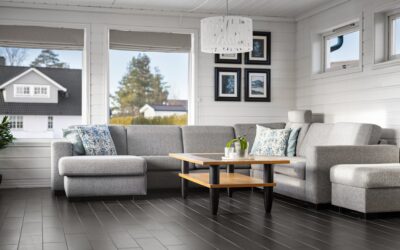
Rustic wood tile gives you the warm, weathered look of reclaimed barn planks without a single one of the headaches real hardwood brings into a bathroom or mudroom. I’ve installed this material in homes where the client tried real oak first, watched it cup within a year near a kitchen sink, and switched to porcelain plank on the redo. The wood-look porcelain category has matured a lot since 2015 — the embossing, the color variation, even the slight surface texture now reads convincingly as distressed timber from a few feet away. This guide covers what rustic wood tile actually is, what it costs installed, and where it makes the most sense in a home.
Part of our Tile & Grout guide — explore the full guide →
- What Makes a Wood-Look Tile “Rustic”
- Cost Per Square Foot: Material and Installation
- Where Rustic Wood Tile Outperforms Real Hardwood
- Grout Joint Width and Layout Considerations
- Color Tones and Room Pairing
- Installation Considerations and Common Mistakes
- Rustic Wood Tile vs. Luxury Vinyl Plank
- Maintenance and Longevity
What Makes a Wood-Look Tile “Rustic”
Rustic wood tile is porcelain or ceramic tile manufactured in plank shapes, typically 6×36 or 8×48 inches, with a high-definition print layer that replicates the grain, knots, and saw marks of reclaimed or hand-scraped wood. The “rustic” designation specifically means the design leans into imperfection — visible wormholes, uneven graying, distressed edges, and heavy grain contrast — rather than the cleaner, more uniform look of oak or maple-style wood tile.
Manufacturers like Marazzi (their Montagna and American Estates lines), Daltile (Emerson Wood and Season Wood series), and MSI (Charwood and Cyrus) all produce rustic collections with plank sizes running from 6 inches wide up to 9 inches, and lengths from 24 to 48 inches. The surface texture is usually a matte or “wood grain” embossed finish that mimics real timber underfoot rather than a glossy finish that would break the illusion immediately.
Cost Per Square Foot: Material and Installation
Rustic wood-look porcelain tile itself typically runs $2.50 to $8.00 per square foot for material, depending on the brand and plank size — budget options from MSI start around $2.50-$3.50, while premium hand-scraped-look lines from Marazzi or Emser can hit $6-$8 per square foot. Installation labor adds $4 to $10 per square foot depending on your region and the layout complexity, since plank tile in a running-bond pattern with staggered joints takes longer to set than square format tile.
All-in, expect to pay $8 to $18 per square foot installed for a straightforward room, and up to $22 per square foot if you’re adding a herringbone layout, which is a popular pairing with rustic wood tile because it plays up the distressed-plank aesthetic. For a 200-square-foot living area, that puts total project cost in the $1,600 to $4,400 range including materials, labor, thinset, grout, and standard trim.
Where Rustic Wood Tile Outperforms Real Hardwood
Bathrooms, mudrooms, laundry rooms, and basements are where this material earns its keep. Real hardwood, even engineered hardwood, will eventually react to moisture — cupping, gapping, or staining near a tub, washing machine, or exterior door where wet boots track in water. Porcelain plank tile has near-zero water absorption (rated under 0.5% per ANSI A137.1) and simply doesn’t care about splashes, spills, or humidity swings.
Radiant floor heat is another spot where wood tile wins outright — porcelain handles radiant heating systems without the expansion and contraction risk that solid wood faces, and it conducts heat more efficiently than a wood plank would. Basements with any moisture risk from below-grade concrete are a near-automatic call for tile over wood, since even engineered hardwood needs a moisture barrier and acclimation period that tile skips entirely.
Grout Joint Width and Layout Considerations
Keeping the grout joint narrow — 1/16 to 1/8 inch — is what sells the wood illusion. A joint wider than 3/16 inch starts to visually read as tile rather than plank flooring, breaking the effect you’re paying for. Rectified tile (cut to precise dimensions at the factory) allows for these tighter joints; non-rectified tile needs at least 3/16 inch to account for slight size variation between pieces.
Layout pattern matters just as much as joint width. A staggered running bond with a minimum one-third offset (rather than the 50% offset common in subway tile) mimics how real hardwood planks are staggered on a job site and avoids the “lippage” risk that comes with a 50% offset on longer plank tile. Herringbone and chevron patterns cost more in labor — typically 20-30% more than straight running bond — because of the additional cuts required at every row.
Color Tones and Room Pairing
Rustic wood tile comes in three broad tone families: warm honey and amber tones that read like reclaimed pine, gray-brown weathered tones that mimic barn wood or driftwood, and deep walnut/espresso tones for a more traditional look. Gray-brown weathered tones have been the dominant seller for the past several years, pairing well with white oak cabinetry, black matte fixtures, and the broader farmhouse-industrial aesthetic still common in new builds and renovations.
For smaller rooms like powder baths or laundry closets, lighter honey and driftwood tones keep the space from feeling cramped, while deeper walnut tones suit larger rooms like great rooms or finished basements where you want warmth without a bathroom-adjacent maintenance concern.
Installation Considerations and Common Mistakes
Plank tile requires a flatter subfloor tolerance than square tile — most manufacturers and the TCNA (Tile Council of North America) recommend no more than 1/8 inch of variance across a 10-foot span for plank format over 15 inches long, versus 1/4 inch for standard square tile. Skipping a self-leveling underlayment on an uneven slab is the single most common installation mistake I see, and it results in visible lippage between planks within the first year.
Large-format tile adhesive (a modified thinset like Custom Building Products VersaBond LFT) is worth the extra $10-$15 per bag over standard thinset, since it’s formulated specifically to support plank and large-format tile without slumping. Back-buttering each plank in addition to combing the floor also reduces hollow spots that can crack under point loads like a dropped cast-iron skillet.
Rustic Wood Tile vs. Luxury Vinyl Plank
Homeowners shopping for a rustic wood look almost always compare porcelain plank against luxury vinyl plank (LVP), and the two materials trade different strengths. LVP costs less up front — typically $2 to $5 per square foot for material and a total installed cost of $4 to $9 per square foot — and it’s softer and warmer underfoot, which some people prefer in a kitchen where they stand for long stretches. Rustic wood tile costs more to install but outlasts LVP by a wide margin: porcelain routinely runs 25 years or more, while even premium vinyl plank usually carries a residential wear layer rated for 10 to 20 years before the print layer starts to show traffic patterns.
Heat and scratch resistance is where tile pulls clearly ahead. A hot pan or a dropped ember from a wood stove can dent or discolor vinyl, and pet claws leave micro-scratches in the wear layer over time. Porcelain shrugs off both. If your priority is the lowest install cost and a forgiving surface, LVP makes sense; if you want the closest thing to permanent flooring with a genuine tile feel, rustic wood tile is the better long-term value despite the higher labor bill.
Maintenance and Longevity
Rustic wood tile needs essentially no maintenance beyond regular sweeping and an occasional pH-neutral tile cleaner — no refinishing, no periodic sealing of the tile body itself (though grout should be sealed every 12-18 months). Expect a lifespan of 25+ years with normal residential use, since porcelain doesn’t wear the way a wood finish does under foot traffic and furniture legs.
The one durability note worth flagging: while the tile body is essentially indestructible, a hard impact from a dropped heavy object can chip the surface print layer, and unlike solid wood, a porcelain chip can’t be sanded out — it has to be replaced. Keeping a few spare tiles from the original box on hand for exactly this scenario is smart, since dye lots change and matching a discontinued rustic wood tile pattern years later can be difficult.
Prefer to explore on your own?
See how new flooring looks in your actual room in seconds — free, no signup.
Try the free Floor Studio →