The spray gun is the part of your pressure washer you actually hold, and when it starts leaking at the trigger or won’t shut off cleanly, it kills the whole cleaning experience. The good news is that a replacement ryobi pressure washer gun is one of the cheapest and easiest upgrades you can make, typically $20 to $45 depending on whether you’re running an electric or gas model. Ryobi builds guns for both its electric lineup and its Honda-powered gas washers, and the fittings differ enough that ordering the wrong one is easy. This guide covers gun types, fitment, common failures, and how to pick the right replacement the first time.
What the Spray Gun Actually Does
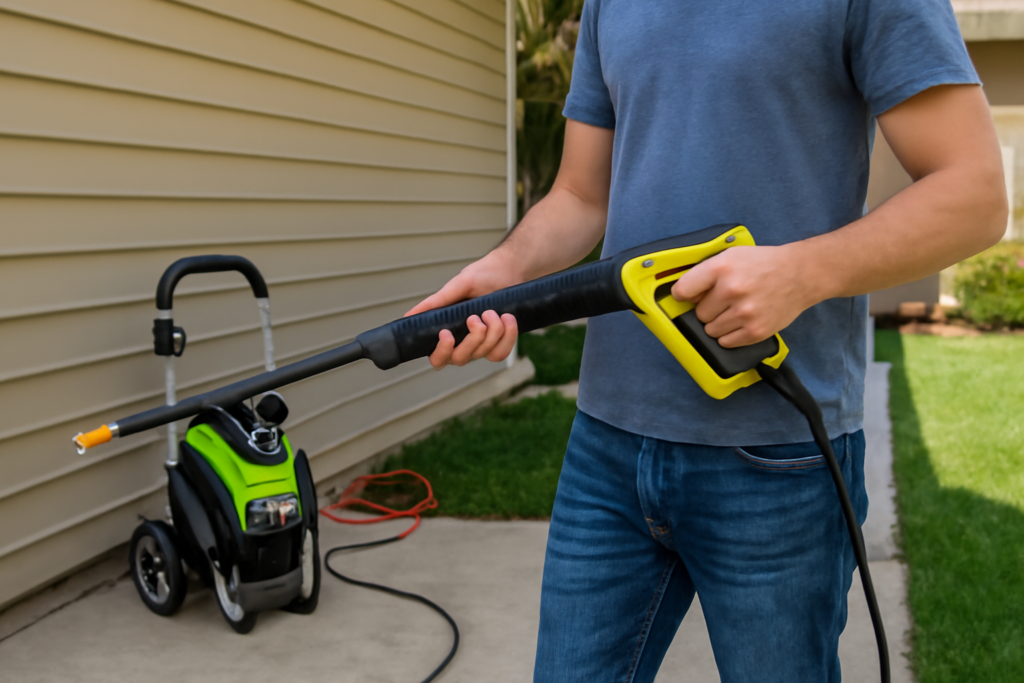
The trigger gun is a valve, plain and simple. When you squeeze the trigger, an internal plunger opens and lets high-pressure water flow through to the wand and nozzle. Release it, and a spring snaps the valve shut, stopping the water almost instantly. On a Ryobi machine, the unloader valve in the pump then diverts flow back internally so pressure doesn’t spike.
Because the gun sees the full working pressure of the machine on every trigger pull, its internal seals take a beating. Ryobi electric washers run 1,600 to 2,300 PSI, while the gas models push 3,000 to 3,300 PSI. That pressure difference matters when you shop, since a gun rated for an electric unit will fail fast on a gas machine.
Ryobi Gun Types and Fittings
Ryobi uses two main connection styles across its range, and identifying yours is the single most important step before you buy. Getting this wrong means a gun that either won’t thread on or leaks the moment you pull the trigger.
- Quick-connect (electric models): many Ryobi electric washers use a proprietary click-in coupler where the hose snaps into the gun handle. These are convenient but limit you to Ryobi-compatible replacements.
- M22 threaded (gas models): Ryobi’s Honda-powered gas units use the industry-standard M22-14mm threaded fitting, which opens you up to a huge market of universal replacement guns.
- Quick-connect wand tip: nearly all Ryobi guns accept 1/4-inch quick-connect nozzles at the end of the wand, regardless of the hose-end fitting.
Check your existing gun where the hose attaches. If it threads on with a collar, you have M22 and the widest selection. If it clicks in, note your exact model number and match a Ryobi-specific gun.
Common Reasons the Gun Fails
Spray guns rarely fail catastrophically; they degrade. Recognizing the early symptoms lets you order a replacement before a job goes sideways. The most frequent complaint is a trigger that leaks water even when released, which points to worn internal seals that no longer seat.
Another common issue is a trigger that won’t return, leaving water flowing after you let go. That usually means a broken return spring or debris jamming the plunger. You may also see leaks at the hose connection, which is often just a dried-out O-ring rather than a bad gun. Before replacing the whole unit, swap the inlet O-ring — an $8 assortment fixes a surprising number of “bad gun” complaints.
The Wand and Lance
The wand, or lance, screws or clicks onto the gun and extends your reach while holding the nozzle at the far end. Ryobi wands are typically 15 to 16 inches on electric models and longer on gas units. The wand itself is durable, but the quick-connect coupler at the tip wears from repeated nozzle changes.
When nozzles start leaking or popping out under pressure, inspect the coupler’s internal O-ring and the retaining ball. A replacement quick-connect coupler costs about $10 and threads onto the wand end. Some homeowners upgrade to a longer 24 or 36-inch wand for gutters and second-story siding, and as long as the fitting matches, these aftermarket wands work fine on a Ryobi gun.
Choosing a Replacement Gun
Once you know your fitting type and pressure rating, narrowing the field is quick. Focus on these specs to avoid a return.
- Pressure rating: buy a gun rated at or above your machine’s max PSI. For a 3,300 PSI gas Ryobi, choose a gun rated 4,000 PSI for margin.
- Inlet fitting: M22-14mm for gas, or the exact Ryobi quick-connect for electric.
- Outlet size: confirm it accepts a 1/4-inch quick-connect wand, the near-universal standard.
- Ergonomics: guns with a full-hand trigger and a comfort grip reduce fatigue on long jobs.
- Flow rating (GPM): match to your pump’s output; Ryobi electrics run 1.2 to 1.4 GPM, gas models 2.3 to 2.5 GPM.
A quality universal M22 gun from a reputable maker runs $25 to $40 and often outlasts the original. For electric quick-connect models, ordering the genuine Ryobi replacement part is usually the safest path.
Installing the New Gun
Swapping a spray gun takes about five minutes and no special tools. Always relieve pressure first by squeezing the old trigger with the machine off, so you’re not fighting stored water.
For M22 guns, unthread the high-pressure hose from the old gun, inspect the O-ring, and thread it onto the new gun by hand until snug — no wrench needed, just firm hand-tight. Snap your wand into the new gun’s outlet and confirm it locks. For quick-connect electric models, press the release collar and pull the hose free, then click it into the replacement. Test at low throttle before returning to full-pressure work.
Maintenance to Extend Gun Life
A little care keeps a spray gun working for years. The biggest enemy is mineral buildup and grit, which score the internal seals every time you pull the trigger. Flushing the system with clean water after each use goes a long way.
- Store indoors in winter or run pump antifreeze through the gun to prevent freeze cracks.
- Never dry-fire the trigger repeatedly without water, which wears the seals fast.
- Lubricate O-rings with silicone grease when you disconnect fittings.
- Keep the trigger lock engaged during storage and transport to protect the return spring.
Upgrades and Accessories
Once you’re replacing the gun anyway, it’s worth considering upgrades that expand what your Ryobi washer can do. The quick-connect nozzle system on the wand tip opens the door to a whole ecosystem of accessories that snap on in seconds.
- Turbo/rotary nozzle: spins a 0-degree jet in a cone pattern for aggressive cleaning without gouging — great for concrete and stubborn grime.
- Foam cannon: mixes detergent into thick foam for car washing; needs an M22 or Ryobi-compatible inlet.
- Surface cleaner: a spinning disc attachment that cleans flat concrete evenly without streaks.
- Extension wands: add 18 to 48 inches of reach for gutters and second-story siding.
- Angled and undercarriage wands: reach behind gutters and under vehicles.
Confirm the accessory’s fitting matches your gun’s outlet — almost all use the 1/4-inch quick-connect standard — and check its pressure and flow ratings against your machine so you don’t starve or overload it.
Troubleshooting a Leaking Gun
Before you replace anything, it pays to pinpoint exactly where the leak originates, because the fix ranges from a free O-ring reseat to a whole new gun. Work through the connections systematically with the machine running at low pressure.
If water drips from the hose-to-gun joint, the inlet O-ring is the usual suspect — remove it, inspect for cracks or flattening, and replace it from an $8 assortment kit. If water weeps from the trigger area or the gun won’t shut off cleanly, the internal valve seals are worn and the whole gun needs replacing. Leaks where the wand meets the gun point to the quick-connect coupler’s O-ring or a worn retaining mechanism. Tighten M22 connections firmly by hand and re-test before assuming a part is bad, since a loose fitting mimics a failed seal.
When to Repair vs. Replace
Because a complete gun is so affordable, a full rebuild rarely makes sense. If the only problem is a leaky inlet, an O-ring fixes it for pennies. But once the internal trigger valve seals go, replacing the whole gun costs less than the time and fiddly parts of a rebuild kit. Keep a spare ryobi pressure washer gun on the shelf if you use your washer weekly, and you’ll never lose a Saturday to a dribbling trigger. Match the fitting, respect the pressure rating, and the swap is one of the most satisfying five-minute fixes in the whole garage.