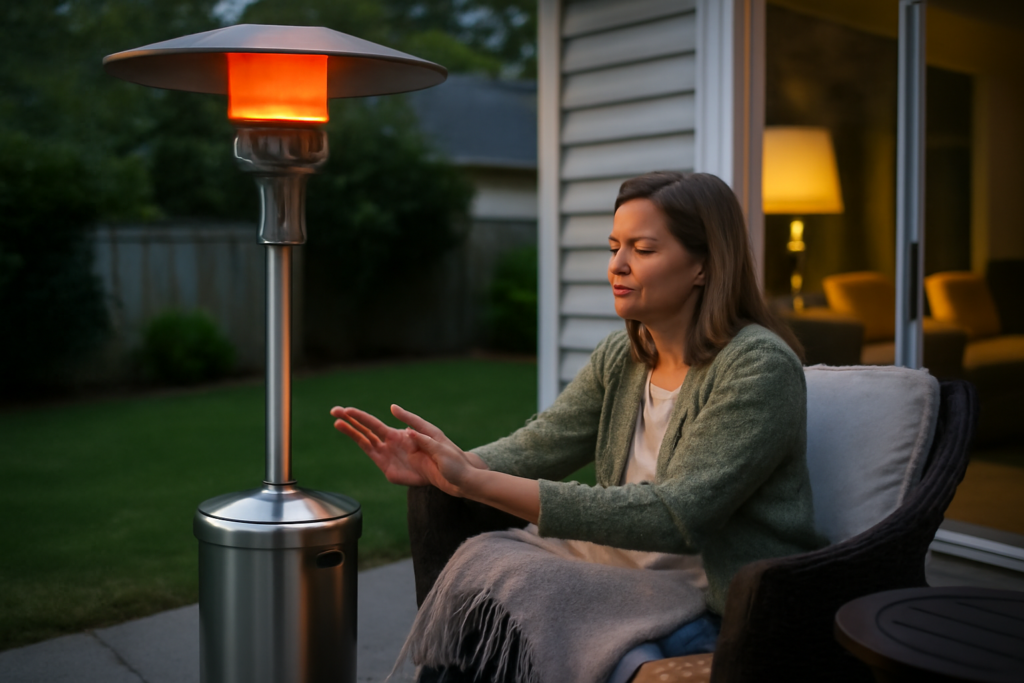
A patio heater keeps your outdoor evenings comfortable, but these appliances combine heat, fuel, and high power, so safety should drive your choice as much as warmth. Selecting a safe outdoor heater means matching the right fuel type to your space, prioritizing built-in protections, and following sensible placement rules. Done correctly, an outdoor heater is both cozy and worry-free. This guide walks through the safety features and decisions that matter most before you buy and every time you use it.
Part of our Windows & Doors guide — explore the full guide →
- Match the Heater Type to the Space
- Essential Safety Features to Look For
- Carbon Monoxide and Ventilation
- Safe Placement and Clearances
- Safe Operation Habits
- Fuel Storage and Handling
- When to Hire a Professional
- Safe Heating for Covered and Enclosed Spaces
- Choosing the Safest Heater for a Family
- Inspecting Your Heater Before Each Season
Match the Heater Type to the Space
The safest heater is the one suited to where you will use it. Open patios, covered porches, and enclosed three-season rooms each call for different equipment, and using the wrong type is the most common safety mistake.
Electric Infrared
Electric heaters produce no flame, fumes, or carbon monoxide, making them the safest choice for covered, partially enclosed, or ventilation-limited spaces. They mount on walls or ceilings, switch on instantly, and have no fuel to store. For porches and pergolas, electric is usually the smartest safe option.
Propane
Freestanding propane heaters deliver strong heat and easy portability, but they burn fuel and must only be used in open, well-ventilated outdoor areas, never indoors, in a garage, or under an enclosed tent. They are an excellent choice for open patios when paired with proper safety features.
Natural Gas
Connected to your home gas line, these eliminate tank handling and run efficiently, but they require professional installation by a licensed pro and, like propane, demand open-air ventilation.
Essential Safety Features to Look For
Not all heaters are equally protected. Prioritize models with these built-in safeguards:
- Anti-tip auto shutoff: Cuts power or fuel instantly if the unit is knocked over
- Flame-failure (oxygen depletion) sensor: Shuts off gas if the flame goes out or oxygen drops
- Tip-over and overheat protection: Standard on quality electric units
- Sturdy, weighted base: Resists tipping in wind for freestanding models
- Cool-touch housing or guards: Reduces accidental burns near reachable surfaces
- Safety certification: Look for testing marks from a recognized safety lab
Carbon Monoxide and Ventilation
This is the single most important safety point for fuel-burning heaters. Propane and natural gas produce carbon monoxide, an odorless, deadly gas, when they burn. They are safe only in open-air or well-ventilated outdoor settings. Never run a gas patio heater inside a home, garage, closed gazebo, or sealed tent. If you enjoy heating an enclosed space, choose an electric model instead, which emits no combustion gases.
Safe Placement and Clearances
Where you put the heater matters as much as which one you buy. Keep these clearances in mind:
- Maintain at least 3 feet between the heater and walls, furniture, plants, and fabrics
- Ensure adequate overhead clearance unless the unit is rated for low ceilings
- Place freestanding heaters on a flat, stable, non-flammable surface
- Position units away from walkways and high-traffic areas to prevent bumps
- Never place a heater near curtains, awnings, or anything that could catch fire
Safe Operation Habits
Even a well-built heater needs responsible use. Never leave a running heater unattended, and turn it off before going inside or to bed. Keep children and pets a safe distance away, since surfaces stay hot after shutoff. For propane units, check the tank and hose for leaks by brushing on soapy water and watching for bubbles before each season. Always shut off the gas valve when not in use.
Fuel Storage and Handling
Store propane tanks upright, outdoors, away from heat sources and out of direct sun, never inside a home or garage. Transport tanks secured and upright, and have them inspected or replaced if they are damaged or past their certification date. Mishandled fuel is one of the leading causes of patio heater incidents, so treat tanks with respect.
When to Hire a Professional
Natural gas heaters and any hardwired electric installation should be installed by a licensed professional to ensure correct connections, clearances, and code compliance. Improper gas hookups are dangerous and can void warranties or insurance. For plug-in electric and standalone propane units you can set up yourself, simply follow the manufacturer’s instructions carefully.
Safe Heating for Covered and Enclosed Spaces
Covered porches, screened rooms, and pergolas are where the most dangerous mistakes happen, because people assume a gas heater is fine under a roof. It is not. Any enclosed or semi-enclosed space limits ventilation and can allow carbon monoxide to accumulate to deadly levels. For these areas, electric infrared heaters are the only truly safe choice, since they produce no combustion gases at all. Wall- and ceiling-mounted electric units are purpose-built for exactly this situation, delivering warmth without fuel, flame, or fumes.
Choosing the Safest Heater for a Family
Households with children and pets have extra reasons to prioritize safety features. Look for cool-touch housings, sturdy anti-tip bases or wall mounting that keeps the unit out of reach, and automatic shutoffs that respond instantly if the heater is knocked or overheats. Mounted electric heaters are often the best family choice because there is no hot tower to bump and no fuel tank within reach. Whatever you choose, establish a clear no-touch rule around the heater and never let young children operate or play near it.
Inspecting Your Heater Before Each Season
- Check propane hoses and connections for cracks and leaks using soapy water
- Confirm the anti-tip and flame-failure safety features still function
- Clean burners, reflectors, and vents of dust, cobwebs, and debris
- Inspect electric cords and plugs for fraying or damage
- Verify the unit sits level and stable on its base
A five-minute inspection at the start of the cool season catches problems before they become hazards and keeps the heater operating safely all season long.
A safe outdoor heater comes down to choosing the right type for your space, insisting on tip-over and flame-failure protections, keeping proper clearances, and ventilating any fuel-burning unit. Respect the carbon monoxide risk, supervise the heater while it runs, and store fuel correctly, and you will enjoy warm, comfortable evenings outdoors without compromising on safety.