Sage has quietly become the neutral of the decade, the green that reads as calm and grounded rather than trendy, which is exactly why it works so well on a single feature wall. A sage green accent wall adds color and depth without the commitment of painting an entire room, and a well-chosen sage green accent wall flatters warm woods, brass, cream, and even black hardware. After painting these in bedrooms, offices, and living rooms across every kind of light, I have a short list of shades and pairings that never disappoint.
- Why Sage Works as an Accent
- Best Sage Green Paint Colors
- Choosing Which Wall to Paint
- Room-by-Room Ideas
- What to Pair With Sage
- Finish and Application Tips
- Sage and Undertones: Warm vs Cool
- Should You Paint the Trim Too?
- Adding Texture and Depth
- Sage in Small Spaces and Powder Rooms
- A Timeless, Low-Risk Update
Why Sage Works as an Accent
Sage is a muted, gray-green that sits close to neutral, so it brings color without shouting. That restraint is its strength on an accent wall. Bolder accent colors can date a room or overwhelm it, but sage layers in like a soft neutral, which means it plays well with almost any existing furniture and flooring you already own.
Green also has a biophilic pull; it echoes plants and nature, and studies on restorative environments consistently tie green tones to lower stress. On a bedroom headboard wall or behind a home-office desk, that calming effect is a real, functional benefit, not just a decorating cliche.
Best Sage Green Paint Colors
Not every “sage” is the same. Some lean gray, some lean yellow-green, and the difference shows dramatically once it covers a wall. These are the shades I reach for.
- Sherwin-Williams Evergreen Fog (SW 9130) – a gray-green sage that was the 2022 Color of the Year, endlessly flattering in most light. About $50 to $70 a gallon in Emerald.
- Benjamin Moore October Mist (1495) – a soft, silvery sage and a 2022 Color of the Year, gentle and slightly gray.
- Farrow & Ball Card Room Green (No. 79) – a deeper, richer sage for a dramatic accent, around $120 a gallon.
- Behr Back to Nature (S340-4) – a warmer, slightly yellow sage, budget-friendly near $40 a gallon.
For a lighter touch, Sherwin-Williams Softened Green (SW 6177) keeps things airy. Always sample; sage shifts more than most colors between daylight and warm bulbs.
Choosing Which Wall to Paint
The best accent wall is the one your eye naturally lands on when you enter the room. In a bedroom, that is almost always the headboard wall. In a living room, it is the wall behind the sofa or the one framing a fireplace. In an office, it is the wall behind the desk that shows up on video calls.
Pick a wall with an architectural anchor, a bed, a fireplace, built-ins, rather than a random blank wall, so the color has a purpose. Avoid choosing a wall broken up by windows and doors, which fragments the effect and wastes the drama.
Room-by-Room Ideas
Sage adapts to nearly every space, and the pairing choices shift the mood.
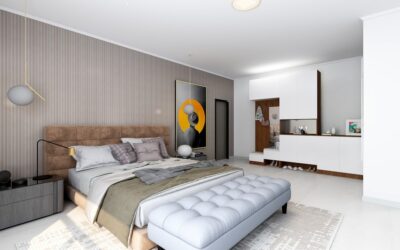
- Bedroom: A deeper sage like Card Room Green behind the bed with white bedding and warm oak nightstands feels like a boutique hotel.
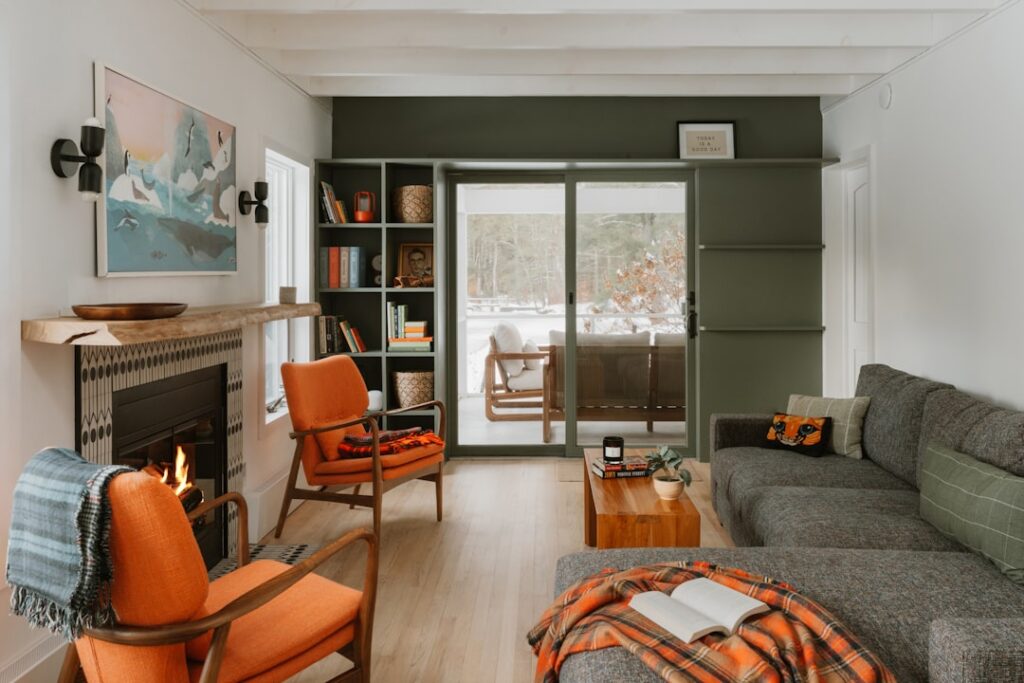
- Living room: Evergreen Fog behind the sofa, paired with cream, tan, and a jute rug, reads earthy and current.
- Home office: October Mist behind the desk is calming on camera and easy on the eyes during long work days.
- Bathroom: A sage vanity wall with brass fixtures and white tile is a spa-like, low-cost refresh.
What to Pair With Sage
Sage is a team player. For a warm, organic look, pair it with natural woods, rattan, cream textiles, and brass or antique-gold hardware. For a crisper, more modern feel, combine it with bright white trim and matte-black accents. Terracotta, blush, and mustard all make lively complementary accents in pillows and art, while a soft cream keeps the surrounding walls from competing.
Keep the other three walls in a warm white or greige so the sage wall stays the star. Benjamin Moore White Dove or Sherwin-Williams Alabaster are safe, warm whites that flatter sage.
Finish and Application Tips
For an accent wall, an eggshell or matte finish is ideal. Matte deepens sage’s velvety, sophisticated quality and hides minor drywall flaws, while eggshell adds a touch of washability for high-touch spaces. Skip semi-gloss, which flattens the color and shows roller marks.
- Sample two or three sages on the actual wall and view them morning, afternoon, and under your evening bulbs.
- Prime any patched or bare drywall so the color absorbs evenly.
- Cut in the edges, then roll two coats for true, even color, letting the first coat dry per the label.
A single accent wall usually takes one quart to one gallon, so the whole project often lands under $75 in materials, one of the highest-impact updates you can make in an afternoon.
Sage and Undertones: Warm vs Cool
All sages are muted greens, but they split into warmer and cooler camps, and matching that undertone to your room is the difference between a sage that glows and one that looks drab. Warmer sages carry a yellow or gold undertone that reads cozy and organic, flattering rooms with warm wood floors and south-facing light. Behr Back to Nature is a good warm example.
Cooler sages lean gray or blue-green, feeling crisp and contemporary, and they suit modern spaces with cooler light and gray or white oak flooring. October Mist sits on the cooler, grayer side. Hold your samples against your flooring and largest furniture pieces; a warm sage next to cool gray floors, or a cool sage against golden oak, can create a subtle clash that is hard to name but easy to feel.
Should You Paint the Trim Too?
A question that comes up on every accent wall is what to do with the trim and any adjacent moldings. You have two strong options. The classic approach keeps trim in a crisp white, which frames the sage and gives a clean, traditional contrast. This is the safest, most timeless choice.
The more current, European-inspired approach paints the trim, and sometimes the door and even the ceiling, the same sage as the wall, a technique called color drenching. Drenching a small room or a reading nook in sage makes the space feel enveloping and intentional rather than choppy. If you go this route, vary the sheen: matte on the walls, satin or semi-gloss on the trim, so the architecture still reads even in a single color.
Adding Texture and Depth
A sage accent wall becomes far more compelling when you layer texture against it. Because sage is calm and matte, it provides the perfect quiet backdrop for tactile elements that catch the light.
- Wood slats or board-and-batten: Vertical wood slats or a simple batten grid painted in sage add dimension and a custom, built-in feel.
- Natural fiber decor: Rattan, jute, and linen in front of a sage wall reinforce its organic character.
- Metallic accents: Brass sconces or picture lights mounted on the wall graze the surface and make the color feel richer at night.
- Framed art and greenery: Botanical prints and live plants echo the green and keep the wall from feeling flat.
A little texture turns a nicely painted wall into a designed focal point, and none of it costs much.
Sage in Small Spaces and Powder Rooms
One of my favorite places for sage is a small room where a bolder color might feel overwhelming. A powder room, a mudroom, or a reading nook can take a sage accent, or even a full sage treatment, without feeling closed in, because the muted green keeps the space calm rather than cramped.
In a windowless powder room, choose a slightly lighter, warmer sage and pair it with a good mirror and warm lighting to keep the space from going flat. In a mudroom, sage on the lower wall or on built-in lockers hides scuffs and dirt far better than white while still feeling fresh. These small, defined spaces are low-risk places to experiment with the color before committing to a larger wall.
A Timeless, Low-Risk Update
The beauty of a sage green accent wall is that it delivers real character with almost no downside. It is calming, it flatters what you already own, and it has proven staying power rather than a shelf life of one trend cycle. Choose a shade that matches your light, anchor it to a meaningful wall, and pair it with warm neutrals; the result feels intentional, restful, and anything but dated.