

Few things are more frustrating than discovering scratches on hardwood floors you spent good money to install. The good news is that most scratches are repairable without a full refinish. After 30 years of installing and restoring hardwood floors, we have seen every type of scratch imaginable and fixed nearly all of them. This guide shows you how to assess the damage, choose the right repair method, and prevent future scratches from happening.


- Understanding the Three Types of Scratches
- How to Fix Surface Scratches
- How to Fix Minor Scratches
- How to Fix Deep Scratches and Gouges
- Best Products for Hardwood Scratch Repair
- Preventing Scratches on Hardwood Floors
- When to Refinish Instead of Spot-Repair
- Professional Repair Options and Costs
- Frequently Asked Questions
Understanding the Three Types of Scratches
Before you grab a repair product, you need to identify what kind of damage you are dealing with. Scratches on hardwood floors fall into three categories, and each requires a different approach.
Surface scratches affect only the finish layer (polyurethane, lacquer, or oil). The wood itself is untouched. These appear as light white or hazy lines and are the easiest to fix. You can usually feel them with your fingernail but barely see exposed wood grain.
Minor scratches cut through the finish and into the top layer of the wood. You can see raw wood at the bottom of the scratch, but the groove is shallow. These need color matching in addition to finish repair.
Deep scratches and gouges penetrate well into the wood grain, leaving a visible groove or dent. These require filling, color matching, and refinishing the area. Furniture legs, dropped heavy objects, and pet claws are the usual culprits.
To test: run your fingernail across the scratch. If your nail does not catch, it is a surface scratch. If it catches slightly, it is minor. If you can feel a distinct groove or depression, it is deep.
How to Fix Surface Scratches
Surface scratches in the finish coat are the most common and the simplest to fix. Here are three methods that work reliably.
Method 1: Hardwood Floor Polish
Apply a thin coat of hardwood floor polish (Bona, Rejuvenate, or Quick Shine are all solid choices) over the scratched area. The polish fills in the micro-abrasions in the finish and restores clarity. Buff with a microfiber cloth. This is a temporary fix that lasts a few weeks to a couple of months before needing reapplication.
Method 2: Screen and Recoat
For rooms with widespread surface scratching, lightly abrade (screen) the existing finish with a 120 to 150 grit sanding screen, clean the dust, and apply a fresh coat of polyurethane. This restores the entire floor surface without sanding down to bare wood. Cost runs $1.50 to $3.00 per square foot for professional work.
Method 3: DIY Finish Touch-Up
Clean the scratched area with a hardwood floor cleaner. Apply a thin line of matching polyurethane along the scratch using a small artist’s brush. Let it cure for 24 hours. Lightly buff with a soft cloth. This works well for isolated surface scratches in high-visibility areas.
How to Fix Minor Scratches
When the scratch exposes bare wood, you need to add color before sealing. Here is the process.
Step-by-Step Repair
- Clean the area. Wipe the scratch with a damp cloth to remove dust and debris. Let it dry completely.
- Apply a stain marker or wax crayon. Match the color of your floor as closely as possible. Wood stain markers from Minwax, Varathane, or Old English come in multiple wood tones. Draw along the scratch, filling the exposed wood with color.
- Wipe excess. Use a soft cloth to remove any color that gets on the surrounding finish. Work quickly before the marker dries.
- Seal with polyurethane. Once the stain is dry (usually 15 to 30 minutes), apply a thin coat of matching polyurethane with a small brush. Feather the edges to blend with the surrounding finish.
- Let it cure. Wait at least 24 hours before walking on the area. Full cure takes 3 to 7 days depending on the product.
For walnut or other dark hardwoods, a walnut meat rubbed along the scratch can temporarily hide minor damage. The natural oils darken the exposed wood. This is a quick fix, not a permanent repair.
How to Fix Deep Scratches and Gouges
Deep scratches and gouges require more work but are still repairable without refinishing the entire floor.
Step-by-Step Repair
- Clean and dry the damaged area.
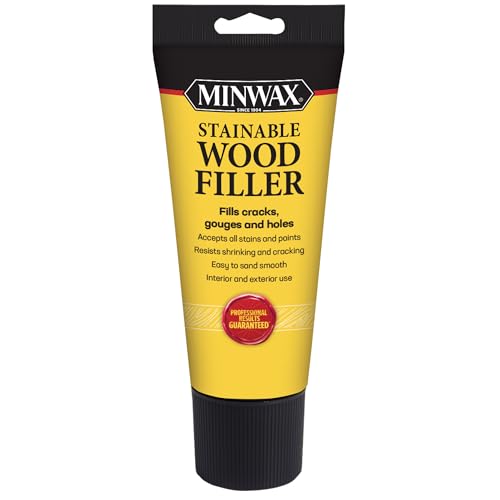
- Apply wood filler. Use a stainable wood filler that matches your floor color. Press it into the gouge with a putty knife, slightly overfilling the scratch.
- Let it dry completely. Follow the filler manufacturer’s recommended dry time, usually 2 to 6 hours.
- Sand flush. Use 180 grit sandpaper to sand the filler level with the surrounding floor. Sand only the filled area, not the surrounding finish.
- Stain to match. Apply wood stain that matches your floor. Test on an inconspicuous area first. You may need to blend two stain colors to get the right shade.
- Apply finish. Brush on two thin coats of polyurethane, allowing proper dry time between coats. Feather the edges well beyond the repair to avoid a visible patch.
For dents without broken wood fibers, try the steam trick first. Place a damp cloth over the dent and press a hot iron on it for 30 seconds. The steam can swell the compressed wood fibers back to their original height. This works on solid hardwood only, not engineered.
Best Products for Hardwood Scratch Repair
These are the products we keep in our service trucks and recommend to homeowners for repairing scratches on hardwood floors.
- Minwax Stain Markers: Available in 6 wood tones. Best for minor scratches. About $6 per marker.
- Bona Hardwood Floor Polish: Fills surface scratches and restores shine. Around $18 for 36 ounces.
- Rejuvenate Professional Wood Floor Restorer: Fills micro-scratches and adds a protective layer. About $20 for 32 ounces.
- Minwax High Performance Wood Filler: Stainable, sandable filler for deep scratches and gouges. Around $8 per container.
- Old English Scratch Cover: Liquid formula that darkens surface scratches on dark floors. About $5 per bottle.
- Howard Restor-A-Finish: Penetrates the finish to restore color in light scratches without stripping. Around $10.
Preventing Scratches on Hardwood Floors
The best scratch repair is the one you never have to do. Here are the prevention measures that actually work based on decades of customer feedback.
- Felt pads on all furniture legs. Replace them every 6 months because they collect grit that defeats the purpose. Self-adhesive felt pads cost about $5 for a pack of 40.
- No shoes policy. Shoes track in gravel, sand, and grit that scratch finishes with every step. This single change prevents more scratches than any other measure.
- Area rugs in high-traffic zones. Hallways, kitchens, and entryways take the most abuse. A quality rug pad underneath prevents the rug itself from scratching the floor.
- Keep pet nails trimmed. Dog nails are the leading cause of hardwood floor scratches in homes we service. Trim every 2 to 3 weeks or use nail caps.
- Use a microfiber dust mop daily. Grit on the floor surface is what causes most scratches. A quick daily sweep removes it before it does damage.
- Never drag furniture. Always lift furniture when moving it. For heavy pieces, use furniture sliders.
- Control humidity. Wood expands and contracts with humidity changes. Keep indoor humidity between 35 and 55 percent to prevent gaps and finish stress that leads to scratching.
When to Refinish Instead of Spot-Repair
Spot repairs work great for isolated scratches, but at some point a full refinish is the better investment. Consider refinishing when:
- Scratches cover more than 30 percent of the floor area
- The finish is worn through to bare wood in traffic paths
- Spot repairs have created a patchwork appearance with uneven sheen
- The floor has not been refinished in 10 or more years
- You want to change the stain color
A full sand-and-refinish costs $3 to $8 per square foot, while a screen-and-recoat costs $1.50 to $3 per square foot. For floors with mostly surface damage, a screen-and-recoat is often the sweet spot between spot repair and full refinishing.
Professional Repair Options and Costs
If the damage is beyond your comfort level, professional hardwood floor repair is widely available. Here is what to expect for pricing in 2026.
- Spot repair (individual scratches): $100 to $200 per visit for a few scratches
- Screen and recoat (one room): $200 to $500 depending on room size
- Full refinish (one room): $500 to $1,500 depending on size and condition
- Board replacement (severe damage): $200 to $600 per section plus matching and finishing
When hiring a professional, ask for references, verify they are insured, and request a written estimate. Ask specifically about color matching because a poor color match on a repair is worse than the original scratch.
Frequently Asked Questions
Can I use coconut oil to fix scratches on hardwood floors?
Coconut oil can temporarily hide light surface scratches by filling in the abrasion with oil. However, it is not a long-term fix and can create a slippery surface. It may also interfere with future refinishing by preventing proper adhesion of new finish coats. Stick with products designed for hardwood floor repair.
Do scratches on engineered hardwood fix the same way as solid hardwood?
Surface and minor scratch repairs are the same for both. The difference shows up with deep scratches. Engineered hardwood has a thin veneer layer (typically 1 to 6 millimeters) over plywood. If a scratch goes through the veneer, wood filler is your only option since you cannot sand deeply enough to remove the scratch without going through the veneer.
Will area rugs prevent all scratches on hardwood floors?
Area rugs prevent scratches from foot traffic and dropped objects in the areas they cover. However, grit can still work its way under the rug and scratch the floor if you do not vacuum beneath it regularly. Always use a quality rug pad without rubber backing, as certain rubber compounds can discolor hardwood finish over time.
How do I fix scratches on matte or satin finish hardwood?
Matte and satin finishes are actually more forgiving of surface scratches than high-gloss finishes because scratches are less visible against a low-sheen surface. Use the same repair methods but match the sheen level of your polyurethane. Applying gloss poly over a matte floor creates an obvious shiny patch that looks worse than the original scratch.
Prefer to explore on your own?
See how new flooring looks in your actual room in seconds — free, no signup.
Try the free Floor Studio →

