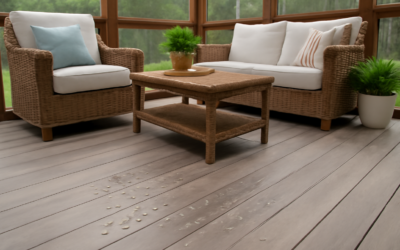
The screened porch sits in a strange middle zone — protected from direct rain but exposed to outdoor humidity, temperature swings, and the occasional wind-driven storm. Screened in porch flooring needs to handle that hybrid environment without rotting, cupping, or freezing into a hazard. After building or refinishing porches across 19 properties in climates ranging from Florida to Vermont, I can give you a clear breakdown of which materials work and which ones turn into expensive mistakes.
This guide compares the realistic material choices with prices and install considerations for each.
- Understanding the Porch Environment
- Pressure-Treated Lumber: The Default Choice
- Composite Decking: Low Maintenance Premium
- Porcelain Tile: The Underrated Option
- Ipe and Other Tropical Hardwoods
- Outdoor-Rated LVP and Vinyl
- What Does Not Work on a Screened Porch
- Installation Considerations
- Maintenance for the Porch Environment
- Who Should Choose Which Material
Understanding the Porch Environment
Screened porches are not interior spaces and not exterior decks. Humidity tracks outdoor levels, which means 70 to 95 percent during summer in most US regions. Temperature swings from 95 F to 25 F across seasons. Direct sun hits part of the floor through the screens. Wind-driven rain reaches several feet inside the screen line during storms.
Any flooring material must tolerate this environment without major expansion-contraction problems, surface deterioration from UV exposure, or moisture absorption that leads to rot or mildew.
With your porch floor looking fresh, it’s worth thinking about the finishing touches. A porch swing is a classic addition, and a retractable awning helps protect both the floor and your furniture from sun and rain.
We may earn a commission when you purchase through our links.
Pressure-Treated Lumber: The Default Choice
Standard pressure-treated 5/4 by 6 deck boards remain the most common and most affordable porch flooring at $2.40 to $4.20 per sq ft installed. Treated pine handles the porch environment well when fastened correctly and sealed every 2 to 3 years.
Pros include low material cost, easy availability, and straightforward repair if a board fails. Cons include splinters once the surface weathers, visible checking and twisting on lower-grade material, and the need for regular maintenance.
Composite Decking: Low Maintenance Premium
Composite boards from Trex, TimberTech, Fiberon, and Deckorators run $7 to $14 per sq ft installed. The capped composite products resist moisture, fading, and stains better than wood with zero sealing required.
For a screened porch, composite is a strong choice because the screens keep most debris off the floor while still allowing rain to reach it. Color stability under UV is excellent on premium SKUs with 25 to 30 year warranties. The downside is heat absorption — dark composite boards reach 130 to 150 F in direct sun, uncomfortable on bare feet but generally not an issue under screens with some shade.
Porcelain Tile: The Underrated Option
Outdoor-rated porcelain tile at 20mm thickness installs over a concrete slab porch floor for $9 to $18 per sq ft including the tile and labor. This is the most durable choice in the long run — porcelain is unaffected by freeze-thaw cycles, UV, or moisture.
The constraint is that this only works if the porch has a solid concrete slab subfloor. Retrofitting a wood-framed porch with a concrete slab is expensive and structurally complex, often not worth the trouble for a screened porch. For new construction or porches built over slab, porcelain delivers a 30 plus year floor.
Ipe and Other Tropical Hardwoods
Ipe at $11 to $16 per sq ft and similar tropical hardwoods like Cumaru and Garapa offer dense, naturally rot-resistant decking that performs well on screened porches. Janka hardness over 3,500 means almost no surface denting from furniture or foot traffic.
Ipe ages from rich brown to silver gray without intervention or accepts annual oiling to maintain the original color. Fastening requires predrilling and stainless screws because the wood is too dense for standard nail penetration. Installation labor runs 50 to 75 percent higher than treated pine because of this prep work.
Outdoor-Rated LVP and Vinyl
A handful of manufacturers including DuraDek and Tufdek produce vinyl membrane and outdoor-rated rigid-core products at $4 to $9 per sq ft installed. These work over plywood subfloor on a covered porch and deliver a waterproof seamless finish.
The trade-off is appearance — outdoor vinyl looks like vinyl and does not photograph well in real estate listings. For functional, low-maintenance porches in rental properties or budget-driven builds, the option is legitimate. For an aesthetic-driven porch on a primary residence, wood or tile is the better choice.
What Does Not Work on a Screened Porch
Standard interior hardwood will fail within 2 to 4 years regardless of finish quality. Humidity cycling causes cupping and gapping that no aftermarket sealer can prevent. Solid oak, maple, and engineered hardwood designed for indoor use should never be specified for screened porch installations.
Carpet has no place on a screened porch. Humidity and the occasional rain blowback create permanent mildew within months. Standard laminate flooring also fails quickly — the fiberboard core swells at the seams within the first humid season.
Installation Considerations
Subfloor matters. Wood-framed porches need at least 3/4 inch exterior-grade plywood or T&G decking with full ventilation underneath. Concrete slab porches need a slight pitch (1/4 inch per foot) toward the screen line so water drains rather than pooling.
All fasteners must be stainless or coated for exterior use. Standard galvanized fasteners corrode within 5 years in humid climates and stain wood surfaces with iron oxide rings. Budget the extra $40 to $80 for stainless on a typical porch — it pays back many times over in floor longevity.
Maintenance for the Porch Environment
Sweep regularly to keep leaves and debris from collecting in corners where they trap moisture. Annual cleaning with oxalic acid solution (1 cup per gallon water) brightens weathered wood and removes mildew without bleaching the grain.
Seal wood floors every 2 to 3 years with a penetrating UV-blocking sealer such as Penofin Marine or Cabot Australian Timber Oil. Composite and porcelain need only mild detergent cleaning twice a year. Match maintenance to material — over-treating composite damages the cap layer.
Who Should Choose Which Material
The right pick depends on use case. Budget-driven build with active maintenance acceptance — pressure-treated pine. Set-it-and-forget-it premium build — composite or porcelain over slab. Aesthetic-driven build with a 30 year horizon — Ipe or porcelain. Functional rental or commercial space — outdoor-rated LVP. The right screened in porch flooring solves the moisture, UV, and temperature swing problem within your budget envelope rather than trying to repurpose interior products that will fail. Match the material to the climate zone, the existing subfloor, and the maintenance commitment you can realistically sustain. That alignment turns a screened porch into a 20 to 30 year fixture rather than a maintenance headache that needs rebuilding every five years.
Prefer to explore on your own?
See how new flooring looks in your actual room in seconds — free, no signup.
Try the free Floor Studio →