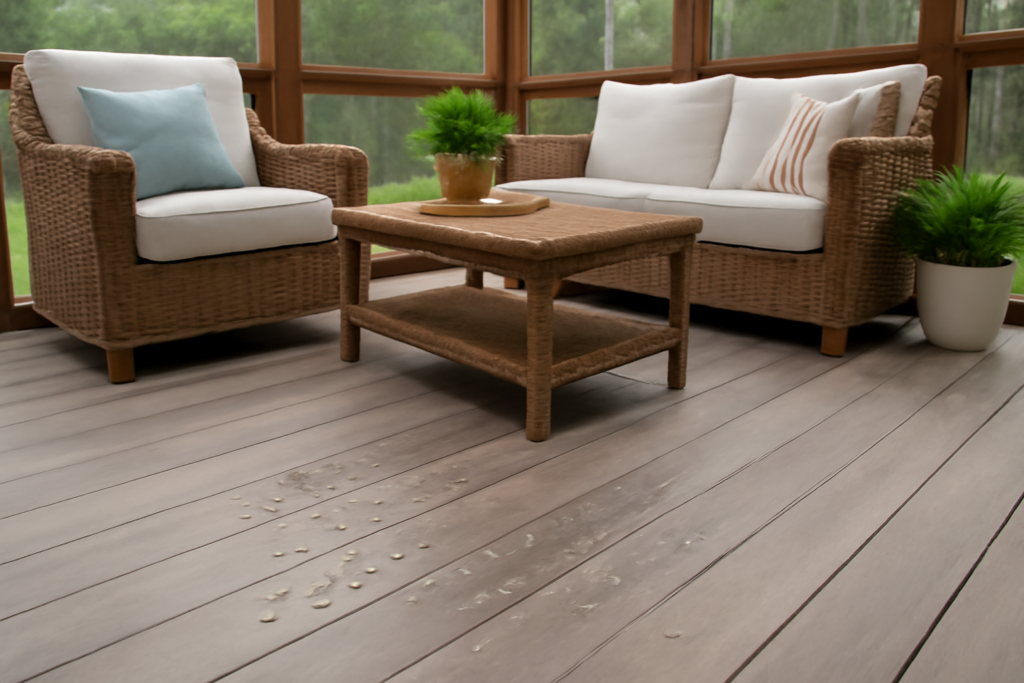
A screened porch lives in a tricky middle ground: it feels like an indoor room but faces outdoor realities like humidity, wind-driven rain, and wide temperature swings. That is why choosing waterproof flooring for screened porch spaces requires materials built to shrug off moisture and weather rather than the floors you would use in a living room. The wrong choice warps, molds, or fades within a season. This guide compares the best weather-resistant options, from porcelain tile to composite decking, so your porch floor stays beautiful and solid for years.
Part of our Roofing guide — explore the full guide →
Why Screened Porch Flooring Is Different
Even with screens keeping out bugs and blocking some rain, a screened porch is still exposed to the elements in ways an interior room is not. Wind blows moisture through the screens during storms, humidity fluctuates with the weather, and temperatures can swing from freezing to sweltering across the year. Direct and indirect sunlight also fades materials over time.
That combination rules out anything that absorbs water or reacts to humidity. Solid hardwood, laminate, and carpet do not belong on a screened porch; they warp, swell, grow mold, or rot. What you need is a fully waterproof surface that also resists UV fading and handles thermal expansion without cracking or buckling. The good news is that several attractive materials meet all three demands.
Porcelain and Ceramic Tile
Tile is a favorite for screened porches because it is naturally waterproof, extremely durable, and available in endless styles, including realistic wood-look planks that give warmth without the vulnerability of real wood. Porcelain is denser and less porous than ceramic, making it the better outdoor choice, especially in climates with freeze-thaw cycles.
Look for tile rated for exterior use with a slip-resistant texture and a low water-absorption rating, ideally under 0.5 percent for porcelain. Use a proper exterior mortar and grout, and make sure the substrate is sound and sloped slightly for drainage. Tile runs $3 to $12 per square foot for material and cleans with a simple hose or mop. Its main drawbacks are hardness underfoot and the need for a stable, level base to prevent cracking.
Vinyl Flooring (LVP and Sheet Vinyl)
Waterproof luxury vinyl plank has become a go-to for covered outdoor rooms because it is 100 percent waterproof, comfortable underfoot, and mimics wood or stone convincingly. For a screened porch, choose a rigid core SPC product and, importantly, one rated by the manufacturer for the temperature swings of a semi-outdoor space, since not all LVP tolerates direct sun and wide temperature changes.
Sheet vinyl is another strong option, offering a nearly seamless waterproof surface that blocks moisture completely. Both are softer and warmer than tile and far easier to install. The caution is heat and UV: standard indoor LVP can expand, gap, or fade in a sun-exposed porch, so confirm the product’s suitability for the conditions and install with the recommended expansion gaps. Quality outdoor-rated vinyl runs $3 to $7 per square foot.
Concrete and Stained Concrete
If your porch sits on a concrete slab, you may already have the ideal base for a waterproof floor. Sealed, stained, or stamped concrete is naturally weatherproof, incredibly durable, and low maintenance, handling rain and humidity without a flinch. Staining and stamping can transform a plain gray slab into a surface that mimics stone, tile, or brick.
Concrete must be sealed with an exterior-grade sealer to resist stains and moisture penetration, and a broom finish or added grit keeps it slip resistant when wet. Costs range from a few dollars per square foot for a basic sealed finish to $8 to $15 for decorative stamping. Downsides are hardness and coldness underfoot, plus the potential for surface cracks over time, though those are largely cosmetic on an existing slab.
Composite Decking and Other Options
For porches with a raised or joisted structure rather than a slab, composite decking is an excellent waterproof-friendly choice. Made of wood fibers and plastic, brands of composite resist rot, moisture, insects, and fading, and they never need staining or sealing. Capped composite in particular sheds water and cleans easily, delivering a wood look with almost no maintenance at $4 to $12 per square foot.
A couple of other options round out the field. Outdoor-rated rubber tiles or interlocking deck tiles offer traction and cushioning and are fully waterproof, ideal if comfort and slip resistance are priorities. Natural stone like slate or bluestone is beautiful and weatherproof but heavy and pricey. Avoid any organic or absorbent material; even on a covered porch, moisture will find it.
Climate Considerations for Your Region
Where you live should steer the decision as much as your budget. In cold climates with hard freezes, freeze-thaw cycling is the enemy: water that penetrates a porous material, freezes, and expands will crack ceramic tile, spall concrete, and split natural stone over a few winters. That is why dense porcelain rated for exterior use, sealed concrete, and composite decking are the safer bets up north, and why any grout or sealer must be exterior grade.
Hot, sunny climates flip the priority to UV resistance and heat tolerance. Direct sun on a screened porch can push surface temperatures high enough to expand and gap standard indoor luxury vinyl, and years of exposure fade many materials. Choose UV-stable, outdoor-rated vinyl or tile in these regions, and favor lighter colors that absorb less heat. Humid coastal areas add mold and salt-air corrosion to the mix, rewarding non-absorbent surfaces and stainless fasteners.
Wide daily temperature swings in high-desert and mountain regions stress every material through constant expansion and contraction, so leaving proper expansion gaps and choosing dimensionally stable products becomes critical. Whatever your climate, confirm with the manufacturer that a given product is warranted for semi-outdoor, unconditioned use before you buy, since installing an indoor-only floor on a porch usually voids the warranty and shortens its life.
Installation and Maintenance Tips
A waterproof material still needs a sound install to perform. Make sure the substrate is structurally solid and, ideally, pitched slightly, about 1/8 inch per foot, so wind-driven rain drains away rather than pooling. Over a slab, an uncoupling membrane under tile helps absorb movement and prevent cracks, while composite decking needs proper joist spacing and gapping for airflow and drainage.
Maintenance is minimal but not zero. Sweep debris regularly so grit does not scratch the finish, hose or mop as needed, and reseal concrete or natural stone every couple of years. Check that screens and any roof edge are diverting the worst of the weather, and add outdoor rugs for warmth and traction. With the right material installed and drained correctly, a screened porch floor asks very little and lasts for many seasons.
How to Choose the Right Porch Floor
Start with your structure. A concrete slab pairs naturally with tile, stained concrete, or outdoor vinyl, while a raised joisted porch suits composite decking. Then weigh your climate: freeze-thaw regions demand porcelain over ceramic and truly outdoor-rated products, while mild climates give you more latitude.
Balance waterproofing with comfort, slip resistance, and looks, and always confirm a product is rated for semi-outdoor, unconditioned use before buying, since that single check prevents the most common porch-flooring failures. Add outdoor area rugs for warmth and softness once the floor is down, and choose lighter colors in sunny regions to keep the surface cooler underfoot.
Think about how you actually use the space, too. A porch that functions as a second living room justifies a warmer, more comfortable surface like outdoor-rated vinyl or composite, while a high-exposure porch that takes driving rain is better served by porcelain tile or sealed concrete. With a fully waterproof, UV-resistant material matched to your structure and climate, you will have a durable, good-looking space you can enjoy through every season.
Prefer to explore on your own?
See how new flooring looks in your actual room in seconds — free, no signup.
Try the free Floor Studio →