Every flooring manufacturer wants to put “waterproof” on the label, but not all waterproof claims are created equal. Some products can sit in standing water indefinitely without damage. Others resist spills for a limited time before moisture penetrates the core. Knowing the difference saves you from installing a floor that fails the first time a pipe leaks or a toilet overflows.
Part of our Roofing guide — explore the full guide →
This guide compares the genuinely waterproof flooring options available today, including luxury vinyl plank, porcelain tile, sheet vinyl, epoxy, and sealed concrete. We compare each by cost, durability, comfort, best rooms, and real-world waterproof performance. We also debunk common marketing claims so you can make an informed decision. For a focused overview, visit our waterproof flooring guide.
What “Waterproof” Actually Means in Flooring
True waterproof flooring means the material itself cannot be damaged by water exposure, regardless of duration. The core, surface, and backing are all impervious to moisture. You could submerge the flooring in water for days and it would emerge undamaged.
Water-resistant flooring means the product can handle temporary moisture exposure but will eventually sustain damage if water sits on or penetrates the surface long enough. The distinction matters because manufacturers often use “waterproof” loosely.
The Weakest Link Matters
A floor is only as waterproof as its most vulnerable component. A vinyl plank with a waterproof core but unsealed edges can allow water to seep between planks and reach the subfloor. A tile floor with waterproof tiles but cracked grout lets water through. Always evaluate the entire installed system, not just the flooring material in isolation.
Luxury Vinyl Plank (LVP)
LVP with an SPC (stone polymer composite) or WPC (wood polymer composite) core is the most popular waterproof flooring choice for residential use. The rigid polymer core cannot absorb water, and the vinyl surface layer is completely impervious to moisture.
How Waterproof Is It Really?
The planks themselves are 100 percent waterproof. You can submerge an SPC vinyl plank in water for weeks and it will not swell, warp, or degrade. However, water can seep between planks through the click-lock joints and reach the subfloor below. If your subfloor is plywood or OSB, that water underneath causes damage even though the LVP itself is fine. This is why proper installation with tight joints matters, and why many manufacturers recommend a waterproof underlayment beneath LVP on wood subfloors.
Cost
Material: $2 to $7 per square foot. Installed: $4 to $12 per square foot.
Durability
LVP with a 20-mil or thicker wear layer handles heavy residential traffic for 15 to 25 years. It resists scratches, dents, and stains well. It cannot be refinished, so once the wear layer is gone, replacement is the only option.
Comfort
LVP is warmer and softer underfoot than tile or concrete. WPC cores are softer than SPC cores. Products with attached cork or foam underlayment add additional cushion and sound dampening. LVP is comfortable to stand on for extended periods, which is a significant advantage in kitchens.
Best Rooms
Kitchens, bathrooms, basements, laundry rooms, mudrooms, and any room where moisture exposure is likely. LVP is the go-to waterproof option for whole-home installations. Learn more in our vinyl flooring guide.
Porcelain Tile
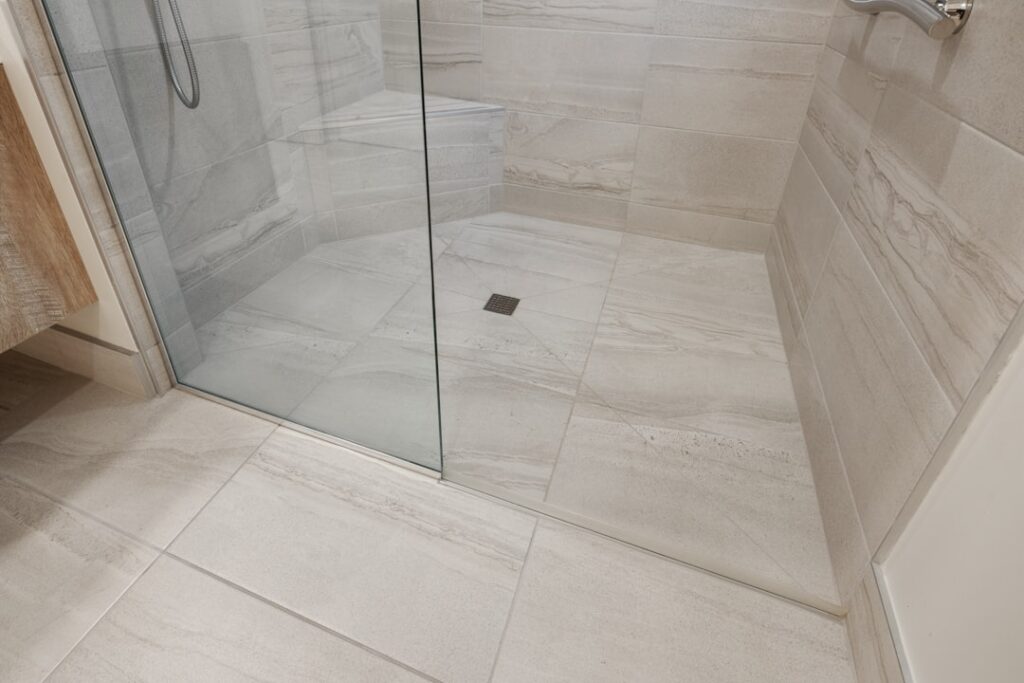
Porcelain tile is one of the most genuinely waterproof flooring materials available. With a water absorption rate below 0.5 percent, porcelain is essentially impervious to moisture. It has been the go-to waterproof flooring for bathrooms and wet areas for generations.
How Waterproof Is It Really?
The tile itself is virtually waterproof. The vulnerability is the grout. Cement-based grout is porous and absorbs water unless sealed. Cracked or deteriorating grout allows water to penetrate to the substrate below. Epoxy grout solves this problem by providing a waterproof grout joint, but it costs more and is harder to install. Properly installed and maintained porcelain tile with sealed grout is one of the most reliable waterproof floor systems available. See our tile flooring guide for more.
Cost
Material: $2 to $15 per square foot. Installed: $7 to $25 per square foot (tile installation labor is significantly higher than LVP).
Durability
Porcelain tile lasts 50 years or more with proper care. It is the most durable residential flooring material available, resistant to scratches, stains, heat, UV fading, and heavy impacts. The main risk is cracking from structural movement or heavy point loads, but properly installed porcelain on a solid substrate is extraordinarily resilient.
Comfort
This is porcelain’s biggest weakness. It is hard, cold, and unforgiving underfoot. Standing on tile for extended periods causes fatigue. Radiant floor heating mitigates the cold factor but adds significant cost. Anti-fatigue mats in front of kitchen sinks and workstations are a common accommodation.
Best Rooms
Bathrooms, shower surrounds, entryways, mudrooms, kitchens, and outdoor living areas. Porcelain tile is the clear winner for shower floors and walls where constant water exposure is the norm.
Sheet Vinyl
Sheet vinyl is an underrated waterproof flooring option that deserves more attention. It comes in continuous rolls (typically 6 or 12 feet wide), which means most rooms can be covered with a single seamless piece. No seams means no places for water to penetrate.
How Waterproof Is It Really?
Sheet vinyl is one of the most waterproof flooring options available because the continuous material has no joints or seams in most installations. Water sits on the surface with nowhere to go. The only vulnerability is at the edges where the vinyl meets walls or where seams are necessary in very large rooms. Proper edge sealing and seam welding make sheet vinyl nearly impervious to water.
Cost
Material: $1 to $5 per square foot. Installed: $3 to $8 per square foot. Sheet vinyl is one of the most affordable waterproof flooring options.
Durability
Sheet vinyl lasts 10 to 20 years depending on quality and traffic. It resists water and stains excellently but is more susceptible to tears, punctures, and heavy furniture indentations than tile or LVP. It cannot be repaired easily if damaged, often requiring full sheet replacement.
Comfort
Sheet vinyl is soft, warm, and quiet underfoot. It provides a cushioned walking surface that reduces fatigue during extended standing. It is one of the most comfortable flooring options for kitchens and playrooms.
Best Rooms
Bathrooms, kitchens, laundry rooms, and basements. Sheet vinyl is especially practical in full bathrooms where seamless water protection is critical. It is also popular in rental properties and budget renovations where cost efficiency matters.
Epoxy Flooring
Epoxy flooring creates a seamless, monolithic surface that is completely waterproof. A two-part resin is applied directly to a concrete substrate, curing into a hard, glossy, impenetrable surface. For more on this option, see our epoxy flooring guide.
How Waterproof Is It Really?
Fully cured epoxy is 100 percent waterproof with zero seams, joints, or grout lines. Water cannot penetrate the surface under any circumstances. This makes epoxy the most waterproof flooring option available. The only weakness is if the epoxy delaminates from the concrete substrate due to moisture vapor pressure from below, which occurs when the concrete slab has excessive moisture content.
Cost
Material (DIY): $3 to $7 per square foot. Professional installation: $5 to $15 per square foot for standard solid-color epoxy. Decorative metallic or flake epoxy can run $8 to $25 per square foot installed.
Durability
Industrial-grade epoxy withstands heavy machinery, chemical spills, and extreme traffic. Residential epoxy lasts 10 to 20 years before needing recoating. It resists stains, chemicals, and impacts but can yellow with UV exposure and shows scratches on high-gloss finishes.
Comfort
Epoxy over concrete is extremely hard and cold. It is essentially a coating that does nothing to change the comfort profile of the concrete beneath. Anti-fatigue mats are necessary in areas where you stand for extended periods.
Best Rooms
Garages, basements, workshops, utility rooms, and commercial kitchens. Epoxy is increasingly popular in modern residential basements and even kitchens where the industrial aesthetic is desired.
Sealed Concrete
Polished or sealed concrete floors are inherently waterproof when properly treated. The concrete itself is porous, but penetrating sealers and topical coatings prevent water from absorbing into the slab. Check our concrete flooring guide for a deeper dive.
How Waterproof Is It Really?
Properly sealed concrete resists surface water effectively. However, concrete is naturally porous and moisture can migrate through the slab from below via capillary action and vapor transmission. Surface sealers protect from above but do not stop moisture moving through the concrete. For basement slabs below grade, moisture vapor barriers beneath the concrete are necessary for true waterproofing.
Cost
Polishing and sealing an existing concrete slab: $3 to $10 per square foot. Staining, scoring, or decorative treatments add to the cost. If the slab is already in place (as in slab-on-grade construction), the cost is essentially just finishing an existing surface, making it one of the most affordable options.
Durability
Concrete floors last the lifetime of the structure. Sealers need reapplication every 2 to 5 years depending on traffic. The concrete itself is virtually indestructible under normal residential conditions.
Comfort
Concrete is the hardest and coldest flooring option. It offers zero cushion, transmits cold from the ground, and causes fatigue when standing. Radiant heating helps with temperature but not hardness. Area rugs and anti-fatigue mats are practical necessities in living spaces with concrete floors.
Best Rooms
Basements, garages, modern lofts, and industrial-style living spaces. Polished concrete is popular in modern and minimalist homes where the raw, industrial aesthetic is part of the design vision.
Comparison at a Glance
For pure waterproof performance, epoxy and sheet vinyl lead the pack because they have no seams. Porcelain tile is close behind when installed with epoxy grout. LVP is waterproof at the plank level but has seam vulnerability. Sealed concrete depends entirely on the quality and maintenance of the sealer.
For comfort, sheet vinyl and LVP are the clear winners. For durability, porcelain tile is unmatched. For cost efficiency, sheet vinyl and sealed concrete (when the slab exists) are the most affordable. For design versatility, LVP and porcelain tile offer the widest range of looks.
Debunking Waterproof Marketing Claims
Waterproof laminate is not truly waterproof. It resists surface moisture for a limited time (typically 24 to 72 hours) but will still be damaged by prolonged water exposure or submersion. The HDF core eventually absorbs water through seams.
Waterproof hardwood does not exist. Some engineered hardwood products carry water-resistant warranties, but wood is hygroscopic by nature. Extended water exposure will damage any wood floor.
Waterproof click-lock does not mean waterproof installation. Even if the individual planks or tiles are waterproof, the assembled floor has seams that can allow water to pass through to the subfloor. A truly waterproof floor system requires attention to the entire installation, not just the material.
All waterproof floors need proper subfloor protection. Water that gets beneath any flooring material can damage the subfloor, promote mold growth, and create structural problems. Waterproof flooring protects the surface you see, but the system below needs protection too.
Final Thoughts
Choosing a waterproof floor starts with understanding your actual moisture risk. A kitchen that sees occasional spills has different needs than a basement that floods annually. Match the waterproof capability to the real-world demands of each room, and do not pay a premium for waterproof performance you do not need. For most homes, LVP offers the best balance of waterproof protection, comfort, appearance, and cost. For wet areas like showers and pool surrounds, porcelain tile remains the gold standard. Explore our waterproof flooring guide for detailed product recommendations.
Prefer to explore on your own?
See how new flooring looks in your actual room in seconds — free, no signup.
Try the free Floor Studio →