
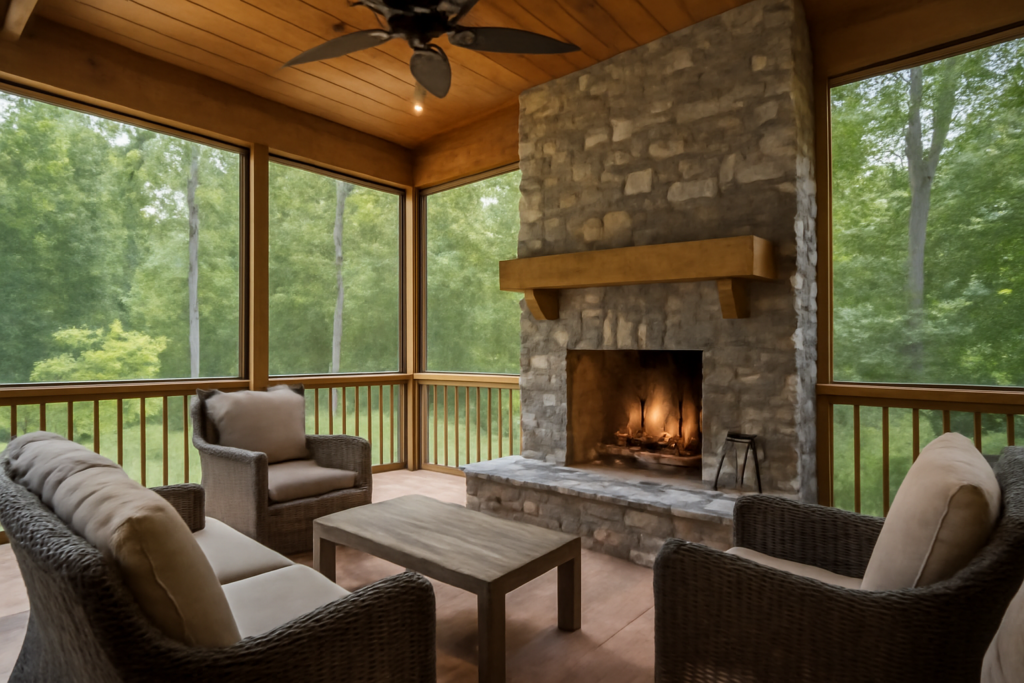
A fireplace can stretch porch season by months, but a screened porch is a tricky place for a flame. It has a roof, a ceiling full of combustible framing, and walls of fine mesh that trap heat and smoke far more than an open patio does. Before you design a screened in porch with fireplace, you need to know which fuel types suit a semi-enclosed space, how the unit will vent, and what your local building and fire codes require.
The short version: a vented outdoor gas fireplace or a properly built wood-burning fireplace with a real chimney are the safest ways to get a live flame on a covered porch. An outdoor-rated electric fireplace is the simplest option when you want the look without combustion. Ventless gas logs and open fire pits are the risky choices, because the porch roof and screens hold combustion gases close to the people sitting there.
- Screened In Porch With Fireplace: Your Main Options
- Clearances to Ceilings, Screens and Framing
- Structural and Planning Steps
- Fire and Carbon Monoxide Safety on a Porch
- Covered Porch With Fireplace Costs
- Troubleshooting Porch Fireplace Problems
- When to Call a Licensed Professional
- Frequently Asked Questions
Whichever direction you go, plan the fireplace with the porch structure, not as an afterthought. Clearances, the chimney path and gas routing all affect framing and roof work.
Screened In Porch With Fireplace: Your Main Options
Every screened in porch with fireplace project starts with choosing a fuel. Each one has different venting, cost and maintenance needs.
Vented outdoor gas fireplace
A gas fireplace for screened porch use is usually a direct-vent or B-vent unit listed for outdoor or covered-porch installation. Direct-vent models pull combustion air from outside and exhaust through a sealed pipe, so gases leave the porch entirely. Many homeowners use an outdoor gas fireplace insert set into a masonry or framed surround, which gives the look of a traditional hearth with the convenience of a switch or remote. Gas runs need a licensed installer, a permit and a pressure test.
Wood-burning masonry or prefab fireplace
A wood fireplace gives the classic crackle and smell, but it is the most involved build. It needs a proper footing, a code-compliant chimney that extends above the roofline, hearth extensions, and clearances to the porch ceiling and framing. Smoke and sparks are the main concerns in a screened space. A tall enough chimney and a spark arrestor cap are essential, and you will clean ash and creosote regularly.
Outdoor-rated electric fireplace
An electric unit is the easiest path. There is no combustion, no chimney and no gas. Look for models specifically rated for outdoor or damp locations, installed on a GFCI-protected circuit. The flame is a visual effect, and heat output is limited, but it is the lowest-risk way to get a fireplace feel on a covered porch.
Why ventless gas is risky in enclosed porches
Ventless gas logs release all of their combustion products into the space around them, including water vapor, carbon dioxide, nitrogen dioxide and small amounts of carbon monoxide. In a fully open patio, wind carries those gases away. Under a roof with screen walls, and especially if you add vinyl or glass panels for winter, they linger at seating height. Many manufacturers do not list ventless units for porches at all. If you are tempted by one, confirm it is listed for the exact installation and check local code, but in most cases a vented unit is the better choice.
Clearances to Ceilings, Screens and Framing
Heat rises, and a porch ceiling is usually tongue-and-groove wood or vinyl over wood framing. Every fireplace has minimum clearances published by the manufacturer, and local code builds on those. Plan for:
- Ceiling clearance: the space above the firebox opening to any combustible ceiling or beam. Mantels and hoods count too.
- Side clearance: distance from the opening to wood trim, screen frames and posts.
- Hearth extension: a noncombustible surface in front of the firebox, extended farther for wood burning than for gas.
- Chimney or vent clearance: the gap required between the chimney or vent pipe and roof framing, plus the height above the roofline.
- Screen proximity: screen mesh, especially fiberglass, can melt from radiant heat. Keep screen panels well away from the firebox face.
Treat published clearances as minimums. On a porch with a low ceiling, a raised hearth and a tall surround help direct heat and draft away from the roof structure.
Structural and Planning Steps
- Check codes, permits and HOA rules. Most jurisdictions require a permit for any fireplace, chimney, gas line or new circuit. HOAs may control chimney height and exterior materials.
- Choose the unit first. The manufacturer’s installation manual drives clearances, framing, vent routing and hearth size.
- Plan the foundation. Masonry fireplaces and chimneys are heavy and need their own footing. Even framed prefab units sit on a structure that must handle the weight, including stone veneer. Call 811 before digging footings.
- Route the vent or chimney. Decide whether it goes straight up through the porch roof or out through a side wall. Roof penetrations need proper flashing to prevent leaks.
- Plan utilities. Gas lines and any new electrical circuit for a blower, lighting or an electric fireplace are licensed-trade work.
- Consider wind and snow. Tall chimneys on porches take wind load. Ensure the structure is anchored into framing and footings as designed.
- Finish with noncombustible materials around the firebox, such as stone, brick, tile or cement board.
Fire and Carbon Monoxide Safety on a Porch
Porches feel like outdoors, but for combustion safety they behave more like rooms, especially when screens are covered for winter. Install CO alarms in the adjacent living areas and near sleeping rooms, and consider one rated for the porch environment. Keep a fire extinguisher handy and never leave any fire burning unattended.
For gas fireplaces, schedule an annual service to check burners, vent seals and the pilot assembly. For wood fireplaces, have the chimney inspected and swept yearly, burn only dry seasoned hardwood, and use a screen or doors to contain sparks. Keep furniture, cushions, rugs and holiday decor at least 3 feet from the hearth.
If you ever smell gas on the porch, turn off the fireplace if it is safe to do so, leave the area and call your gas utility from a safe distance. Never attempt to repair gas valves, fittings or piping yourself.
Covered Porch With Fireplace Costs
Costs vary widely with fuel, materials and structure. As general ranges:
- Outdoor electric fireplace: the lowest cost, mainly the unit plus a GFCI-protected circuit if one is not already in place.
- Vented gas fireplace or insert with framed surround: a mid-range project once you add gas piping, venting, framing, stone or tile, and permits.
- Masonry wood-burning fireplace and chimney: the most expensive, due to footing, masonry labor, chimney height and roof work.
Adding a fireplace to a new porch build is usually cheaper than retrofitting one later, because framing, roof penetrations and footings are planned together. For an existing back porch fireplace retrofit, expect extra costs to open and patch the ceiling and roof.
Troubleshooting Porch Fireplace Problems
- Smoke drifts onto the porch: a wood chimney may be too short, the flue undersized, or wind swirling around the roof. A chimney pro can recommend extending the chimney or adding a draft cap.
- Soot on the ceiling: this points to spillage or poor burn quality. Stop using the fireplace and have it inspected.
- Melted or brittle screen near the hearth: the screen is too close to the heat. Replace with a metal mesh section or move the panel.
- Gas pilot keeps going out: wind, a dirty thermocouple or a failing valve. Have a licensed gas technician service it.
- Water staining around the chimney: flashing has failed. Repair promptly to prevent rot in porch framing.
When to Call a Licensed Professional
Nearly every part of a porch fireplace calls for licensed help. A licensed gas contractor must run, connect and pressure test any gas line and install gas units to the manufacturer’s instructions. A licensed electrician should add circuits for electric fireplaces, blowers or lighting, with GFCI protection in damp locations. A mason or chimney professional should build or inspect any wood-burning fireplace and chimney. For footings, roof penetrations and structural changes to an existing porch, a builder or structural engineer can confirm the framing handles the added load. Pull permits for all of it, since insurers and future buyers will ask.
Planned carefully, a screened in porch with fireplace becomes the most used spot on the property through fall and early winter.
Frequently Asked Questions
Can you put a fireplace in a screened in porch?
Yes, as long as it is a unit listed for that use and installed with the required clearances, venting and permits. Vented gas, masonry wood-burning and outdoor-rated electric fireplaces are the usual choices.
Is a ventless gas fireplace safe on a covered porch?
It is generally not recommended. A roof and screen walls hold combustion gases at seating height, and many ventless units are not listed for porch use. Vented gas or electric is the safer route.
How far should a fireplace be from a porch ceiling?
Follow the manufacturer’s installation manual and local code. Clearances vary by model and fuel, and mantels, hoods and combustible beams all factor in.
Do I need a chimney for an outdoor fireplace under a covered patio?
Wood-burning fireplaces need a chimney that extends above the roofline. Vented gas units need a vent pipe routed as the manual specifies. Electric units need no chimney.
Can I enclose my screened porch with glass if it has a fireplace?
Enclosing a porch changes how codes treat it and traps more combustion gases. Talk to your building department and fireplace installer first, and confirm the unit is still listed for the new enclosure.


