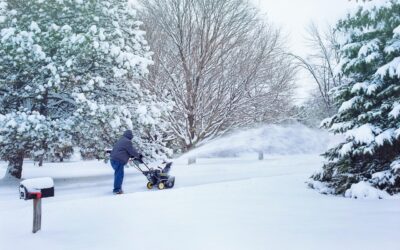
A self propelled snow blower turns a brutal winter chore into a manageable 30-minute job, driving itself through drifts while you steer instead of shove. If you face heavy, wet lake-effect snow or a driveway longer than two cars, a self propelled snow blower is the difference between clearing your property before work and giving up halfway.
These machines use powered augers and drive wheels or tracks to pull themselves forward, so you’re guiding rather than pushing hundreds of pounds through a foot of packed snow. Here’s how to pick the right one, what the specs mean, and how to keep it running for 15 winters.
Two-Stage Versus Three-Stage
Almost every self-propelled unit is either two-stage or three-stage. Understanding the difference tells you which snow it can handle.
Two-stage machines use a serrated auger to gather snow and a separate high-speed impeller to fling it out the chute. That two-step design throws snow 30 to 50 feet and handles depths up to 12 to 20 inches. Because the auger never touches the ground, two-stage units work on gravel driveways without picking up stones. This is the workhorse category for most snow-belt homeowners.
Three-stage machines add an accelerator auger between the collection auger and impeller. That extra component chops icy, packed drifts and feeds snow to the impeller up to 50% faster, so a three-stage unit chews through end-of-driveway plow piles that stall lesser machines. If you routinely deal with deep, wet, or refrozen snow, the three-stage premium pays off.
Clearing Width and Intake Height
Two numbers dictate how quickly you finish: clearing width and intake height. Width ranges from 24 to 30 inches on residential self-propelled models, occasionally wider on premium units. A 24-inch machine suits a two- or three-car driveway; step up to 28 or 30 inches for long driveways where every pass counts.
Intake height — the mouth of the auger housing — runs 20 to 23 inches on most two- and three-stage machines. That tall opening lets you drive straight into deep drifts and plow piles rather than nibbling at them in layers. Pair a 30-inch width with a 23-inch intake and you’ll clear a foot of overnight snow in a single sweep down each lane.
Power Steering, Drive Speeds, and Controls
Size and weight are what make self-propulsion essential, but they also make a heavy machine hard to turn without help. Look for these convenience features:
- Power steering / trigger steering: Independent trigger releases on each handle let you disengage one drive wheel to pivot the machine effortlessly. On a 250-pound unit, this is the feature you’ll thank yourself for at every turn.
- Multiple drive speeds: Most self-propelled blowers offer 5 or 6 forward speeds and 1 or 2 reverse. Crawl through deep drifts in low gear; cruise across a cleared apron in high.
- Heated hand grips: A small luxury that becomes a necessity at 10 degrees.
- Quick-turn chute controls: A joystick or crank that swivels the chute 200 degrees or more without stopping keeps you moving.
Engines and Starting
Gas engines still dominate the self-propelled category because they deliver the sustained torque heavy snow demands. Expect displacement from 208cc up to 420cc, matched to clearing width. Leading engine and machine brands include Ariens, Toro, Cub Cadet, and Honda.
- Ariens Deluxe and Platinum models pair AX engines (223cc–369cc) with all-steel augers and are a snow-country benchmark.
- Toro Power Max units feature the Anti-Clogging System and a quick-stick chute many owners swear by.
- Cub Cadet two- and three-stage machines offer four-way joystick chute control and steel construction at competitive prices.
Nearly all include electric push-button start (plug into a wall outlet, or an onboard battery on newer units) plus a backup recoil pull. You should never be stranded because the engine won’t turn over at dawn.
What a Self-Propelled Blower Costs
Budget realistically. A capable self-propelled snow blower runs roughly $900 to $2,500:
- $900–$1,200: Entry two-stage machines, 24–26 inch width, 208–252cc engines. Fine for average snowfall and standard driveways.
- $1,300–$1,800: Mid-range two-stage with 28-inch width, power steering, heated grips, and larger engines. The sweet spot for most snow-belt homes.
- $1,900–$2,500: Premium three-stage and 30-inch two-stage units for heavy, wet snow, long driveways, and refrozen plow piles.
Spending more buys clearing width, throwing distance, and steel components that survive a decade of abuse. If you clear snow more than a dozen times a winter, the mid-range tier is money well spent.
When Self-Propulsion Actually Matters
Not everyone needs a self-driven machine. It earns its keep in specific conditions:
- Heavy, wet snow: Coastal and lake-effect snow is dense. Pushing a single-stage unit through it is exhausting; a self-propelled two-stage drives right through.
- Long or sloped driveways: Anything over 60 feet, or with an incline, makes powered drive wheels essential.
- Gravel or unpaved surfaces: Two- and three-stage augers ride above the ground on adjustable skid shoes, so they won’t scoop and hurl your gravel.
- Deep plow piles: The compacted ridge the town plow leaves at your apron defeats most single-stage machines. A self-propelled two- or three-stage unit clears it in a pass or two.
If you get only a few inches a handful of times each winter on a short paved drive, a single-stage or even a cordless machine may serve you fine and cost far less. Match the tool to your actual snowfall.
Tracks Versus Wheels
Self-propelled blowers come with either wheels or rubber tracks, and the choice shapes how the machine handles your terrain. Wheeled units are lighter, easier to maneuver, and cheaper — the right pick for flat paved and gravel driveways, which describes most homes. Look for large, aggressive-tread tires (often 15 to 16 inches) for grip on packed snow.
Track-drive machines trade some maneuverability for serious traction. The tracks distribute weight and dig in, so they climb inclines and push through deep, heavy snow without the front end riding up. If your driveway is steep, unpaved, or you routinely clear a foot or more of wet snow, tracks are worth the premium. For a level suburban driveway, wheels do the job and cost less.
Clearing Speed and Throw Distance
Two performance numbers tell you how a machine will feel in real use. Throw distance ranges from about 30 feet on entry units to 50-plus feet on premium three-stage machines. The farther a blower throws, the fewer times you re-clear snow that fell short — a bigger deal than it sounds on a wide driveway.
Snow-moving capacity, sometimes rated in tons per minute, reflects how much the auger and impeller move at full tilt. Larger engines paired with steel impellers move the most, which is why a 369cc machine clears a heavy overnight dump in one steady walk while a small unit stalls and re-chews. When comparing models, weigh engine displacement, impeller diameter, and throw distance together rather than fixating on any single figure.
Maintenance for a Long Life
Snow blowers sit idle most of the year, which is exactly why off-season care matters. Follow this routine:
- Fresh fuel and stabilizer: Old ethanol gas is the top cause of no-start failures. Run the tank dry or add stabilizer before storage.
- Change the oil once a season, typically after the first 5 hours on a new machine, then annually.
- Inspect shear pins and keep spares on hand. These sacrificial bolts break to protect the auger gearbox if you hit a hidden object.
- Check the belts for cracks and glazing; a worn drive belt kills self-propulsion mid-storm.
- Adjust skid shoes each fall to set auger clearance for your surface — higher for gravel, lower for pavement.
- Grease the chute and rotation gear so it swivels smoothly in the cold.
Thirty minutes of fall prep guarantees a first-pull start when the first blizzard hits. Neglect it and you’ll be in the garage with a wrench while the snow piles up.
Choose your clearing width for your driveway, your stage count for your snow type, and don’t skimp on power steering. Do that, and a self propelled snow blower will make even a record winter feel routine.